Creating Scalable Operations: A Summary of "Scaling Up" by Verne Harnish
Overcome the Growth Paradox

Start to Scale
Powered by FINSYNC
As your startup adds more employees, customers, and product lines, operational complexity multiplies, creating a frustrating “growth paradox” where the more success you have, the harder your business is to run. Without a solid foundation, internal processes inevitably begin to break down.
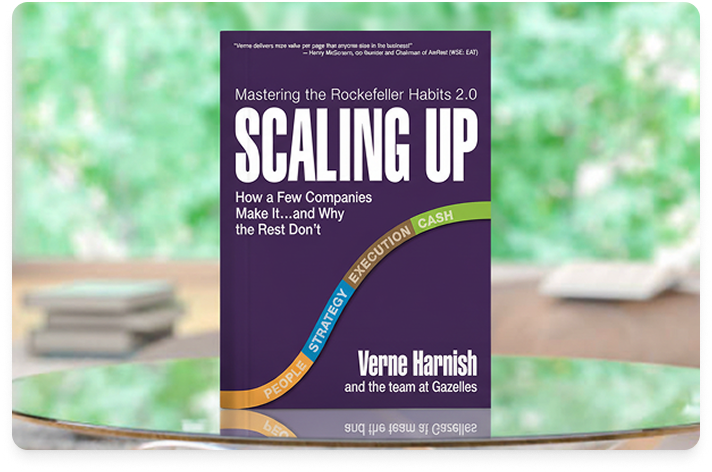
Scaling Up by Verne Harnish, published in 2014 as an evolution of his earlier work Mastering the Rockefeller Habits, tackles this exact organizational bottleneck.
Verne Harnish, founder of the Scaling Up coaching system and the global community Entrepreneurs’ Organization (EO), has spent decades helping companies navigate the shift from growing startups to systematized companies. Scaling Up has become a definitive classic because its tactical advice spawned a global industry of certified coaches and strategic planning tools that thousands of mid-market companies rely on daily
The book’s functional operating system gives leadership teams practical routines to reduce the time spent fighting daily fires so they can focus on market-facing strategy. With frameworks that help align everyone, founders can drastically reduce internal drama and accelerate momentum.
Core takeaway: Sustainable scale is achieved by installing rigorous, repeatable disciplines around your people, strategy, execution, and cash.
The Four Pillars of a Scalable Operating System
Harnish’s framework asks you to evaluate and optimize four distinct pillars. If you shortchange any of these areas, your growth will stall as you hit the natural barriers of leadership development, scalable infrastructure, and market dynamics.
- People: You must attract and retain the right talent while ensuring you have a single person accountable for every major outcome. The book challenges you to ask if you would enthusiastically rehire every current employee and provides tools to diagnose leadership gaps.
- Strategy: Harnish advises you to identify your company’s “Profit per X” metric and establish a One-Page Strategic Plan (OPSP). This document encompasses your entire vision, from your 10-year goal down to this quarter’s immediate priorities, aligning your growing team with a single page.
- Execution: A strategic plan dies without rigorous execution. The book’s Rockefeller Habits Checklist relies heavily on establishing a strict meeting rhythm, including 15-minute daily huddles to improve internal communication, surface constraints immediately, and keep the team focused on a single quarterly priority.
- Cash: Growth inherently consumes capital. Instead of constantly relying on outside venture funding, Harnish provides frameworks to shorten your cash conversion cycle. By pulling specific financial levers, such as adjusting pricing, managing inventory, or tweaking accounts receivable, you can generate the cash required to fund your expansion.
Implementing these tools takes time, but they ultimately provide the structure needed to decentralize decision-making. When middle managers understand the core values and strategic priorities of the business, they can run the day-to-day operations without constant input from the founding team.
What Experts Say About Scaling Up
“I’ve worked with a lot of consultants over the years, but only Verne Harnish ever gave me the secrets to building highly successful, fast-growing companies. One of the big aha moments I had from his work is that an organization can only move as fast as the leadership team." ”
The StartToScale Takeaway
Many founders wear their 80-hour workweeks and endless firefighting as a badge of honor, but Scaling Up shows that relying on founder grit is a massive organizational vulnerability. If this sounds like you, your scaling model isn’t sustainable and will likely stall the moment you step away from the daily operations.
True scaling requires you to transition from doing the day-to-day work to architecting an environment where others can succeed, and this book provides the practical tools you need to build this self-sustaining system.
Translating Scaling Up into the StartToScale framework
Start ➡️ Establish your core values and locate the primary economic engine of your business model.
Build ➡️ Implement daily huddles and strict meeting rhythms to clear communication bottlenecks.
Grow ➡️ Accelerate your cash conversion cycle to fund expansion with internally generated revenue.
Scale ➡️ Use the One-Page Strategic Plan to align your expanding workforce around a single quarterly priority.
Action Plan: 3 Ways to Systemize Your Business This Week
- Map your accountabilities. Review your leadership team and assign exactly one person to be accountable for each major line item on your profit and loss statement to eliminate confusion.
- Launch a daily huddle. Implement a 15-minute daily stand-up meeting with your core team to discuss the next 24 hours, review daily metrics, and uncover where team members are stuck.
- Audit your cash conversion cycle. Calculate exactly how many days it takes for a dollar spent on operations to return to your bank account. Identify one bottleneck in your billing or delivery process you can shorten.