A Guided Path From Start To Scale
Connect the right ideas, frameworks, and people — applied at the right stage of growth.
Where Are You on the Journey?
Whether you're starting a business or preparing to scale one, begin with the guidance designed for your stage.
Starting a Business?
Answer the critical questions every founder must confront before launching — from identifying real problems to building something customers love.

Ready to Scale Your Business?
Answer the critical questions leaders face as companies grow — from building teams and installing systems to creating repeatable growth and lasting advantage.

More Than Content, A Path to Real Progress
Whether you're starting a business or preparing to scale one, begin with the guidance designed for your stage.
Get New Start To Scale Stories in Your Inbox
Get articles, founder stories, and growth insights from StartToScale, built for entrepreneurs turning ideas into stronger, more scalable businesses.
Startup
- Startup

- Startup
- Startup
- Startup
- Startup
Real Support to Help You Start Strong
From business formation to your first customer and beyond, we connect you with the tools, guidance, and partners to build with confidence.

Growth

- Growth

- Growth
- Growth

- Growth
- Growth

- Growth
- Growth
Strategy

- Strategy
- Strategy
- Strategy
Funding to Help You Grow With Confidence
Explore Funding Navigator to discover financing options that fit your goals, understand your eligibility, and connect with the right funding partners.
Leadership
- Leadership

- Leadership

- Leadership
- Leadership
- Leadership
Proven Frameworks.
Stronger Systems. Real Results.
Explore proven business frameworks and practical systems that help you build a stronger foundation, improve execution, and scale with confidence.
Frameworks
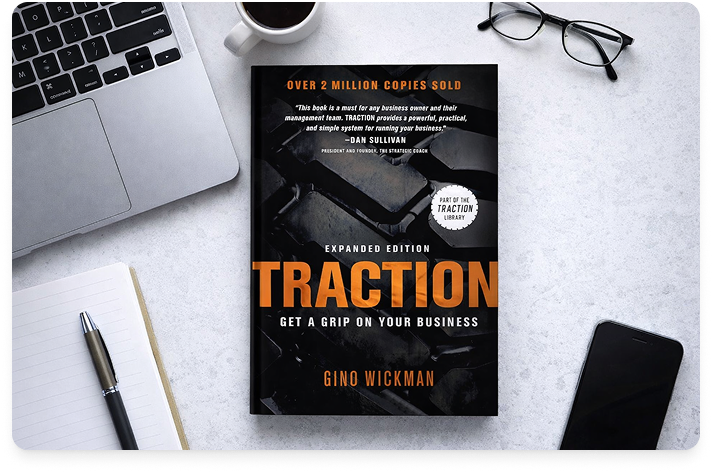
- Frameworks
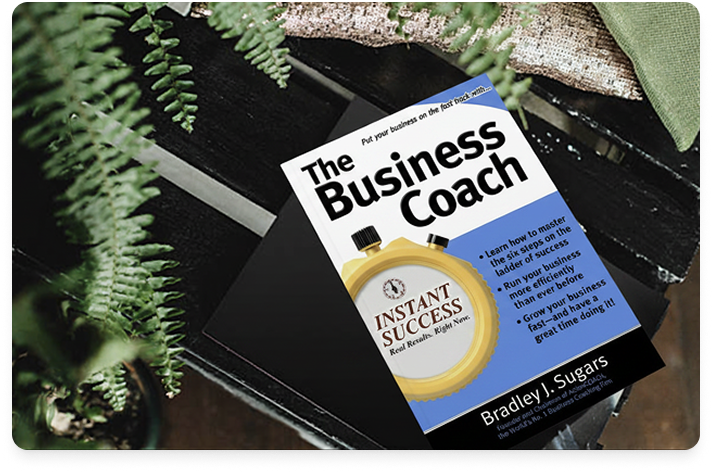
- Frameworks

- Frameworks
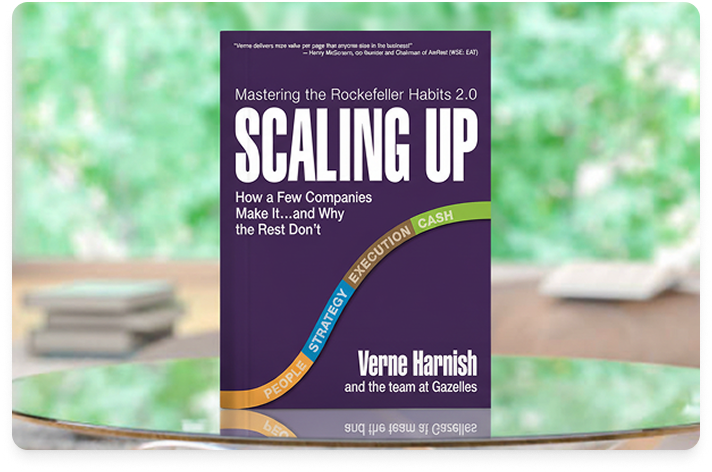
- Frameworks

- Frameworks
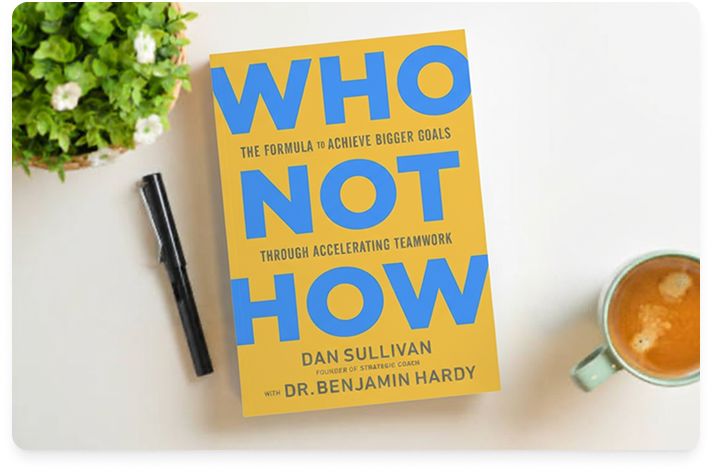
- Frameworks
Start
Start the Right Way
By: Tucker Mathis CEO of FINSYNC and StartToScaleSix Questions Every Founder Should Answer Before Starting a Business
Every year millions of people consider starting a business. Some are driven by the excitement of entrepreneurship. Others see a problem they believe they can solve. Some simply want more independence or control over their future.
Starting a business can be one of the most meaningful journeys a person ever undertakes. It can also be one of the most difficult.
Startup success is never guaranteed. Even great founders with great ideas often struggle. Markets change, competition evolves, and the path forward rarely unfolds exactly as planned.
But while success is never certain, the odds improve dramatically when founders begin with the right questions.

At StartToScale, we believe entrepreneurship begins not with a business plan, but with clarity.
The most successful companies rarely begin with elaborate strategies. They begin with a few fundamental truths that founders understand deeply.
The six questions below help establish that foundation.
If you can answer them honestly and thoughtfully, you dramatically increase the chances that what you start can eventually grow into something meaningful.
1. Are You a Founder or Co-Founder — or Not Quite Ready Yet?
Starting a company should never be taken lightly.
The entrepreneurial journey is demanding. It often requires years of focus, resilience, and continuous learning before meaningful success appears.
Author and researcher Malcolm Gladwell popularized the idea that it takes roughly 10,000 hours to develop mastery in a field. While the exact number is debated, the principle is widely accepted: meaningful expertise requires sustained commitment.
If someone dedicates themselves fully to a craft, those hours can accumulate over five or so years of focused work. But those years are rarely easy. They involve experimentation, mistakes, iteration, and persistence.
The best startup ideas often emerge from accumulated experience
Founders frequently build companies in areas where they already possess:
When someone has already invested thousands of hours understanding a problem space, they often see opportunities others miss. This doesn't guarantee success, but it significantly reduces one of the greatest startup risks: building something you don't understand well enough to execute.
A strong startup idea is always relative to the team building it. An idea that might fail with one team could succeed with another that understands the problem deeply.
Where Startup Ideas Come From
Many great ideas arise organically from experience. But idea generation can also be systematic. Founders often identify opportunities by:

Co-Founder Advantage
Many successful startups begin with co-founders who complement each other's strengths. One founder may understand the product, while another understands the market. One may excel at product design while another drives customer acquisition.
Stay Close to the Customer
Regardless of the industry, early founders must develop direct contact with customers. In the earliest stages founders should personally handle:
Customer support - Sales conversations - Onboarding - User interviews - Product feedback

No survey or report can replace firsthand conversations with the people you're trying to help. Customer understanding is not optional — it is one of the greatest advantages a founder can possess.
Wait Until the Idea Grabs You
Another important signal that you may be ready to start a company is when you encounter a problem you simply cannot stop thinking about.
Other Entrepreneurial Paths
Intrapreneurship
An intrapreneur works within an existing organization to develop new products, services, or business units. Many large companies actively seek employees who can think and operate like founders while benefiting from the resources of an established company.
Franchising
A franchise allows entrepreneurs to operate a proven business model with established branding, systems, and support. While less experimental than a startup, franchising can still provide independence and meaningful business ownership.
Founders should not start companies simply because starting a startup sounds exciting. They start because they are drawn to solving real problems that genuinely matter.
2. Are You Solving a Real Problem in a Meaningful Market That's Growing?
Most successful startups begin with a painful problem. Something customers actively want solved. Something they are already trying to solve — even imperfectly.
Good startup ideas exist where three things intersect:
A meaningful customer problem
A market large enough to matter
A market that is growing
Interestingly, the growth rate of a market is often more important than its current size. A small market growing rapidly can be far more attractive than a large market that has stopped evolving.
Avoid Solutions Searching for Problems
One of the most common startup mistakes is building a solution before confirming the problem. This often happens when founders become excited about a new technology and then search for ways to apply it.
But the same mistake appears in many industries. A talented chef may believe the world needs another restaurant. A developer may want to build the next app. A craftsman may want to launch another product line.
The Critical Question:
Is this solving a problem people actually care about?
Take Small Steps First
Another common mistake is trying to perfect the idea before testing it. In reality, no startup idea is ever perfect at the beginning. The best founders start with small experiments:
Talking to potential customers
Building simple prototypes
Testing willingness to pay
Learning quickly from feedback
You need signals that customers care.
When customers start paying for your solution — and telling others about it — that signal becomes much stronger.
Think About Market Evolution
Markets are constantly changing. Technology shifts. Consumer behavior evolves. Distribution channels emerge and disappear. Companies that fail to anticipate these changes often struggle. Understanding where a market is going — not just where it is today — is critical.
Cautionary Examples:
The Power of Small Starting Points
Many great startup ideas initially look small, strange, or even wrong.
Google looked like just another search engine.
Facebook looked like a small college social network.
Airbnb sounded bizarre — strangers sleeping in your house.
These ideas succeeded because they dominated a small initial market before expanding. The best startups often begin by owning a small monopoly — a narrow use case where they are clearly the best — and then expand outward into larger markets. Avoid Superficial Clones
Distinguish Real Trends From Hype
Not every emerging technology creates a lasting market. Some trends become foundational — like smartphones enabling entire ecosystems of applications. Others fade quickly.
Learning to distinguish meaningful platform shifts from short-lived excitement is a critical entrepreneurial skill.
nce you’ve identified a real problem in a meaningful market, the next question becomes practical:
Can you actually build something people love?
3. Can You Assemble the Resources to Deliver a Great Product?
Nearly every successful company begins the same way:
With something simple and remarkably good.
Simplicity is powerful. It reduces complexity and allows founders to focus on doing one thing exceptionally well.
Start With a Small Group of Customers Who Love It
Early success rarely comes from building something millions of people like. It comes from building something a small group of people absolutely love.
That intense customer love creates:
Create the Smallest Valuable Experience
The goal is not to build everything at once.
Instead, focus on creating the smallest experience that delivers real value.
Even a small group of enthusiastic customers can create momentum that grows over time.
Depth of enthusiasm matters far more than breadth of mild approval.
Every Customer Interaction Matters
In the early stages the entire experience matters:
The product or service itself
Onboarding
Customer support
Communication
How value is explained

Customer Love Comes Before Everything Else
Until customers genuinely love what you built, almost nothing else matters.
Founders should obsess over customer journey, time to value, and long-term value delivered to loyal customers.
This applies to every business — software, retail, manufacturing, services, restaurants, and more.
Start Lean
Another critical principle: start with as little capital as possible. The early challenge is finding a way to deliver meaningful value with minimal resources.
This constraint forces creativity and discipline.
If you can get even one customer to love what you offer with limited resources, you've already solved one of the hardest problems in entrepreneurship.
The degree to which a startup succeeds is often strongly correlated with how much customers love the product.
If a product is so good that customers spontaneously tell their friends about it, the startup has already accomplished most of the work required for long-term success.
Once customers love what you're building, the next step becomes equally important:
building the team that will scale it.
4. Can You Build a Winning Team?
In the beginning, founders build the product.
Eventually, founders build the company.
And building the company means building the team.
Culture Starts With the Founder
In the earliest stage, company culture is simply the character of the founder. As new people join, culture becomes the consistency of the people you recruit.
This makes hiring one of the most important responsibilities a founder has.
Great Teams Create Great Companies
Exceptional companies are built by exceptional teams. Founders should prioritize recruiting people who are:
Talented and capable
Mission-driven
Optimistic and resilient
Eager to take ownership
Many startups offer equity because they want team members who think like owners and share in the long-term success of the company.
Mission Matters
Clear missions improve:

Ambitious visions often attract talented people who want to work on meaningful problems.
Measure What Matters
Early startups should avoid vanity metrics and focus on indicators that reflect real value:
Active customers
Engagement
Retention
Revenue per customer
Referrals
Net promoter score
Constant Improvement
"Without continual growth and progress, words such as improvement, achievement, and success have no meaning."
— Benjamin Franklin
Great teams constantly look for ways to improve — even if many ideas initially fail.
Momentum matters. Learning quickly matters. Adaptation matters.
5. Can You Gain Distribution and Advantages Over Competitors?
Competition is not necessarily a bad thing.
In fact, competition often indicates a healthy market. A complete absence of competitors may simply mean there is no real demand.
What matters is how your company competes. New startups succeed by bringing something meaningfully better:
A superior product
A dramatically better experience
Better timing
Better technology
A more effective business model
Distribution Matters More Than Many Founders Expect
A great product must still reach customers. Successful startups develop effective ways to acquire and retain customers through:
Build Defensible Advantages
Over time, successful companies develop competitive advantages that are difficult to replicate. These can include:
Network effects
Proprietary technology
Scale advantages
Brand strength
Unique partnerships
Operational expertise
The Critical Question:
Why can't someone easily copy what we're doing?
Finally, even the best product and team must confront the ultimate reality of business.
6. Do You Have a Path to Profitable Growth?
For a business to endure, it must eventually become profitable. This doesn't mean profits must appear immediately. Many companies invest heavily in growth early on.
But founders should always have a credible path to profitability.
Start With Value Customers Will Pay For
Your earliest goal is to create a minimum valuable product that solves a real problem well enough that customers pay for it. That initial revenue validates demand and provides the foundation for future, profitable growth.
Understand Unit Economics
Founders must eventually understand the basic economics of their business:
When the lifetime value of customers significantly exceeds the cost to serve them, the business has the potential to scale sustainably.
Grow Thoughtfully
Growth should be intentional and disciplined. As companies grow they must carefully manage:
Capital investment
Hiring
Infrastructure
Customer acquisition costs
Iterate Constantly
No business begins fully optimized. Successful founders continuously improve their product, operations, and strategy as they learn more about customers and markets.
Growth becomes a cycle of:
The Real Reason to Start
Starting a company can be stressful, demanding, and far less glamorous than it appears from the outside.
The best reason to start a business is not status, control, or money.
It's the feeling that you are uniquely compelled to solve an important problem or deliver an experience that truly matters.
The best founders often describe a moment when they realized they simply could not ignore the opportunity in front of them. They couldn't not do it.
That level of conviction matters. It sustains founders through the inevitable difficulties of building something new. It attracts talented teammates who believe in the mission. And it creates the persistence required to turn early experiments into lasting companies.
You Don't Have to Do It Alone
Entrepreneurship may start with an idea, but it rarely succeeds in isolation.
Through StartToScale and the broader ecosystem surrounding it, entrepreneurs can connect with people and organizations that specialize in helping new businesses succeed.
This includes:
Many community organizations offer structured programs where entrepreneurs can:
These resources exist to help founders move from idea to execution with greater clarity and confidence.
Starting a business is one of the most ambitious journeys a person can undertake.
If you're ready to begin, we're here to help — every step of the way.
And when you're ready, StartToScale will help connect you with the people, insights, and resources that can help turn your idea into a thriving business.
Scale
Scale the Right Way
By: Tucker Mathis, CEO of FINSYNC and StartToScaleSix Questions Every Founder Must Answer to Scale a Company That Lasts
Starting a company is an act of creativity and action.
Scaling a company is an act of discipline and leadership.
Many businesses successfully reach their first customers. Some generate early traction and begin to see the possibility of something larger. But moving from a promising startup to a durable company requires a different level of thinking.
Growth introduces complexity:

What worked with five employees may break with twenty.
What worked with twenty may struggle with one hundred.
Scaling is rarely about simply doing more of the same. It requires structure, clarity, and consistent execution.
From Start to Scale
If you've read the Start guide, you'll notice something important.
The earliest stages of building a company revolve around three fundamental questions:
Are the founders uniquely suited to pursue this problem?
Is there a real problem in a meaningful and growing market?
Can the team build something customers genuinely love?
Those questions determine whether a company should exist at all.
But once those foundations begin to take hold — once customers appear, traction begins to build, and the idea starts turning into a real business — the nature of the challenge changes.
The focus gradually shifts from founder and product to organization and execution.
Is this a real opportunity?
Can this organization consistently deliver, grow, and compete at scale?
This transition introduces a new set of priorities:
Building leadership teams
Installing operational systems
Strengthening financial discipline
Developing repeatable growth engines
Creating defensible advantages
The early questions determine whether a company can start.
The next set determines whether it can endure and scale.
The six questions below focus on that next stage of the journey.
1. Do You Have a Clear Vision — and Is Your Team Aligned Around It?
As companies grow, clarity becomes increasingly important.
In the earliest stage, the founder's vision may exist mostly in their own mind. But as the team expands, success depends on whether everyone understands where the company is going and why.
Scaling companies create shared clarity around:
Without this alignment, teams drift. Different departments pursue competing priorities, and execution becomes fragmented.
Great leaders continuously communicate the company's direction and reinforce alignment across the organization.
Vision provides direction
Alignment creates momentum
2. Are You Building Systems That Scale — or Just Solving Problems One at a Time?
Early-stage companies often operate informally. Founders solve problems quickly, decisions are made in the moment, and communication happens organically.
But as companies grow, this approach becomes difficult to sustain.

Scaling organizations develop repeatable systems that guide how the company operates.
These systems help define:
How goals are set and tracked
How decisions are made
How teams communicate
How performance is measured
How problems are addressed
Many successful companies eventually adopt proven operating frameworks that provide structure around leadership, execution, and accountability.
These frameworks help organizations align vision, people, strategy, and financial performance — allowing the company to grow beyond the founder's direct control.
Frameworks don't replace leadership.
They strengthen it.
3. Are You Hiring the Right People — and Empowering Them to Perform?
A company's ability to scale is deeply tied to the quality of its team.
One of the most important transitions founders make is moving from doing everything themselves to building a leadership team capable of driving results.
Scaling organizations prioritize:

Great founders eventually recognize that building the company means building leaders within the company.
The strength of that leadership bench often determines how far the organization can grow. But hiring great people is only part of the equation.
The environment those people operate in — the culture of the company — ultimately determines whether a team performs at a high level or struggles to maintain alignment as the organization grows.
In the early days, company culture is largely a reflection of the founder. As more people join, culture becomes the shared expectations, behaviors, and values that guide how the organization works together.
That culture must be intentional.
Scaling organizations are deliberate about defining:
This ties directly back to the company's vision.
A clear mission attracts people who care deeply about the work being done. When team members believe in the purpose of the organization, they are far more likely to invest their energy, creativity, and commitment into helping it succeed.
Mission creates alignment
Culture creates consistency
Together, they form the foundation for building a winning team.
Culture Is Often a Competitive Advantage
Some of the most successful companies in the world are known not just for their products, but for the cultures that power them.
Chick-fil-A
Has built a reputation around service, care for customers, and leadership development — values reinforced consistently across thousands of locations.
Netflix
Became widely known for its culture of high performance, ownership, and transparency — captured in its widely shared culture deck that has influenced leadership thinking across Silicon Valley and beyond.
In both cases, culture is not an abstract idea. It shapes how decisions are made, how teams operate, and how consistently the company delivers on its promises to customers.
When culture is clear and reinforced, it becomes a powerful advantage.
Grow the Company by Growing the People
Another important mindset for founders is to think about the growth of the company through the growth of its people.
Not simply the number of employees. But how individuals on the team are growing:
Personally
Professionally
Financially
When people feel that their work is helping them become better leaders, stronger professionals, and more capable contributors, they tend to invest more deeply in the mission of the organization.
A culture where people are consistently learning, improving, and expanding their capabilities creates a powerful effect over time.
As individuals grow, the company grows with them.
When a company reaches the point where its people are advancing in meaningful ways — gaining skills, developing leadership ability, and building financial stability — something special begins to take shape.
The organization becomes more than a workplace. It becomes a place where people build careers, develop confidence, and help each other succeed.

Be Intentional About Culture
Culture doesn't emerge by accident. It develops through consistent leadership, thoughtful hiring, and clear expectations.
Founders who want to build enduring companies often spend significant time thinking about the kind of organization they want to create.
That might include defining values, documenting operating principles, and being clear about what the company stands for.
For example, within our own organization we've invested heavily in thinking about culture and leadership expectations. We even developed a detailed internal overview describing the kind of culture we aspire to build and be known for. Some founders find it helpful to write these principles down and share them openly with their teams.
Being intentional about culture early helps ensure that as the company grows, the values and behaviors that define it remain consistent.
Because ultimately, great companies are not only built on strong products or good strategies.
They are built on teams of people who believe in the mission, trust one another, and work together in a culture that helps everyone perform at their best.
And over time, culture becomes something even more powerful.
It becomes the mechanism through which the company executes.
When people understand the mission, trust one another, and share clear expectations for how work gets done, execution becomes more consistent across the organization. Decisions improve, teams collaborate more effectively, and the company moves forward with greater momentum.
Culture creates consistency.
Consistency strengthens execution.
And strong execution is what ultimately allows companies to scale.
Which is why one of the most important jobs of a founder is not just building a product — but building the kind of culture where great people can do their best work together.
4. Do You Have the Financial Discipline to Support Sustainable Growth?
Growth can put tremendous strain on a company's finances.
Revenue may increase, but expenses often rise quickly as teams expand, infrastructure grows, and investments are made in customer acquisition and product development.
Scaling companies develop strong financial discipline around:
Cash flow management
Capital allocation
Operational efficiency
Forecasting and planning
Understanding the basic economics of the business becomes critical.
Leaders must understand:
Companies that scale successfully build financial systems that allow leaders to see risks and opportunities early — long before they become crises.
Growth without financial clarity can undermine even the most promising businesses.

5. Do You Have a Repeatable Growth Engine?
In the early days, growth often comes from experimentation. Founders try different approaches to reaching customers and learning what resonates — and ultimately what customers love enough to tell others about.
Over time, scaling companies discover something incredibly valuable: repeatability.
They begin to understand what consistently drives new customers, stronger engagement, and increasing revenue.
That growth engine might come from:

Once the drivers of growth become clear, companies can begin investing in them deliberately and consistently.
The Flywheel Effect
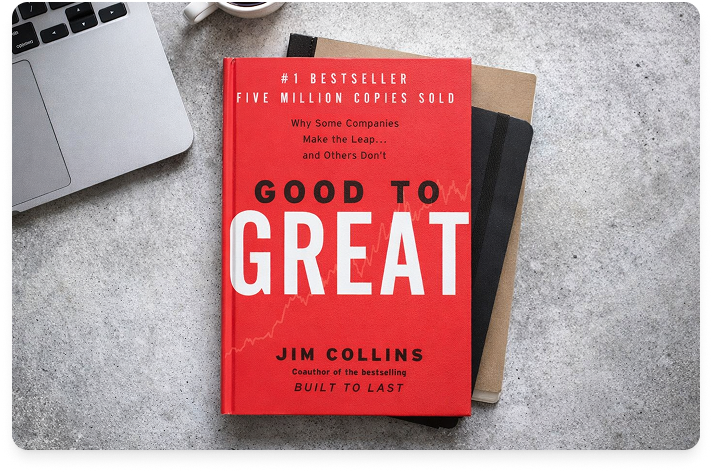
This is where growth begins to resemble what Jim Collins famously described as the Flywheel.
In Good to Great, Collins explains that great companies rarely grow because of a single breakthrough moment. Instead, progress comes from pushing the same strategic wheel again and again — each effort building momentum until growth becomes increasingly powerful and self-reinforcing.
The Flywheel in Motion
At first the flywheel moves slowly.
Each turn of the wheel builds on the previous one.
Over time, the momentum compounds.
When a company understands what truly drives its flywheel — and consistently reinforces those drivers — growth becomes more predictable and sustainable.
Repeatability transforms growth from an experiment into a strategy
Momentum turns small successes into long-term scale
6. Are You Learning Faster Than Your Competition?
Markets evolve quickly:
The companies that scale successfully are those that learn faster than everyone else.
They maintain tight feedback loops between:

They measure the right signals, adapt quickly, and continuously refine their approach.
But learning quickly requires two important disciplines that great companies hold in balance:
Customer Obsession
Relentlessly focused on understanding needs and improving experience
Competitor Awareness
Staying aware to never be caught flat-footed
The best companies are relentlessly focused on their customers — understanding their needs, improving their experience, and innovating alongside them. They listen carefully, observe behavior closely, and continuously look for ways to deliver more value.
At the same time, strong leaders remain aware of what competitors are doing. Not because they want to copy them, but because they never want to be caught flat-footed.
Customers will naturally compare options. When they do, companies should always be able to answer a simple but important question:
Why choose you?
That answer should never be "me too" as in we do that too.
Great companies understand what makes their offering different and valuable, and they can clearly articulate that to the people they serve.
Of course, no company wins or retains every customer. Markets evolve, needs change, and sometimes another solution may simply be a better fit for a particular situation.
But the best organizations approach those moments with honesty and integrity.
When a company consistently acts in the best interest of its customers — even when it doesn't immediately benefit the business — it builds something far more valuable than a single transaction.
It builds trust.
Trust strengthens relationships
Relationships build great brands
Over time, the companies that scale successfully learn that the most enduring growth comes from valuing the relationship over the transaction.
Because when customers trust you, respect your honesty, and feel that you genuinely care about their success, they often return, recommend you to others, and remain connected long after a single purchase or contract ends.
That is how great brands are built.
And it is how great cultures take shape inside companies as well.
Scaling organizations treat learning, improvement, and customer trust as permanent disciplines.
They never assume they've finished learning — because the moment a company stops learning is the moment it begins falling behind.
Scaling Is a Leadership Journey
Scaling a company is one of the most demanding leadership challenges there is.
As organizations grow, the problems become more complex and the consequences of decisions become larger. What worked when the company was small eventually requires stronger structure, clearer execution, and more experienced leadership.
Many of the world's most successful companies recognize that growth is rarely achieved in isolation.
Leaders often rely on experienced advisors, business coaches, and operational frameworks that help them recognize patterns early, strengthen execution, and build systems that support sustainable growth.
Perspective shortens the learning curve
Pattern recognition helps avoid costly mistakes
Experienced guidance helps move faster with confidence
If you're building something meaningful and preparing for the next stage of growth, you don't have to navigate that journey alone.
Through StartToScale, we can help connect you with experienced coaches, framework implementers, advisors, financial partners, and entrepreneurial communities who specialize in helping companies move from early traction to sustained growth.
Because scaling a business isn't just about working harder.
Something went wrong. Please try again.