Escape the Trap of Competition: A Summary of "Zero to One" by Peter Thiel
Stop Picking Unwinnable Fights and Start Finding Your Million-Dollar Niche

Start to Scale
Powered by FINSYNC
Entering a crowded market and battling over razor-thin margins is starting up with a significant disadvantage.
Instead, author and Silicon Valley legend Peter Thiel argues that true progress requires vertical innovation — doing something no one else has ever done and taking the world from zero to one.
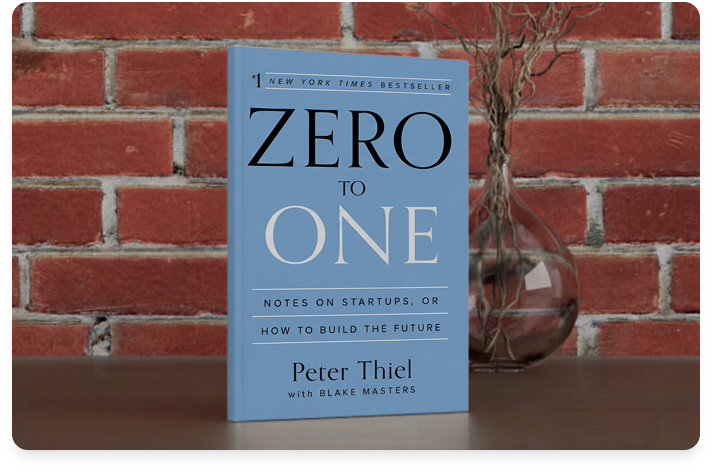
This contrarian philosophy was codified in his book, Zero to One. Thiel, co-founder of PayPal and Palantir, challenges the conventional business wisdom that competition is a healthy ideal. He says that if you want to create and capture lasting value, you must build a creative monopoly rather than yet another undifferentiated business.
This book is a fundamental read because it forces you to abandon the safety of copying existing models and embrace the difficult task of finding a unique idea that gives you market domination.
How to Architect of a Creative Monopoly
Thiel breaks down the characteristics of a durable monopoly into four distinct elements: proprietary technology, network effects, economies of scale, and branding.
While a recognizable brand is highly visible, the foundation of a monopoly relies heavily on proprietary technology. This technology must be at least an order of magnitude better than its closest substitute. Anything less than a 10x improvement will likely be perceived by the market as a marginal update and fail to gain traction.
To build this kind of company, you must choose your initial market carefully, starting small and monopolizing. Chasing a tiny percentage of a massive, trillion-dollar industry guarantees fierce competition and zero profits. You must instead identify a specific group of people who are currently served by few or no competitors.
Scaling successfully requires a thoughtful and deliberate expansion plan:
- Dominate completely: Capture your initial small niche to establish a foothold and reliable cash flow before looking elsewhere.
- Expand to adjacencies: Move gradually into related and slightly broader markets, much like Amazon did when expanding from books to CDs and software.
- Avoid disruption: Ignore the urge to prematurely challenge massive incumbents, as picking unwinnable fights drains resources.
Finally, Thiel insists that distribution is just as critical as the product itself. You can build a 10x better product, but without an effective strategy to sell and deliver it, the business will ultimately fold
What Experts Say About Zero to One
“...Peter Thiel's new book, Zero to One, shines like a laser beam. Yes, this is a self-help book for entrepreneurs, bursting with bromides and sunny confidence about the future that only start-ups can build. But much more than that, it's also a lucid and profound articulation of capitalism and success in the 21st century economy.”
The StartToScale Takeaway
Trying to appeal to a broad audience that’s already being serviced by giant brand names is a sure path to diluting your capital. Zero to One shows that scaling is actually an exercise in extreme focus and intentional market sequencing. The easiest way to fail is to aim for a large market on day one. Your greatest strategic advantage is pairing a radically superior product with a tiny market that everyone else has ignored to create a monopoly by default.
Translating Zero to One into the StartToScale framework
Start ➡️ Identify a hidden secret and build proprietary technology for a hyper-specific niche.
Build ➡️ Monopolize that initial small market to establish a foundation of loyal early adopters.
Grow ➡️ Develop a dedicated distribution channel to drive customer acquisition efficiently.
Scale ➡️ Expand methodically into adjacent markets until you achieve lasting monopoly status.
Action Plan: 3 Ways to Apply Zero to One This Week
- Evaluate your competitive advantage. Review your core product and ensure it offers a transparent 10x improvement over the closest alternative, rather than just an incremental feature update.
- Narrow your target audience. Look at your current marketing efforts and intentionally restrict your focus to a much smaller, highly specific subset of customers where you can dominate.
- Audit your distribution channels. Identify the single most effective sales or distribution method for your specific price point and concentrate all your resources on mastering that one channel.