The Entrepreneur’s Greatness Test: A Summary of "The Hard Thing About Hard Things" by Ben Horowitz
How to Deal With Your Toughest Startup Challenges

Start to Scale
Powered by FINSYNC
Starting a business offers immense rewards, but even the most resilient entrepreneurs need pragmatic advice for facing stressful problems that lack clear-cut solutions.
In The Hard Thing About Hard Things, author Ben Horowitz acknowledges that scaling a startup is fraught with difficult choices, existential threats, and demoralizing setbacks. Drawing from his experience steering companies through the dot-com crash, he provides practical guidance on the unglamorous, isolating aspects of leadership.
He focuses on “the Struggle,” which is the grueling time when your startup vision collides with the grind of running a business, from cash flow problems and macroeconomic issues to plummeting employee morale and competitors going to market first.
StartToScale finds The Hard Thing About Hard Things a critical text for founders because Horowitz doesn’t sugarcoat the truth. Being a leader is difficult and it takes actionable frameworks to make the best move when there are no good moves.
Core takeaway: Building a startup isn’t just about executing your ideal plan, but maintaining the courage to make difficult decisions when there are no easy answers.
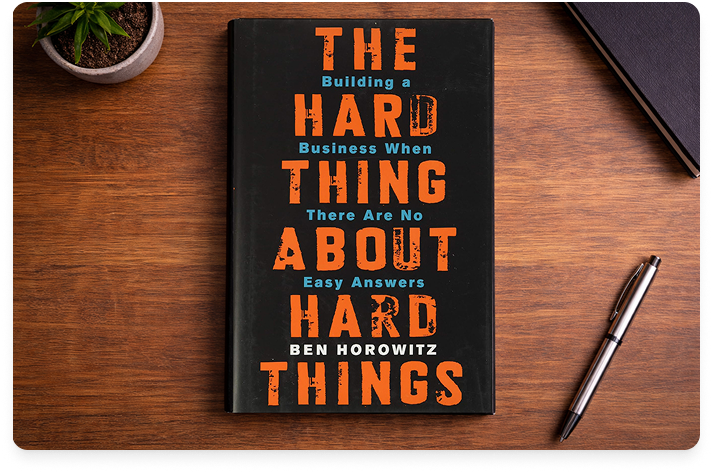
How the Peacetime/Wartime Framework Works
The Peacetime/Wartime methodology fundamentally shifts how leaders operate based on the company’s current environment. Peacetime is where you want to be — a large advantage in a growing market, the ability to focus on expanding opportunities, and the resources to pursue innovative ideas. Wartime is where many startups find themselves: fending off an imminent existential threat, such as fierce competition, a cash-flow crisis, or macroeconomic collapse.
A wartime CEO can’t afford consensus-building or deviations from the plan; they must demand strict adherence to a singular mission for survival. This framework helps founders recognize that management techniques are not universally applicable. A practice that fosters innovation during peacetime can be fatal during wartime. Understanding which environment you are in dictates how you should lead, communicate, and execute to keep your startup alive.
Other important concepts from The Hard Thing About Hard Things include:
-
The struggle. This is the startup abyss where problem after problem occurs. Greatness emerges by not wallowing in your mistakes, sharing your burdens to bring more brains to the problem, and finding the right strategic move to make.
- Lead bullets over silver bullets. In business, there is rarely a magical “silver bullet” to fix a severe competitive disadvantage. Instead, you must rely on “lead bullets”: doing the hard work to build a better product.
- Management debt. Making expedient, short-term management decisions — like avoiding tough feedback or putting two people in charge of one role — create expensive, long-term organizational problems that Horowitz calls management debt. And like all debt, you’ll eventually have to deal with it.
- People, products, and profits in that order. Taking care of your people by making your company a good place to work is an essential priority. If you fail to take care of the people, the products and profits will not matter.
What the Experts Say About The Hard Thing About Hard Things
“This book — basically a series of guidelines for CEOs and building a business — is not some fluffy management tome written by a theoretical management consultant with no personal concept of what brutally hard decisions are like. This is front-line reporting from a CEO who has gone to war….”
The StartToScale Takeaway
The Hard Thing About Hard Things is a survival guide for dealing with crises and chaos. But from our perspective, there’s an even more important takeaway: This book demonstrates that a founder’s primary job is building and protecting trust.
While the stories Horowitz shares focus on near-bankruptcies and brutal layoffs, the underlying mechanics show that sustainable growth is impossible if your team doesn’t trust you. Whether it’s maintaining strict processes for promotions to avoid politics or having the courage to tell your staff the unvarnished truth, Horowitz illustrates that high-growth companies are built on a foundation of trust.
Equally important, Horowitz demonstrates, is building your own network of trusted advisors. Just like your employees need your honesty even when reality is harsh, you need people to provide hard truths and tough advice when your company’s life is on the line.
Translating The Hard Thing About Hard Things Into the SmartToScale Framework
Start ➡️ Embrace “The Struggle” and define your story, context, and strategy.
Build ➡️ Focus on “lead bullets” by building a truly superior product rather than looking for easy shortcuts.
Grow ➡️ Implement management training and strict communication processes to avoid accumulating “management debt.”
Scale ➡️ Adapt leadership styles (Peacetime vs. Wartime) to match your market reality and scale your organizational design carefully.
Action Plan: Start Facing Tough Situations This Week
- Stop protecting your team from reality. Be transparent about some difficult news to build organizational trust and to leverage their problem-solving power.
- Pinpoint and resolve a piece of “management debt.” This may be an unaddressed performance issue or a poorly defined role.
- Identify where you’re seeking “silver-bullet” fixes. Instead fire a lead bullet by starting the hard work required to fix your core product.