The Idea Meritocracy: A Summary of "Principles" by Ray Dalio
Build Deep Trust and Methodical Decision-Making Processes

Start to Scale
Powered by FINSYNC
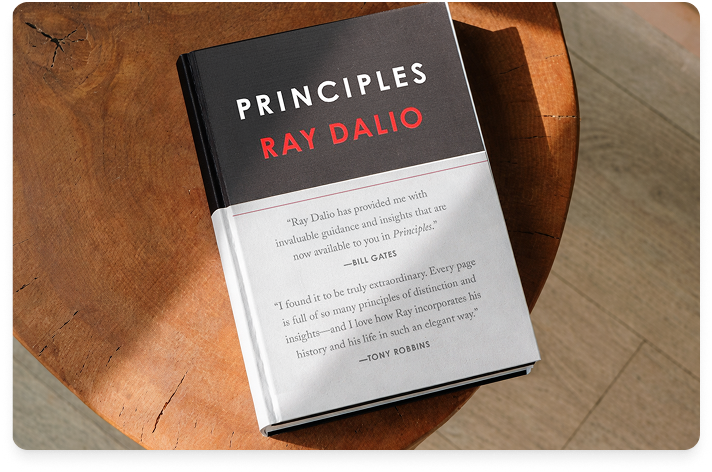
Ray Dalio started Bridgewater Associates in his apartment and grew it into the world’s largest hedge fund. In his book Principles, he codifies and shares the rules that drove his company’s phenomenal growth so that every entrepreneur can run their startup like a machine.
In Principles, Ray Dalio explains how to engineer your culture so that your business evolves by learning from failures, accurately diagnosing root causes, and weighing decisions based on expertise. He advocates for an “idea meritocracy” driven by radical truth and transparency, demonstrating how growth-minded leaders allow the best thinking to rise to the top.
Principles teaches founders and leaders how to build an organization with impeccable trust and decision-making processes. Like The Hard Thing About Hard Things, you’ll find some tough love in Principles that will enable you to face mistakes, build the right team, and strengthen your business.
Core takeaway: To scale effectively, build a machine that systematically extracts the best decisions from your team, rather than relying on just your perspective.
Ray Dalio's Five-Step Plan and Idea Meritocracy
To achieve your most ambitious goals, you must treat progress as a continuous, repeatable loop. (1) Set clear goals. As you pursue them, you will (2) inevitably hit problems. Instead of tolerating those roadblocks or applying quick fixes, (3) pause to diagnose their root causes. Once you understand exactly what is broken in your processes or people, (4) design a practical plan to get around the issue. Finally, (5) execute the tasks necessary to push that design through to results.
Critical to this loop working is creating an idea meritocracy. This upends the traditional top-down dynamic, where a boss gives orders and everyone else follows, and instead taps into your team’s collective brainpower.
Start a foundation of radical truth and transparency. By openly sharing your own challenges and encouraging push-back, you make it safe for others to surface problems, share their honest thoughts, and openly disagree. The goal of these debates is to test each other’s logic and discover the best answers together.
This builds a culture where problems are solved early and the smartest solutions naturally rise to the top. You’ll protect your organization from the ego and blind spots that trip up many founders, and create opportunities from failures. Ultimately, this keeps your team deeply connected to your mission and moving forward together.
What the Experts Say About Principles
“I highly recommend [Principles]. It has already changed how I think about making decisions in my life and in my business, how I think about managing, how I think about managing, how I think about communications between teams. I could go on and on and on.”
The StartToScale Takeaway
Given Dalio’s background, Principles can be seen as a manual for building hedge funds and managing investments. However, its most valuable lessons focus on overcoming the human ego to build scalable systems. The process demands the discipline to prioritize what is true over the comfort of being right.
Founders face obvious external threats like tight capital or shifting markets, but their own wiring often poses a more significant risk. The human brain is conditioned to seek comfort, reject criticism, and hide weaknesses.
Principles inspires you to accept your imperfections and act as an objective organizational engineer, even if that means firing yourself from tasks you like but don’t perform well. It means staring failure in the face to learn what went wrong, and then redesigning your systems to avoid the error in the future.
Translating Principles Into the SmartToScale Framework
Start ➡️ Define your goals and identify the harsh realities standing in your way.
Build ➡️ Assemble a team of independent thinkers and foster a culture of radical transparency.
Grow ➡️ Implement the 5-Step Process to continuously loop from failure to reflection to progress.
Scale ➡️ Translate your principles into repeatable systems, and learn to make believability-weighted decisions.
Action Plan: 3 Steps to Put Principles Into Effect This Week
- Write down one major weakness. Look for one that chronically stands in the way of your success, and share it with a trusted mentor or peer who can hold you accountable.
- Identify a recent failure. Drill down to its root cause by asking “why” until you pinpoint the specific flaw in a person, a team, or the design.
- Implement an “Issue Log.” Everyone on your immediate team must record mistakes publicly so that problems are surfaced instead of hidden.