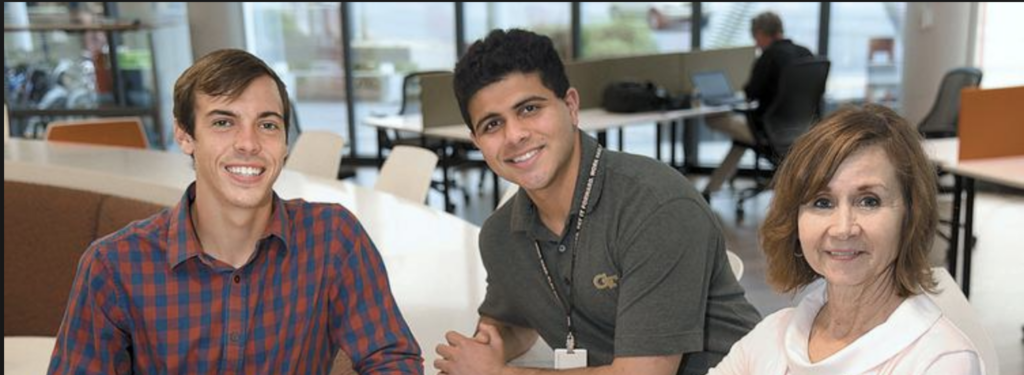
Spotlight on Small Business Owners: Galen Dalrymple, Polymath

Finding the balance between creativity and commerce is one of Galen Dalrymple’s biggest jobs at Polymath, a creative agency with a focus on nonprofits where he works with his son. 

By FINSYNC

From decades working in business management at big tech companies to a stint as a pastor leading a church in Northern California, Galen Dalrymple’s path to Polymath has been a long and winding road. As a full-service creative agency, Polymath provides digital marketing, video, content and branding services to amplify the story and strategy of nonprofits and other businesses.

Galen is the COO at Polymath, where he’s in the unique position of working with his son, founder Tim Dalrymple. The yin to his son’s yang, the left brain to his son’s right, Galen talked to us about the importance of balancing art and commerce when running a small business anchored in creativity — and how FINSYNC has helped Polymath master project cost accounting.

Spotlight on Small Business Owners: Galen Dalrymple, Polymath 1

What makes Polymath different than other creative agencies out there?


We work with a lot of nonprofits, which is also one of our challenges. We love to work with organizations that are doing morally significant work in the world. They have a cause and it’s a good cause and they believe in it. They need to tell their stories, and we think of ourselves as their storytellers. 

We work hard to give them a really great product on margins that can get pretty thin at times just because we believe in what they’re doing. It’s fulfilling work, and you feel like you’re making a difference and helping them make a difference, but it creates some unique challenges for us. We have to watch our nickels and dimes.

What do you like best about working for a small business?

Getting to know the people so well, not just the employees and the contractors but the clients. The depth of the interpersonal relationship in a small business is just really fulfilling. It’s knowing the clients, knowing the people that I work with really well, and we have a great time together.

I’ve worked in companies of several thousand people and managed budgets for a 55 million dollar department. Sometimes big businesses can seem to be nameless and faceless places. We’re more like a family, really, and not a corporation or a business.


What’s the biggest challenge of running a creative agency?

Creatives generally don’t think in terms of dollars and cents. They think in terms of beauty and aesthetics and enhanced functionality. And they want to design and deliver the most elegant thing that they can think of in their creative brains. Getting them to think about profits isn’t easy. 

It’s the nature of creatives to take whatever time it requires to produce an exquisite product, and I appreciate that about them — wanting to give clients the very best thing we can, and we try to do that. 

But when you can show them in terms of hours and dollars how it affects the project and company overall, and by extension their own wallet, it helps them to see that there’s a happy middle ground somewhere that you have to hit.

As a small business, has Polymath faced any other challenges? 

We’re small in terms of personnel and revenue, but small businesses face the same kind of financial decision-making challenges as the big companies do. We’ve got a smaller margin for error. A really bad decision can sink a small company faster than a bad decision can sink a big one.

We were using various tools and none of them talked to each other. We were using QuickBooks Online for our receivables. Later, we added the payables part to it, but it wasn’t connected to payroll, nor was it connected to time tracking, nor to our project management data in Excel for project cost accounting. 

Our time tracking vendor didn’t connect to QuickBooks. We couldn’t really have a project cost accounting solution other than Excel spreadsheets, so I was spending a lot of time trying to get the data we needed from one tool and then patch summary information to other tools and make sense out of it all. It was very costly and very burdensome. 

What made Polymath start using FINSYNC?

I knew we had to have a better sense of where we stood as a company. FINSYNC pulls all the data together so I can make sense out of things. It was the only platform we found that did everything we wanted. 

QuickBooks can do payables, payroll, receivables, and general ledger kind of stuff. However, the project cost accounting was virtually non-existent. Time tracking didn’t exist at that point either. Our accountant was a certified QuickBooks professional, but he couldn’t figure out how to use QuickBooks to get what we wanted.

The only platform that really seemed like it did project cost accounting well in a way that made sense to me was FINSYNC.

How has FINSYNC helped Polymath with project cost accounting?

Everything we do is pretty much on a project basis. By having the time tracking built into FINSYNC that automatically updates costs and projects, and being able to track expenses, I can go in at a moment’s notice on any project and see what our budget for the project was. I can see how much we spent in labor and how much we’ve spent in expenses and what it looks like our projection is going to be. 

And we use that historical data on future projects. Having all that information in FINSYNC, it’s just a matter of running a report and you’ve got that information. We use that to price out future projects so that future projects are more profitable than past ones. Having the information in FINSYNC that we can pull out to make better decisions has the biggest impact on us in terms of cash flow.

Any advice for small businesses out there?

In small business, you still need to sweat the details. It might seem like a dollar or two here and there, and that might not seem like much, but it all adds up and small businesses don’t have the capital reserves as a general rule to be frivolous. 

Getting the tools that will give you the instantaneous information that you need in a way that’s easy to consume and understand is really important. I don’t know how a small business can operate without actionable intelligence anymore. I don’t know how any business can.

Many times, it can be a tool that you don’t have that can submarine your ship. Many small businesses don’t have project cost accounting, and I don’t know how they make decisions without it. At best, you’re guessing. 

Denied for a Small Business Loan? Consider Alternative Lenders

What do restaurants, auto parts stores, and essentially all businesses have in common? They can’t survive for long without some combination of cash or financing.


A significant lapse in cash flow, for example, could jeopardize a restaurant’s ability to buy the ingredients it needs to serve the dinner crowd. Retailers may be able to stock some of their shelves on a consignment basis, but they still need to fund their payroll, pay rent, cover operating expenses, or make more ambitious moves, like opening up new locations.


Cash flow can fluctuate unpredictably, especially for startups and small businesses, which is why many small firms rely on credit cards and business loans to keep their doors open.


Loans backed by the Small Business Administration can offer attractive interest rates, but that won’t help if you don’t qualify. Meeting the requirements for a conventional business loan from a traditional lender can be difficult, especially if your business is just starting out or you have a so-so credit history.


The Decline of Small Business Lending


Traditional small business lending contracted sharply following the U.S. financial crisis in 2008. It has been slow to return to pre-crisis levels. Small businesses still find it difficult to get financing from traditional lenders, partly because many community lenders — traditionally a key source of small business financing — shuttered after the crisis.


Nearly 20% of small businesses report being denied credit, according to a survey by the Kauffman Foundation


Those business owners who get approved for a loan or line of credit often don’t receive the full amount that they were seeking. More than half of small businesses that applied last year for a loan of $250,000 or less received a smaller amount, according to the Federal Reserve. 


The typical reasons for being denied financing are low credit scores, too much debt, not enough collateral, insufficient credit history, and weak business performance.


An Attractive Alternative   


Small business owners who have been denied loans from traditional sources may have better luck getting financing from alternative lenders. Many have emerged in the last decade.    


These non-bank, online lending companies offer individuals or small business owners options with less stringent requirements. Many do not require collateral.


These lenders are a big factor in why the number of small businesses that say they’re able to access the capital they need has been rising in recent years, according to the National Small Business Association.   


Business applications to online lending companies have been increasing. Some 32% of applicants turned to online lending in 2018, up from 24% a year earlier, according to the Federal Reserve.   


The U.S. market for alternative business loans is expected to hit $350 billion by 2025, according to research from Balboa Capital.


Easier To Qualify   


Applying for a conventional business loan typically requires firms to have several requirements. Such as a good credit score, providing collateral, and presenting their business plan. In addition to turning over all manner of financial records. Including tax returns and bank statements.    


Alternative lending companies don’t always need to see financial statements and will accept average credit scores. They’re also more likely than traditional lenders to lend smaller amounts. Another perk: Their online application process tends to be faster and easier.


That’s one reason 54% of businesses with riskier credit profiles are more likely to apply to an online lending company than a small bank, according to the Federal Reserve.   


Some Caution Required   


Getting approved for financing by an alternative lending company may be easier, especially if your credit score isn’t stellar. Business owners must weigh that against the possibility they may have to pay higher interest rates and loan fees. Check out this blog for everything you should know about your business credit score.


Many alternative lenders charge significantly higher interest. Consider that annual percentage rates, or APRs, from banks and credit unions, range from about 4% to 13%. Loans from online loan companies can run between 7% to more than 100%. That is depending on the risk, according to financial data firm ValuePenguin.


One reason for the higher APRs is online lenders’ financing terms tend to include sharply higher fees for loan processing.    


Alternative loans can be a lifeline for your business during hard times. Or a supplement to more traditional sources of financing that have fallen short of your needs. But always consider the cost-benefit ratio, especially if the alternative financing being offered is too expensive.    


To ensure you’re getting the best rates available, check out FINSYNC’s lending network. Businesses that use FINSYNC’s integrated accounting and cash flow management software can easily apply for a loan free of charge. Then, immediately receive offers with competitive rates from multiple alternative lenders that are ready to extend their financing. Learn how to apply for business financing with FINSYNC.


How FINSYNC Can Help


FINSYNC allows you to run your business on One Platform. You can send and receive payments, process payroll, automate accounting, and manage cash flow. To learn more about how we can help your business start, scale, and succeed, contact us today.

Spotlight on Small Business: Diane Bloodworth, Competitive Sports Analysis

Diane Bloodworth shares how her innate entrepreneurship, knack for data and passion for sports led her on a small business journey that was worth every twist and turn.

By FINSYNC

For Diane Bloodworth, entrepreneurship runs in the family. Even as a ten-year-old, this little girl from Flintstone, Georgia stepped up to the plate to help run her family’s grocery store, at one point even taking over for an entire season, but Diane always had her sights set on bigger things.

After working her way up the corporate ladder, Diane decided she wanted to create her own path. It hasn’t always been the easiest road to navigate, but she landed right where she belongs: running her own business. 

Diane combined her technology and data expertise with her passion for football to found Competitive Sports Analysis, a platform to help college athletic coaches recruit the best possible talent. 

“It’s been a pretty long journey to get to this point, which makes it worthwhile, when things start to move and happen,” she explains. “It’s very rewarding, but it has been quite the journey.”

Diane spoke with us about the challenges and rewards of being a small business owner, and how FINSYNC has made sure she’s always scoring touchdowns. 

Spotlight on Small Business: Diane Bloodworth, Competitive Sports Analysis

What are some basic challenges you think emerging entrepreneurs face?

I think anybody that starts a business is going to face challenges. That’s just the nature of entrepreneurship. But you know, when you’re going into a new or evolving market, I think you face challenges with timing. Is your target market ready for the type of capabilities that you can provide? I think a few years ago the answer was no. Now that’s turning to yes. So, I think timing can be challenging.

Do you have any advice for small business owners? 

You need to be very passionate about what you do, but you also have to be willing to pivot, because sometimes you start doing something and you’re so determined, you don’t realize that you might need to take a step back and tweak or change. You’ve got to keep a certain openness to improving the way you’re doing things to really be successful. So I’m all about perseverance. I’m all about passion, but don’t forget that you might need to pivot. 

What’s your favorite part of your job?

When a coach says, “This is great, this helped me find a recruit that’s really going to work out.” Or when a recruit says, “Thank you, I’m going to have a better chance of playing at the next level.” That just makes my day. It makes it worthwhile.

The whole recruiting system is just so broken and there are a lot of recruits that don’t even get a look because their high school coach may not know the right college coaches or their parents don’t know the recruiting process, which is not that unusual. A lot of these recruits are overlooked and don’t have an opportunity. I grew up in a rural area and I think some of those kids get overlooked.

How has FINSYNC helped you when it’s come to running your business?

My least favorite thing to do is accounting and bookkeeping, to be honest with you. FINSYNC is awesome, and I also love being able to work with another startup company in Atlanta. I think it’s great when startups can support each other.

I’ve used other systems and bookkeepers and all kinds of things, and when I hired a bookkeeper it was kind of costly and then she had to ask me everything anyway because I knew the business. FINSYNC allows the person who knows the business to go in and work through these entries very easily.

Spotlight on Small Business: Diane Bloodworth, Competitive Sports Analysis 2

How has FINSYNC helped with efficiency? 

They’ve made my business more efficient. They’ve made my time more efficient. Accounting and bookkeeping is something that’s very important to the business, but I don’t like spending a lot of time on it. So it’s helped make my time, and therefore the business, more efficient.

They really have just made my accounting and bookkeeping life so much easier, especially with payroll. I have a lot of hourly interns on payroll right now, so it just makes my life so much easier. I’m not an accounting person, and I find the system really easy to use. I’m very grateful for them. 

Spotlight on Small Business Owners: Andy Rostad, Media Beyond

Andy Rostad and Media Beyond are on a mission to blend strategy and design to create powerful content for their clients.

By FINSYNC

After graduating from the University of Wisconsin, Andy worked for nearly a decade on The Oprah Winfrey Show and Harpo Productions. He now uses that experience as the Executive Producer and Audio-Visual Alchemist at Media Beyond to help his clients tell a compelling story that fits their content strategy.

Spotlight on Small Business Owners: Andy Rostad, Media Beyond

What inspired you to start Media Beyond?

My partners and I worked at the Oprah Winfrey Show. When she decided to sunset the program we had visions of becoming the next great television content creators. We realized that there was a greater opportunity to bring storytelling to business than to make more reality TV.

The biggest part of the journey for us has been taking the skills and talents that we have and translating them to a value proposition that business people understand. It goes from how can I elicit emotion for an audience to how can I elicit action for a consumer. 

Along the way you’ve got to figure out how to do several things. Such as, pay your bills, do your taxes, track your accounts receivable, accounts payable, prospecting, project management. Also all the other stuff that when you’re part of a big enterprise, you don’t necessarily have to get your hands dirty with. 

What were some of the challenges that you faced as a start-up?

Coming into the marketplace and not realizing that not everybody knew the things that we knew. It’s like being experts in our field but always being surrounded by senior executives. It was difficult to appreciate the fact that we would be pitching services or ideas that couldn’t easily be understood by people who weren’t deep in the industry. 

The Dunning-Kruger effect is this idea that you assume that everybody knows what you know. So there were a lot of early missed opportunities to slow down and be more deliberate and more helpful in our messaging.

The flip side of assuming that everybody knows what you know is trying so hard to prove that you know something special. I think in the early days a lot of companies make the mistake of trying to justify their existence. Instead of trying to be helpful.

What’s been the best part of starting a small business? 

The best part of having so much to do is getting to do so much. When you are contributing to a large enterprise, sometimes you just have to repeat the same function over and over again. While there’s a certain pride one can take in being dependable and repeating the same task over and over again, we’ve enjoyed a variety of projects. 

Moving through many different roles, getting to bring to bear our fundamental acumen in creative problem solving and idea generation, and getting to apply that across lots of different media has been great. We’ve also had the opportunity to work with a range of clients, from gigantic companies to fellow startups. 

If you could go back and do one thing differently, what would it be?

There is a lot of opportunity left on the table when trying to take something from maybe 80% to 90%. The amount of effort required to get an idea to perfection is infinite, right? So you can’t have a perfect anything. The closer you try to get to perfection, the greater the diminishment of the returns. There’s a saying in the filmmaking community that movies don’t get finished — they escape.

Early on I think we could have been more effective for our clients by emphasizing speed to market and the idea of testing and iterating versus making something that is unimpeachably, uncritically perfect. That’s not to say that there’s anything sloppy about what we do but there is something to be said for letting the marketplace determine what’s good rather than one’s own standards. Your audience will tell you what you’re doing well.

What prompted Media Beyond to start using FINSYNC?

We were using QuickBooks because that’s what our accountant had asked us to use, and I was looking for more cost-effective alternatives. FINSYNC had everything that I wanted at a much more attractive price point. 

Plus, they were much more responsive to inquiries, really friendly in the onboarding process and seemed much more concerned with our success and happiness than with just signing us up. The fact that there was a personalized onboarding process speaks directly to the difference between FINSYNC and the gigantic companies.

Has FINSYNC helped Media Beyond overcome any specific challenges?

The best one was I used to have 30 vendors. Some of whom did not participate in our digital ACH wire transfer program. They wanted paper checks. In order to create a paper check in my old software, I would have to buy special printable paper. Then, line those up with our printer and send them through, and there would be misalignments and duplicate check numbers. It was just a nightmare. 

When I found FINSYNC, they said you can send somebody an email, and they can elect whether or not to get a paper check, and we’ll handle that for you for a trivial cost. That saved me hours of headaches and let me focus on my business. That’s just been the FINSYNC way. We don’t have a ton of complex needs, but whatever I need, I can do quickly and get back to creating content. 

What are the biggest benefits Media Beyond has experienced using FINSYNC?

One of the things that was really neat was being introduced to the idea of financing and getting a chance to participate in the early days of initiatives that they’re testing. FINSYNC is always trying out new things. Whether it’s in-app access to bridge loans or inviting members to participate in a loyalty program. 

That chance to participate and see a company testing and trying new features and giving feedback that I know is considered is a real plus. It helps me think entrepreneurially to see what this innovative company is also doing. Also, being able to borrow against future invoices is great and painless. 

The idea of adding employees with FINSYNC and having to onboard new people doesn’t cause me any concern. FINSYNC is really easy to use. I know that if I all of a sudden have to add a new employee or train up a new administrator, it’s not going to be a weeks or months-long process. It’s going to be an hours and days process. 

If we added a slew of new employees, they would be able to enter and track their time. We’d get everybody paid and taxed just as seamlessly as we do with our small team now. I know that there’s room to grow and that it’s easy.

Spotlight on Small Business Owners: Erik Fogg, ProdPerfect

Erik Fogg is a startup veteran. A graduate of MIT. A published author. And one of the founders of ProdPerfect, a Boston-based startup that builds automated end-to-end quality assurance (QA) testing for web applications.

Unlike the traditional QA process, ProdPerfect leverages live user data (rather than educated guesses) to determine what tests to write and maintain. And therein lies the disruption.

Fresh out of MIT, Erik started his career fixing factories across North America as an operations consultant. From there, he was brought into HelmetHub, a helmet rental system for bike share programs. It was there that he met Dan Widing, who he hired to be HelmetHub’s lead software engineer.

The two have been best friends ever since. Six years into their friendship, the duo traveled to Poland together. Erik had no idea what Dan was cooking up until somewhere between four and six vodkas in, Dan turned to Erik and said, “So, I have this idea.” And ProdPerfect was born.


What inspired you to start ProdPerfect?

We got started because we realized that in the world of web development and software development outsourcing, there have been a lot of great advancements with data and analytics that have helped build better products, but quality assurance had been left behind.

QA had always been this redheaded stepchild. Mark Zuckerberg famously said, “Let’s move fast and break stuff.” QA was always an afterthought. QA didn’t have the resources it needed to be good at its job. And because it wasn’t good at its job, it wasn’t sexy.

A lot of the advancements in technology that have been affecting other areas of web development could be applied to QA. What we want to do with ProdPerfect is bring data-driven decision-making to quality assurance.


Shot of a young woman using a digital tablet while working on a farm


How is ProdPerfect’s approach different than traditional QA testing?

The biggest problem in the quality assurance of web applications is that people don’t know what to test. We’re taking the user traffic from the current application to tell you how your users are using your application. Let’s test the things they’re trying to do to make sure that those always work.

And that’s what ProdPerfect does. It takes the data from how people are using the application and writes tests that reflect it. So our customers are confident that whenever they ship code (make an update), they haven’t broken something about their application that’s important to their users.


What’s the biggest challenge ProdPerfect has faced as a startup?

The biggest challenge for us is that the product we’ve built is fundamentally disruptive. ProdPerfect is not a better mousetrap. We’re going to people who have spent the past 20 years doing things a certain way and telling them: You need to let go of having a feeling of control over what gets tested because machines using data are going to make better decisions than you.

We’re asking them to take this big leap into the future, into the unknown, where they’re not personally in control anymore. A lot of people said nobody’s ever going to sign up for this because of the sales challenge. They were wrong, but it was hard.


Has growing so fast been difficult?

We had our first sale four months into the business with three people. It was this recurring revenue sale, and we very quickly had to get some sort of financial control over our business. We had to understand where we were spending our money.

FINSYNC has helped us create a level of predictability around what we’re spending and taking in, and what we’re likely to spend and take in, so that we can make budget decisions in order to keep the pace that we’ve been keeping.

That’s been mission-critical for us. I need to be able to report what our revenue looks like, and we need to be able to raise money on this.


How does FINSYNC help you run ProdPerfect?

FINSYNC helps with the centralization of everything. The platform can do everything I need as far as paying people and taking money in, and then it knows where all that money is and where it’s gone. And I can print a report on it, which is great.

We don’t have anyone who’s going to sit there with a spreadsheet and do that all day. There are only three of us, and two of us are trying to build a product. That’s one of the biggest challenges that FINSYNC has helped us solve. I don’t have to do the work, and I don’t have to hire someone.

Everything is in one place, and we’re able to tack on FINSYNC’s bookkeeping concierge. At the end of the month, I can go look at my books and know how we’re doing with the budget. In fact, I can look week to week and know how we’re doing with the budget. And I can make decisions on it with a short amount of time and a very tight level of data.


Has ProdPerfect had trouble accessing capital?

We ended up raising a substantial equity round, so we don’t have cash flow issues right now. But knowing that we can get access to working capital from our future invoices through FINSYNC helps me sleep at night.

We’re in a SaaS business. And the SaaS curse is that you throw all this money at bringing on customers, you have this cost to acquire a customer, and then there’s a time period for it to pay off. Because of that process,s there’s normally a fundamental limit to how quickly you can work because of your working capital.

With FINSYNC, we can get a credit line with an extremely competitive rate on our invoices. With the knowledge of our customer acquisition costs and a history of revenue generation, FINSYNC provides guidance into our future revenue, allowing us access to capital.

The working capital crunch that limited growth — we just strategically eliminated that problem. That problem is gone. And it will never exist for us again.


Is there anything you would do differently if you could go back?

Yes. One thing that took us way too long to do was figure out what channels were bringing us the most customers. We spent a ton of money on customer acquisition channels that weren’t working.

And all I needed to do was spend four hours, which is a terrifying amount of time in a day. But it’s a one-time four hours to step back and do the math. Let’s see where these people are coming from, who’s closing, and who’s actually turning revenue for us. And we found that of the eight channels we were working at, six of them were a waste of time, two of them were great.

It turns out we could do less work and get more out of it because we were smart and we made some fact-based decisions. Obviously, FINSYNC financial control was a big part of being able to do that in four hours. 


Any advice for startups out there?

When people with an idea ask me about how they should get started, I usually say get a better idea. Your consumer app is probably not going to work. If you want a start-up idea that’s actually going to be a good use of your time, the idea needs to be a completely unique solution to a very expensive problem for a lot of people.

So those are the three key things. You need to be the only one with it. People need to be willing to spend a lot of money. There needs to be a lot of those people. If you can do that, you’ve got a good startup idea. And then you should go build it.

The other thing I learned is that a lot of people are going to give you advice, and it’s probably wrong. If someone listens to you for ten minutes and they say do this thing differently, they’re probably wrong. If you have conviction that the way you’re going to do something is going to work, stick with it.

You’re the startup founder. The whole point is that you’re disrupting the things that normally work. If you just did the things that normally work, you wouldn’t have a startup. You would just have a regular small business. But if you want to go disrupt things, you’re going to be breaking rules.

If venture capitalists and other startup founders are uncomfortable with the rules that you’re breaking, it means you may very well be doing something right.


Fynn Moves Your Business Forward Faster 
Meet Fynn, your AI assistant, built to simplify business planning, funding, operations, and growth. With a fully connected Business Platform and Financial Network, Fynn helps you turn ideas into action, secure funding, streamline operations, and accelerate success.
From business planning to seamless execution and smarter financial connections, Fynn keeps everything and everyone in sync—so you can focus on what truly matters, in business and in life.

Spotlight on Small Business Owners: Shaun Lapacek, Rock N Wool Winery

For Shaun Lapacek, there’s no greater feeling than working for yourself — as long as you’ve got the right tools to handle the bookkeeping.

By FINSYNC

When you have an innate love of something along with the drive to be your own boss, it seems like owning your own business is a no brainer. Just ask Shaun Lapacek.

After becoming completely enamored with the wine country in Italy during a trip abroad, Shaun returned home and looked for any opportunity that would allow him to combine his passion with his natural abilities. “I’ve always had a nose for wine, and people seem to like what I’ve had to say about it,” he explains.

So it’s no surprise that Shaun now owns 40 acres of vines and pines where he makes his very own varietals. What is surprising, however, is its location: Wisconsin.

Shaun spoke with us about how Rock N Wool Winery came to exist, the challenges and rewards of being a small business owner, and how FINSYNC helps him be the boss he needs to be.

How exactly did you end up making wine in Wisconsin?

My parents bought a property in Poynett, Wisconsin, which is about 25 minutes north of Madison. They raised sheep here and the soil is incredibly rocky, so they called it Rock N Wool Acres. In early 2000 I asked my father if I could grow a couple rows of grapes to see how they worked and possibly open up a small wine shop. Well, neither one of us really knew what we were getting into.Spotlight on Small Business Owners: Shaun Lapacek, Rock N Wool Winery

By the time we started planting we had a whole lot of money in the property. So we kept planting and we had about six acres of vines. All of a sudden we realized that we’d put two hundred thousand dollars in this and we were going to need more than just a little shop. We were going to have to get a winery going to start getting the money back.

So that’s kind of how we started. I mean, I love wine. I wanted to make wine. The next thing I know, I’m going to go belly up if I don’t start making a lot of wine and really take this seriously. So I bought the property about two years ago from my parents.

What would you say is the best thing about being a small business owner?

I love waking up and just being me. There is no greater feeling. I don’t go to a job. I wake up and I’m Shaun. I mean, there’s nights I don’t sleep, I have things to do and all that, but at the same time I’ve never had to go into a day of work.

Knowing when my girls come home they run out here and they know it’s their winery. They’ll ask, “Are they drinking Papa’s wine?” It’s ownership of that and creating a dream. It’s something that’s very, very special, especially since I have two little girls.

What are some of the challenges you’ve faced as a small business owner?

Bookkeeping, accounting, payroll — those are the things that I absolutely hate. Looking at the whole payroll system, I have absolutely no concept of how to deal with it. I can do all of that stuff for myself, but when it comes to filing for other people, that’s where I was kind of going crazy. The paperwork’s the worst thing.

Has FINSYNC helped you address some of these challenges?

Oh my God, they’ve been fantastic. I had talked to Square originally and they want to nickel and dime you for everything. They wouldn’t be flexible with me for what I needed. That’s why I went to FINSYNC.

FINSYNC was great. They were able to accommodate how people got paid, what taxes got taken out and it’s very easy. They’ll send me reminders about running payroll and things like that. It’s so nice to have that completely off my mind. It’s a hat I don’t have to wear. FINSYNC’s been great with this for me.

What are some of the biggest lessons you’ve learned as a small business owner?

Wow. One, start keeping great files and bookkeeping right from the very beginning because they’ll come back at some point. You can’t say, “Oh my God, I was so busy. I didn’t keep this, I didn’t keep that.” When you start a business, go into a plan, get somebody who’s going to work with you, who’s going to be able to help you from day one.

That’s as important as knowing what kind of wine I want to make, so all of that is taken care of. That is such a big deal because otherwise once things get going faster and faster, if you don’t have a system in place, you just forget it and you’re behind the eight ball. So you have to have your systems in place for accounting, payroll, all that, and that’s really big.Spotlight on Small Business Owners: Shaun Lapacek, Rock N Wool Winery 1

The other thing is, realize that you can’t do everything yourself. You have to have people who can help you because you’re not going to be able to grow if you try to do everything yourself. You can’t focus on what matters.

I always remember that if I’m not making wine, this place closes down. So I have to hand these things off to other people. We don’t need me mowing the lawn. We don’t need me doing payroll for four hours a week. We need me in the production area making wine.

Would you say that FINSYNC has helped you focus on the more important aspects of your business?

Oh my God, yeah. Payroll is a big deal as we’re getting bigger. Even today I had a new person on payroll and on the clock. Having people being able to punch in and out, it’s something I don’t have to worry about and that’s just everything. FINSYNC really allows me to focus on what I want.


Shaun Lapacek, Founder of Rock N Wool Winery

Spotlight on Small Business Owners: Sonia Dumas, Curio Haus

In honor of National Small Business Week (May 5 – 11), we’re launching a new series to showcase some of the small businesses that power our country.

By FINSYNC

Entrepreneurship has always been in Sonia Dumas’s blood. Just ask her four brothers. When they wouldn’t pick up their toys as kids, Sonia did it for them — only to sell them back for a profit.

Spotlight on Small Business Owners: Sonia Dumas, CurioHaus

Sonia’s ventures have come a long way since she was 8. Before starting her own business, she spent 14 years opening high-end lifestyle hotels across the U.S. Today, Sonia runs Colorado-based Curio Haus, a marketing firm that helps connect financial advisors with clients.

The name she chose for her business (translation: house of curiosity) reflects the questions that led Sonia to start the company, namely: “How do you develop memorable experiences?” and “How do you drive growth?”

Most importantly, Sonia wondered how she could harness the expertise she developed in the hotel industry to develop effective marketing for financial advisors that target the same client base. The question had legs, and Curio Haus was born.

Sonia spoke with us about the challenges and rewards of being a small business owner, and how a desire to simplify led her to FINSYNC.

Is starting your own business something you’ve always wanted to do?

Starting my own business has been in my blood probably since I was 8. My first business was collecting. My parents would complain about toys being left all around the house — my four brothers wouldn’t pick them up.

So I decided, I’ll pick up those toys. And I took all their toys and put them in my room and I put my parents’ piano chair in front of my bedroom door and I started to sell my brothers their toys back. No overhead. No expenses. It’s a free product. (laughs)

Back in elementary school my girlfriends would be coloring mermaids and rainbows and unicorns, and I would be designing what my penthouse office would look like. It’s always been in me.

What inspired you to start Curio Haus?

I love marketing and branding and developing experience. And I thought to myself, how can the art of the guest experience that is so prevalent in luxury and lifestyle hotel development transition over into the financial industry?

At the end of the day, they service the same clients, it’s just a different service. We have the specificity of focusing on affluent or high net worth individuals. Why can’t the best practices in hospitality be transitioned over into the financial industry, but in a way that combines modern buying behaviors, smart technology and high-touch experience?

It’s a hefty question wrought with a lot of compliance challenges and roadblocks within the financial world, but I really feel like that’s how disruption happens — with a bold question.

What’s the best thing about being a small business owner?

For me, it’s the spectrum of relationships I get to build on a daily basis. I love looking forward to the journey of having a complete stranger either become a strategic partner, an advocate, a client or just a local friend.

As a marketing strategist, my services impact the lives of people I’ll never meet. At the end of the day if my team develops the right meaningful campaign for a financial advisor, it’s going to connect with somebody and bring clarity and security to their financial world.  And in some indirect way, I’ve made a difference in our society.

What is the biggest lesson you’ve learned running a small business?

Specialization. Finding your niche audience, your niche product or service is by far the best and fastest way to grow. Being generic and everything to everyone — only certain global brands can do that well and they struggle to sometimes show a profit on Wall Street.

From a small business owner side, the more specific you can be about who your audience is and what you offer them, the better. It’s just the best way to grow because it automatically attracts that tribe, as Seth Godin always brings up.

Our company took a leap of faith. Originally we started out just doing general marketing, and 30 days later we completely shifted. We decided we’re not going to just do marketing for anyone and everyone. We’re only going to focus on helping financial advisors and fintech firms grow.

Every industry has its own nuances, buying behaviors, best practices and regulations. If you become an expert in what you need to know about your client’s specific industry, it just makes the conversation and the campaign so much easier to do.

Being this specific is the best thing we ever did — I wouldn’t go back. It was scary. I’ll admit it is absolutely scary because you’re technically putting all your eggs in one basket of one industry — or one segment of a segment of an industry. You really have to say, is it worth it? We did our research to make sure it would grow with us.

Do you have any advice to small business owners?

Be able to pivot quickly. If something’s not working, accept it as a lesson because it’s not a failure. Just accept it as a lesson and then shift and move in a positive direction. And I know that takes a lot of courage because there’s always that internal voice that says maybe I’m not really good enough, and that’s a lie.

You are good enough because, one, you would have never launched this company. And, two, you’re good enough to figure out a better way to be of service to the world around you. Pivot and shift in a positive direction and you’ll go a lot farther than trying to force something that’s not working.


What are the biggest challenges you’ve faced running a small business?

The two things that are a consistent challenge for me are cash flow and processes because they’re the foundation of running a successful business. Cash flow is like fuel in the jet. I don’t care how much money you spent on that jet, if you don’t have fuel you’re grounded. You’re not going anywhere.

The other thing is processes, and they’re not to be underestimated. Processes enable a business to be efficient and innovative and adaptable — not to mention it keeps the business owner sane knowing that there are systems in place to deliver what was promised to clients.

How has FINSYNC helped you address those challenges?

For me, FINSYNC brings clarity and confidence both to our processes and cash flow management. From the FINSYNC command station, I can see the financial health of my firm on a daily basis. I love that I can monitor the profitability of client engagements.

The cash flow dashboard when you first login can either give you a heart attack or it can make you rest well at night. It can push you to say, okay, I have a 45-day window to bring in another client or do something different. And it’s good to have that kind of heads up, versus talking to your accountant or getting statements once a month only to find out you’ve got two weeks.

The other thing I love is being able to know where to quickly trim the fat on value-depleting expenses and say, how can we become leaner in certain areas, or where should we become a little bit more generous in certain areas? Especially if it’s client facing, and it’s going to improve the value of our relationships with our clients.

What made you choose FINSYNC?

I researched several things — accounting, project management, invoicing and what payroll would look like. So I was thinking about a lot of different things and wondering, is there something that packages that all together without me having to subscribe to five or ten different apps to make it happen? 

For me, it’s about time. Time is my most valuable asset. At this stage in my life, I don’t have time for another app that adds complexity to my world. For the most part, I have a drive for simplicity. As executives we’re in this ever-vigilant battle to make our lives more simple. I was just looking for a way to streamline our processes. How can we streamline marketing and communication so that it’s simple, effective and relevant to both our team and our clients?


How does FINSYNC help you run your small business more efficiently?

Everything about the system is very intuitive and simple, and the customer support team is fabulous. They always get back to me and even if they don’t know, they’ll figure it out. It’s great to be able to bring up features and know that the system’s always being developed with real owners in mind, and that they’re very high touch.

At the end of the day, it’s that relationship — these people are part of my financial team. FINSYNC, on some level, is a part of my financial team. They’re in the day-to-day because so much relies upon what their system does. And only seeing it get better — I love it. I can’t see myself on another platform.

Sonia Dumas, Chief Marketing Officer of Curio Haus

The Rise of Online Lending and Its Effect on Today’s Business Landscape

The lending landscape has changed drastically over the past decade. Banks that don’t adjust to the changes sweeping the industry may be in for some real challenges. Traditional bank loans are no longer the only option for small businesses in America. The growth of online lending has given business owners a new avenue to secure financing.


The Rise of Online Lending


Back in 2015, the SBA reported, “A new generation of online lenders is surfacing with the promise of an efficient, streamlined application process with quick turnaround times and higher approval rates.”


The report went on to note that borrowers spend a mere 30 to 60 minutes on online loan applications, which can become funded in a matter of days. At the same time, the traditional loan application process takes an average of 26 hours. It may not be processed for weeks or even months.


More recently, a 2018 report on small business lending in the U.S. detailed how a handful of the largest small business lending platforms are filling a financing gap for small business owners.


NDP Analytics, an economic research firm based in Washington, D.C., reported that five online lending platforms alone funded $10 billion in online loans from 2015 to 2017. Generating $37.7 billion in gross output. Creating 358,911 jobs and $12.6 billion in U.S. wages.


Needless to say, we’re far from business as usual in the banking world when it comes to small business lending.


The Opportunity for Online Data


Access to online financial data streamlines both the loan application and approval processes, benefitting both lenders and borrowers alike. However, there are many more benefits to unlock in this newly charted territory.


What if access to a business’s financial data could open up a dialogue between lender and borrower in a way that elevated the interaction from a mere transaction to an ongoing relationship?


Along with the ease and access that online banking offers, small businesses in America are looking for more out of their lender than a simple “approved” or “rejected” response.


Beyond “Yes” or “No”


As we all know, a solid relationship is based on an ongoing dialogue rather than a communication dead end. What’s true in life is most certainly the case in banking. For far too long, the conversation between lenders and their clients has ended with, “No, I cannot help you with financing.”


What if the conversation — and relationship — could continue, even when a bank opts not to finance the loan? The payoff, of course, is a long-term relationship and all of the future business that comes along with it.


Banks and credit unions in FINSYNC’s Business Network have three options every time they receive a loan application:


• First, the member bank can assess the financial data provided by FINSYNC. Then, opt to approve the loan for their own balance sheet.

• If the bank determines that the business isn’t quite ready for traditional bank financing, the lender can seamlessly share the application with another member lender. One that’s prepared to approve and fund the loan on behalf of the bank.

• If the bank determines that the business is not ready for financing at the present time, the banker can show them how to get where they need to be. As part of FINSYNC’s cash flow management solution, the bank can communicate milestones and actionable steps that the applicant can take to qualify for financing in the future.


FINSYNC Makes it Easy to Evolve


FINSYNC makes it simple for banks and credit unions to graduate from the old binary way of banking. Participating in FINSYNC’s lending network helps banks connect with their customers online to strengthen these all-important relationships and ultimately fund more loans.


Currently, both traditional and alternative lenders are joining FINSYNC’s partner network at a rate of one new lender per day. This number is rising rapidly as more banks begin to see the growth opportunities that the new lending landscape offers.


We’ve made it as easy as possible to get started. FINSYNC uses established data connections to banks, so there’s no need for IT investment or laborious integration. In fact, we’ve gotten some lenders enrolled and up and running in as little as an hour.


The future of banking is about relationships backed by the power of online data that can benefit both lenders and customers alike.


How FINSYNC Can Help


FINSYNC allows you to run your business on One Platform. You can send and receive payments, process payroll, automate accounting, and manage cash flow. To learn more about how we can help your business start, scale, and succeed, contact us today.

What would happen if Amazon were to get into the banking business?

FINSYNC is rapidly building a network of banks that use our technology to connect with customers in search of financing online. As a “fintech” company, we are often asked about other technology companies and their potential impact on the banking industry. Should they elect to throw their hat (or weight) into the ring. Most commonly — Amazon.

Uniquely enough, I love the question because it teases out something I am very passionate about. That’s the desire to be in the relationship business (as opposed to transactional). If banks want to build a defensible competitive advantage over Amazon banking, they too will need to move to the mindset of being in the relationship business.

This may sound obvious, but it’s not. I meet with bankers all the time that speak of a desire to innovate, then describe the box their idea needs to fit within and the areas where it cannot overlap. If only I could walk into my next bank board meeting with Clay Christensen, who authored The Innovator’s Dilemma. He has a message in that book that everyone in the banking industry should stop and read, if they haven’t done so already. If I had to summarize it in one sentence: Innovating in fear of staying within a box, or a previous product, process or price — isn’t innovating.  

Willingness to adopt new technology

For a bank to truly be in the relationship business, they, like Amazon, have to innovate and always iterate in an effort to earn the customer’s business and loyalty long term. For most banks, this requires a change in mindset and a willingness to adopt new technology and processes.

All of this can be overwhelming for a bank. I recently attended a bank conference where the bankers were outnumbered almost three to two. That is, there were three vendors for every two bankers at the conference. In this kind of environment, how does a bank decide with whom to innovate? Or, to partner or to build?

Building is very expensive and risky and should only be considered by very large, well-capitalized banks. For the other 4,000-plus banks and 6,000-plus credit unions, I can help make your job easy. Think about your customer first. Look for and then adopt the solutions on the market that are proving to create the most value for your customers while also helping your financial institution to increase revenue, reduce risk and improve the overall relationship you have with your customers. If your customers win, you will win irrespective of who enters the market.

Benefits of using FINSYNC

FINSYNC makes it easy for you to connect with your customers online in order to strengthen these all-important relationships, and ultimately fund more loans. Joining FINSYNC’s Lending Network allows you to offer your customers an online financing option that goes beyond traditional lending. It requires no IT investment or implementation on your end.

When you’re not ready to approve a loan, FINSYNC helps you continue the relationship by presenting the business with actionable steps they can take to secure financing with you in the future. We also help businesses with advanced cash flow analytics and projections. Allowing them to show you exactly where their business is going. It’s a value-add for both you and your customers, and it all begins with your relationship.

5 Types of Loans You Need to Know About

Finding a small business loan that suits your specific needs can be a tricky prospect.


The best type of financing options for your business depends on several factors, including how long you’ve been in business, what you’re going to use the funds for, if you have collateral, and how high is your credit score.


Learn about five popular options that may be available to your small business, depending on your specific situation.


Term Loan


When you think of traditional financing, you are likely thinking of a term loan. Issued by a bank, these loans have fixed interest rates and are paid back via monthly or quarterly payments made over a defined period of time.


If you’re a well-established business with excellent credit and solid financials, this may be the most favorable loan you can get. Term loans tend to have the lowest interest rates, and you can borrow a large amount of capital.


However, they can also be difficult to qualify for, and you can expect an in-depth application process — something to keep in mind if you need cash in a hurry. Term loans also generally require collateral.


Business Line of Credit


The difference between a term loan and a business line of credit boils down to flexibility. With a line of credit, you use it when you need it (up to a set limit) and only pay interest on what you use. You have the freedom to draw from your line of credit whenever you need to.


Lines of credit can provide the security of a cash cushion for your business, which can be especially helpful if your cash flow tends to fluctuate or you frequently face unexpected expenses.


A business line of credit may be fixed or revolving. The latter works a bit like a credit card combined with a cash advance. Once you repay what you’ve borrowed, your line of credit resets, and you may borrow up to your limit again. A fixed line of credit doesn’t reset once you’ve used it.


Like term loans, lines of credit can be difficult to qualify for, though you’ll have a good chance if you’re an established business with excellent credit.


Equipment Loan


Does your business need a new printer? A delivery van? Perhaps you’re starting a food truck? Equipment loans are worth considering, as they can help you purchase both new and used equipment.


The beauty of an equipment loan is that the equipment itself serves as collateral. Unlike many other types of loans, it generally makes no difference if you’re a brand-new business. If something happens and you can’t repay the loan, the lender is entitled to the equipment itself.


Consider these alternate lenders for a small business loan.


CollectEarly


If you are in the business of invoicing customers, you’ve likely encountered some cash flow issues caused by late payments. CollectEarly allows you to borrow money against the amount of money you’re owed, so you can get the cash immediately — without having to wait for your clients to pay.

Borrowing against your unpaid invoices can be as simple as a click, and you get funds fast, which can help you avoid cash flow dips that may make it difficult to pay your vendors or even your employees.

Like equipment loans, CollectEarly is also less difficult for new businesses to qualify for. Is your credit less than stellar? We’ve got good news: The credit of your customers matters more than your own with this type of loan. Learn more ways to qualify your business for financing with bad credit.


SBA Loan


The Small Business Administration helps businesses that may have difficulty qualifying for a term loan by teaming up with banks to guarantee part of the loan. This win-win situation reduces the risk for banks and allows more businesses to qualify for low-interest-rate loans.


While SBA loans are open to new businesses, long repayment terms and low-interest rates mean that they’re highly competitive. There are several types of SBA loans. The most popular is the SBA 7(a) loan, a flexible loan of up to $5 million that small businesses can use for nearly any business purpose.


If you need funds for commercial real estate, to renovate your business, or for equipment, consider a SBA CDC / 504 loan. In this program, a bank funds up to 50 percent of the loan, while a nonprofit certified development company (CDC) covers up to 40 percent (you’re responsible for the final 10 percent of project costs). In order to qualify, you’ll need to occupy at least 51 percent of the space you’re funding.


If you want to borrow $50,000 or less, the SBA’s Microloan program may be for you. For this type of loan, the SBA partners with community-based non-profit lenders to offer smaller loans. The average Microloan is for around $13,000 and has terms of up to six years.


Streamline Your Efforts


Don’t let the variety of loan options out there overwhelm you. Online tools like FINSYNC simplify the loan application process by connecting you with a diverse lending network that offers a variety of loan types — via one simple application. Simply tell us the purpose of the loan and what type of collateral you have (if any), and we’ll do the rest.


How FINSYNC Can Help


FINSYNC allows you to run your business on One Platform. You can send and receive payments, process payroll, automate accounting, and manage cash flow. To learn more about how we can help your business start, scale, and succeed, contact us today.

Apply For Business
Checking Account

Before you get started

1

We are not able to service these businesses at the moment:

  • Crypto Currency and Money Services
  • Privately Owned ATMs
  • Marijuana-Related
  • Gambling
  • Money Services Business
  • Business headquartered outside of the U.S.
2

At this time we are offering online business checking accounts through bank partners in these states:

  • Arizona
  • California
  • Idaho
  • Nevada
  • New Mexico
  • Oregon
  • Texas
  • Utah
  • Washington

Is your business in one of these states?