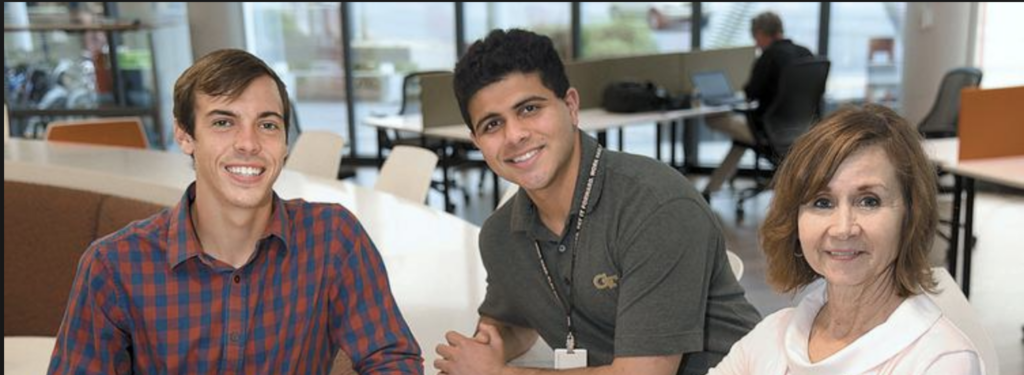
Spotlight on FINSYNC Specialists: Mark Wright, Accountant

Independent accountant Mark Wright found a remote position that fits his schedule and lifestyle through FINSYNC’s virtual assistance network.

By FINSYNC

For small businesses looking for help with their accounting, bookkeeping, human capital management, financial analysis or corporate strategy, independent contractors can be a fantastic choice for a cost-effective and experienced expert. The FINSYNC virtual assistance network has a carefully vetted selection of professionals looking to help businesses. 

One such independent skilled professional is Mark Wright, an accountant who was paired with a FINSYNC client to serve as their cloud controller. Finding an accountant like Mark can be difficult, especially when he spends time traveling across the country in an RV with his wife. Luckily, every campground they stop at has Wi-Fi, so he’s always available remotely. Spotlight on FINSYNC Specialists: Mark Wright, Accountant

How did you decide to become an independent professional?

I’ve been doing this for 34 years now and probably about a third of the time I’ve been working as an independent professional. Right out of college, I got a job as a controller for a government contracting company. It’s very extensive when you deal with the government as far as what they’re looking for, and we had to do a very in depth audit every year. 

The CPA that did the audit loved the information I gave him because it was clean, and he didn’t really have to do anything with it. He was a CPA that had hundreds of clients all over the world and he told me, “if you ever want to go out on your own, there’s a lot of incompetence in the accounting field, and I can give you a lot of work.”

What are the benefits of being an independent contractor? 

Obviously, flexibility is the biggest thing. You can move things around if you need to. If you need to go away on vacation, you can basically do it from everywhere. Now there’s Wi-Fi everywhere, so there’s a lot of flexibility. You’re working on your own, and so you know … you take care of your own stuff, and I like that. 

What’s the most challenging part about being an independent contractor?

I’m a people person so sometimes it’s hard to not get out. You’re not in an office every day, you’re not around a lot of people. I think anybody working from home, no matter what field they work in, has to find a way to be active in the community and to get outside. Do things like exercise to balance it out, because otherwise you would never leave your house.

How did you learn about FINSYNC’s virtual assistance network?

I was on Indeed, looking to pick up some more remote hours, and I saw an ad of theirs. Then, I responded and had to go through the process of interviewing, getting certified with their proprietary software and getting familiar with it. 

I went through that and they had a client in Dallas, Texas that they thought would be a good match. I interviewed with them, and I’ve been working for them ever since.

What do you do for Peisner Johnson?

Pretty much everything — accounts payable, accounts receivable, handling all the general ledger, payroll — I’m really their one-person accounting team, soup to nuts. One issue I deal with is billings. They have a lot of monthly billings they do based on tax returns, and a lot of subscription billings. I’m not going to say it’s complicated, but there are a lot of intricacies.

What’s your working relationship like with the company?

I think it’s been good. They would have to testify on that, but I think it’s good that the former controller, Mike, did stuff online with me to make a smooth transition. There have been a few little things that came up that I wouldn’t know about, and the people there have been great and very helpful. It’s been a great experience so far.

Would you recommend FINSYNC’s virtual assistance network to other independent skilled professionals? 

I definitely would, especially if they’re looking to do something where it’s totally remote. The whole platform allows you to do everything on a remote basis. I’ve been doing this for 34 years and there are some clients I’ve worked for directly as an employee where there was just no way you could do the job remotely from a logistical standpoint. 

If you’re a client that has the ability to work with professionals remotely, the FINSYNC platform provides cost savings and efficiencies. Everything is cloud-based and backed up. All documents are saved online — invoicing, bills, anything — so it’s all paperless and saved. 

The support from FINSYNC has also been tremendous. They really stand behind you and make sure that there’s no issue with a client or with anything you’re doing. If you do need help, they’re available to talk to and their response is excellent.

Any advice for other independent professionals out there?

Keep looking. It’s hard to find the perfect match, but FINSYNC can help. Remote work for accountants is definitely becoming more acceptable, and I think over the next five to ten years it’s really going to blow up. A company can save a lot of money using a remote employee, and if they’re open minded, it can really work well. Anyone that wants to get into this and go remote needs to just keep plugging away. 

Spotlight on Small Business: Travis Peters, Impelos

Travis Peters shares how a long career in manufacturing administration and a knack for organizing systems (and cattle) led to a small business journey that has been quite a ride. 

By FINSYNC

The longer you work in an industry, the more you notice the problems it faces. Then you start to build potential solutions. Work in a space long enough, and you could end up with a lot of solutions. Spotlight on Small Business: Travis Peters, Impelos

The longer you work with cattle, the more proficient you become at moving groups in a single direction. In his spare time, Travis sharpens his skills as he works cattle with his family in Northeast Texas. 

After wrangling a herd of cattle all weekend, reigning in administrative processes seems like a breeze. That’s where Travis Peters found himself when he started Impelos, a provider of back office software solutions for manufacturing companies, an industry for which he had developed profitability solutions over a period of years.

When Travis and Impelos needed to improve their own administrative processes for finances and invoicing, they turned to FINSYNC. We sat down with Travis to talk about how his journey began and continues to grow today.

What inspired you to start Impelos?

There’s a significant need in the American manufacturing industry for optimized processes in the administrative workspace. Having previously done this throughout my career, it’s been a thrill for me to be able to remove processes through lean thinking. 

I use lean thinking to design software, as a contractor and as an employee. Over the years, I’ve developed a suite of productivity tools that relate specifically to manufacturers. My goal with this business has been to bring those tools to a broader market.

What have been the biggest challenges you’ve faced running a small business?

Cash flow has been a big one. Being able to run the business without debt and managing our investments into the business. Also, ensuring that clients are paying and contractors and vendors are getting paid in a straightforward fashion. Those have been the biggest challenge. 

Another challenge is from a sales perspective. Bringing a potential client into the fold to use our product takes a long time. It can be challenging to convey to a client that’s building 30 to 40 custom units a day how our software can freeze administrative overhead where it is today while expanding capacity by 300 to 400%.

Managing our team is also really important. We have employees and contractors. We use FINSYNC to manage payments for both, as well as all of their related financial needs.

What have been the biggest lessons you’ve learned growing your business?

Every business I go into is different. They each have their own market niche and competitive advantage. That inevitably leads to a different solution as they produce and market their product, fulfill orders and deal with their vendors. That’s been a fun part — discovering how companies choose to differentiate themselves.

As far as running a business for myself, using a method called “profit first,” I’ve found it’s pretty lightweight to manage the financial operations for this business. That’s been a really fun journey for me to be able to make sure that as revenue comes in, the money is allocated appropriately ahead of time. That way I don’t find myself in a bind later.

What prompted you to start using FINSYNC?

We had tried Quickbooks and several other solutions. They all prevented us from getting visibility into where our cash pain points were going to be. Early on in the business we often found ourselves running out of cash unexpectedly. 

Whether something someone had purchased on a credit card wasn’t foreseen, or a client payable wasn’t paid on time and we didn’t anticipate that, these situations became a problem. Working with FINSYNC we were able to get a lot of visibility to anticipate the crunches and prepare for those situations.

How has FINSYNC helped you overcome your challenges?

With the cash flow tools that allow us to see where our financial trends are, we’ve been able to look forward and see where potential problems might arise. This allows us to plan accordingly rather than having sudden surprises.

Any advice for small business startups out there?

Strongly consider the profit first method to ensure your most valuable employee gets paid. That’s you, the entrepreneur. You can’t do that without good financial planning. FINSYNC helps with that.

Spotlight on Small Business Owners: Callie Ogden, Event Vines

Callie Ogden talked to us about capitalizing on an industry need, forging her own path and embracing entrepreneurship — with a little help from back office automation.

By FINSYNCSpotlight on Small Business Owners: Callie Ogden, Event Vines

As the Founder and Director of Event Vines, Callie Ogden helps enhance the event industry by connecting everyone in it. The former Director of Events for Wanderlust Yoga, Callie gained experience in the event industry and developed a wanderlust of her own, into entrepreneurship.

Wanderlust Yoga and other venues and vendors in the Austin area all struggled sorting through connections, contacting and evaluating options and booking events. Callie went into warrior’s pose to develop a network to simplify the event management and booking process. From that seed, Event Vines bloomed.

As Event Vines expanded to create tools to help event professionals connect, Callie soon learned that her own business would need tools to enable her to reach the next level. She turned to FINSYNC to help improve invoicing, automate repetitive tasks and allow her to focus on business growth.

What inspired you to start Event Vines?

I was working in both the event and real estate industries in Austin, and I noticed a lot of similarities, but the event industry has way fewer resources. Then, I saw a need for an event industry directory (modeled after MLS) and a la carte event services, especially for white-glove buyer support (functioning similar to a Realtor). 

I did about a year of research with venues, vendors and event planners while I built the directory and then launched in Austin just in time for the SXSW Festival in 2017. I’m so glad I made the leap into entrepreneurship!

What are some of the biggest challenges you’ve faced as a start-up?

My biggest challenges are administrative. Since there are a lot of moving parts with Event Vines, between the directory and the services, there is a continuous stream of administrative tasks ranging from emails to vendors and clients, invoice payment and collection, and more.

As a bootstrapping start-up owner, I would initially juggle most of those time-consuming tasks on top of sales, event sourcing, booking and marketing. Each year I’ve gotten more efficient by outsourcing and managing the administrative tasks, so I can focus on building the business and team.

What’s the best thing about being a small business owner?

Freedom! Event Vines is growing on my terms — so I have full creative freedom to shape the services, brand and offerings. I also enjoy the freedom to work remotely and according to my own schedule. 

What are the biggest lessons you’ve learned?

Collaboration is a powerful tool! In marketing and event sponsorships, you can combine forces with other business owners to share expenses, the workload, and audiences. This has been really advantageous for me.

It’s also important to build for sustainability rather than as fast as possible. I’ve learned to be strategic with how I spend my time and my money.

Any advice for small business startups out there?

Pay close attention to what is and is not working for your business and promptly adjust as needed, whether it’s technology or hiring a contractor or just getting support. Don’t let the thing that isn’t working linger.

What prompted Event Vines to start using FINSYNC?

Before FINSYNC, we focused primarily on online sales and used Stripe and Quickbooks. This presented a limit for how many online invoices I could send. I needed a platform that would allow unlimited invoices and vendor payments since that is a large part of what I’m doing in my business. FINSYNC can do that and has many other features that are valuable to me.

Has FINSYNC helped Event Vines overcome any specific challenges?

FINSYNC gave me the tools and the customer support to manage my business accounting. I feel more confident in my ability to juggle administrative tasks that come with invoicing and paying out vendors because I have FINSYNC. 

I can simply CC them on an email, and they can follow up if an invoice hasn’t been paid by the client, and that is a huge relief. Before that, I had to follow up on everything personally. It just takes things off my plate to have the service and also the automation.

Most of the events I do involve booking at least 12 different vendors. Then I have to pay the venue, and they all have different payment schedules. That’s where the concierge service has been super helpful. I can loop them in on an email to make sure I’m collecting payment when I need to and sending checks when I need to. 

I also like that I can have all my checks mailed to FINSYNC, and they handle the deposits through their lockbox service and make sure it is all recorded. That has been super helpful — less things for me to do.

What are the biggest benefits Event Vines has experienced using FINSYNC?

FINSYNC has an amazing customer support team that helps you learn how to use their solution and set it up. Their concierge service, invoicing, and bill pay have been the most beneficial for improving my administrative workflow. 

It doesn’t take me as long to complete tasks, and it gives me more confidence. I know I’m not forgetting to get something paid or to get paid. 

FINSYNC gives me peace of mind.

Spotlight on Small Business Owners: Galen Dalrymple, Polymath

Finding the balance between creativity and commerce is one of Galen Dalrymple’s biggest jobs at Polymath, a creative agency with a focus on nonprofits where he works with his son. 

By FINSYNC

From decades working in business management at big tech companies to a stint as a pastor leading a church in Northern California, Galen Dalrymple’s path to Polymath has been a long and winding road. As a full-service creative agency, Polymath provides digital marketing, video, content and branding services to amplify the story and strategy of nonprofits and other businesses.

Galen is the COO at Polymath, where he’s in the unique position of working with his son, founder Tim Dalrymple. The yin to his son’s yang, the left brain to his son’s right, Galen talked to us about the importance of balancing art and commerce when running a small business anchored in creativity — and how FINSYNC has helped Polymath master project cost accounting.

Spotlight on Small Business Owners: Galen Dalrymple, Polymath 1

What makes Polymath different than other creative agencies out there?


We work with a lot of nonprofits, which is also one of our challenges. We love to work with organizations that are doing morally significant work in the world. They have a cause and it’s a good cause and they believe in it. They need to tell their stories, and we think of ourselves as their storytellers. 

We work hard to give them a really great product on margins that can get pretty thin at times just because we believe in what they’re doing. It’s fulfilling work, and you feel like you’re making a difference and helping them make a difference, but it creates some unique challenges for us. We have to watch our nickels and dimes.

What do you like best about working for a small business?

Getting to know the people so well, not just the employees and the contractors but the clients. The depth of the interpersonal relationship in a small business is just really fulfilling. It’s knowing the clients, knowing the people that I work with really well, and we have a great time together.

I’ve worked in companies of several thousand people and managed budgets for a 55 million dollar department. Sometimes big businesses can seem to be nameless and faceless places. We’re more like a family, really, and not a corporation or a business.


What’s the biggest challenge of running a creative agency?

Creatives generally don’t think in terms of dollars and cents. They think in terms of beauty and aesthetics and enhanced functionality. And they want to design and deliver the most elegant thing that they can think of in their creative brains. Getting them to think about profits isn’t easy. 

It’s the nature of creatives to take whatever time it requires to produce an exquisite product, and I appreciate that about them — wanting to give clients the very best thing we can, and we try to do that. 

But when you can show them in terms of hours and dollars how it affects the project and company overall, and by extension their own wallet, it helps them to see that there’s a happy middle ground somewhere that you have to hit.

As a small business, has Polymath faced any other challenges? 

We’re small in terms of personnel and revenue, but small businesses face the same kind of financial decision-making challenges as the big companies do. We’ve got a smaller margin for error. A really bad decision can sink a small company faster than a bad decision can sink a big one.

We were using various tools and none of them talked to each other. We were using QuickBooks Online for our receivables. Later, we added the payables part to it, but it wasn’t connected to payroll, nor was it connected to time tracking, nor to our project management data in Excel for project cost accounting. 

Our time tracking vendor didn’t connect to QuickBooks. We couldn’t really have a project cost accounting solution other than Excel spreadsheets, so I was spending a lot of time trying to get the data we needed from one tool and then patch summary information to other tools and make sense out of it all. It was very costly and very burdensome. 

What made Polymath start using FINSYNC?

I knew we had to have a better sense of where we stood as a company. FINSYNC pulls all the data together so I can make sense out of things. It was the only platform we found that did everything we wanted. 

QuickBooks can do payables, payroll, receivables, and general ledger kind of stuff. However, the project cost accounting was virtually non-existent. Time tracking didn’t exist at that point either. Our accountant was a certified QuickBooks professional, but he couldn’t figure out how to use QuickBooks to get what we wanted.

The only platform that really seemed like it did project cost accounting well in a way that made sense to me was FINSYNC.

How has FINSYNC helped Polymath with project cost accounting?

Everything we do is pretty much on a project basis. By having the time tracking built into FINSYNC that automatically updates costs and projects, and being able to track expenses, I can go in at a moment’s notice on any project and see what our budget for the project was. I can see how much we spent in labor and how much we’ve spent in expenses and what it looks like our projection is going to be. 

And we use that historical data on future projects. Having all that information in FINSYNC, it’s just a matter of running a report and you’ve got that information. We use that to price out future projects so that future projects are more profitable than past ones. Having the information in FINSYNC that we can pull out to make better decisions has the biggest impact on us in terms of cash flow.

Any advice for small businesses out there?

In small business, you still need to sweat the details. It might seem like a dollar or two here and there, and that might not seem like much, but it all adds up and small businesses don’t have the capital reserves as a general rule to be frivolous. 

Getting the tools that will give you the instantaneous information that you need in a way that’s easy to consume and understand is really important. I don’t know how a small business can operate without actionable intelligence anymore. I don’t know how any business can.

Many times, it can be a tool that you don’t have that can submarine your ship. Many small businesses don’t have project cost accounting, and I don’t know how they make decisions without it. At best, you’re guessing. 

Spotlight on Small Business: Diane Bloodworth, Competitive Sports Analysis

Diane Bloodworth shares how her innate entrepreneurship, knack for data and passion for sports led her on a small business journey that was worth every twist and turn.

By FINSYNC

For Diane Bloodworth, entrepreneurship runs in the family. Even as a ten-year-old, this little girl from Flintstone, Georgia stepped up to the plate to help run her family’s grocery store, at one point even taking over for an entire season, but Diane always had her sights set on bigger things.

After working her way up the corporate ladder, Diane decided she wanted to create her own path. It hasn’t always been the easiest road to navigate, but she landed right where she belongs: running her own business. 

Diane combined her technology and data expertise with her passion for football to found Competitive Sports Analysis, a platform to help college athletic coaches recruit the best possible talent. 

“It’s been a pretty long journey to get to this point, which makes it worthwhile, when things start to move and happen,” she explains. “It’s very rewarding, but it has been quite the journey.”

Diane spoke with us about the challenges and rewards of being a small business owner, and how FINSYNC has made sure she’s always scoring touchdowns. 

Spotlight on Small Business: Diane Bloodworth, Competitive Sports Analysis

What are some basic challenges you think emerging entrepreneurs face?

I think anybody that starts a business is going to face challenges. That’s just the nature of entrepreneurship. But you know, when you’re going into a new or evolving market, I think you face challenges with timing. Is your target market ready for the type of capabilities that you can provide? I think a few years ago the answer was no. Now that’s turning to yes. So, I think timing can be challenging.

Do you have any advice for small business owners? 

You need to be very passionate about what you do, but you also have to be willing to pivot, because sometimes you start doing something and you’re so determined, you don’t realize that you might need to take a step back and tweak or change. You’ve got to keep a certain openness to improving the way you’re doing things to really be successful. So I’m all about perseverance. I’m all about passion, but don’t forget that you might need to pivot. 

What’s your favorite part of your job?

When a coach says, “This is great, this helped me find a recruit that’s really going to work out.” Or when a recruit says, “Thank you, I’m going to have a better chance of playing at the next level.” That just makes my day. It makes it worthwhile.

The whole recruiting system is just so broken and there are a lot of recruits that don’t even get a look because their high school coach may not know the right college coaches or their parents don’t know the recruiting process, which is not that unusual. A lot of these recruits are overlooked and don’t have an opportunity. I grew up in a rural area and I think some of those kids get overlooked.

How has FINSYNC helped you when it’s come to running your business?

My least favorite thing to do is accounting and bookkeeping, to be honest with you. FINSYNC is awesome, and I also love being able to work with another startup company in Atlanta. I think it’s great when startups can support each other.

I’ve used other systems and bookkeepers and all kinds of things, and when I hired a bookkeeper it was kind of costly and then she had to ask me everything anyway because I knew the business. FINSYNC allows the person who knows the business to go in and work through these entries very easily.

Spotlight on Small Business: Diane Bloodworth, Competitive Sports Analysis 2

How has FINSYNC helped with efficiency? 

They’ve made my business more efficient. They’ve made my time more efficient. Accounting and bookkeeping is something that’s very important to the business, but I don’t like spending a lot of time on it. So it’s helped make my time, and therefore the business, more efficient.

They really have just made my accounting and bookkeeping life so much easier, especially with payroll. I have a lot of hourly interns on payroll right now, so it just makes my life so much easier. I’m not an accounting person, and I find the system really easy to use. I’m very grateful for them. 

Spotlight on Small Business Owners: Andy Rostad, Media Beyond

Andy Rostad and Media Beyond are on a mission to blend strategy and design to create powerful content for their clients.

By FINSYNC

After graduating from the University of Wisconsin, Andy worked for nearly a decade on The Oprah Winfrey Show and Harpo Productions. He now uses that experience as the Executive Producer and Audio-Visual Alchemist at Media Beyond to help his clients tell a compelling story that fits their content strategy.

Spotlight on Small Business Owners: Andy Rostad, Media Beyond

What inspired you to start Media Beyond?

My partners and I worked at the Oprah Winfrey Show. When she decided to sunset the program we had visions of becoming the next great television content creators. We realized that there was a greater opportunity to bring storytelling to business than to make more reality TV.

The biggest part of the journey for us has been taking the skills and talents that we have and translating them to a value proposition that business people understand. It goes from how can I elicit emotion for an audience to how can I elicit action for a consumer. 

Along the way you’ve got to figure out how to do several things. Such as, pay your bills, do your taxes, track your accounts receivable, accounts payable, prospecting, project management. Also all the other stuff that when you’re part of a big enterprise, you don’t necessarily have to get your hands dirty with. 

What were some of the challenges that you faced as a start-up?

Coming into the marketplace and not realizing that not everybody knew the things that we knew. It’s like being experts in our field but always being surrounded by senior executives. It was difficult to appreciate the fact that we would be pitching services or ideas that couldn’t easily be understood by people who weren’t deep in the industry. 

The Dunning-Kruger effect is this idea that you assume that everybody knows what you know. So there were a lot of early missed opportunities to slow down and be more deliberate and more helpful in our messaging.

The flip side of assuming that everybody knows what you know is trying so hard to prove that you know something special. I think in the early days a lot of companies make the mistake of trying to justify their existence. Instead of trying to be helpful.

What’s been the best part of starting a small business? 

The best part of having so much to do is getting to do so much. When you are contributing to a large enterprise, sometimes you just have to repeat the same function over and over again. While there’s a certain pride one can take in being dependable and repeating the same task over and over again, we’ve enjoyed a variety of projects. 

Moving through many different roles, getting to bring to bear our fundamental acumen in creative problem solving and idea generation, and getting to apply that across lots of different media has been great. We’ve also had the opportunity to work with a range of clients, from gigantic companies to fellow startups. 

If you could go back and do one thing differently, what would it be?

There is a lot of opportunity left on the table when trying to take something from maybe 80% to 90%. The amount of effort required to get an idea to perfection is infinite, right? So you can’t have a perfect anything. The closer you try to get to perfection, the greater the diminishment of the returns. There’s a saying in the filmmaking community that movies don’t get finished — they escape.

Early on I think we could have been more effective for our clients by emphasizing speed to market and the idea of testing and iterating versus making something that is unimpeachably, uncritically perfect. That’s not to say that there’s anything sloppy about what we do but there is something to be said for letting the marketplace determine what’s good rather than one’s own standards. Your audience will tell you what you’re doing well.

What prompted Media Beyond to start using FINSYNC?

We were using QuickBooks because that’s what our accountant had asked us to use, and I was looking for more cost-effective alternatives. FINSYNC had everything that I wanted at a much more attractive price point. 

Plus, they were much more responsive to inquiries, really friendly in the onboarding process and seemed much more concerned with our success and happiness than with just signing us up. The fact that there was a personalized onboarding process speaks directly to the difference between FINSYNC and the gigantic companies.

Has FINSYNC helped Media Beyond overcome any specific challenges?

The best one was I used to have 30 vendors. Some of whom did not participate in our digital ACH wire transfer program. They wanted paper checks. In order to create a paper check in my old software, I would have to buy special printable paper. Then, line those up with our printer and send them through, and there would be misalignments and duplicate check numbers. It was just a nightmare. 

When I found FINSYNC, they said you can send somebody an email, and they can elect whether or not to get a paper check, and we’ll handle that for you for a trivial cost. That saved me hours of headaches and let me focus on my business. That’s just been the FINSYNC way. We don’t have a ton of complex needs, but whatever I need, I can do quickly and get back to creating content. 

What are the biggest benefits Media Beyond has experienced using FINSYNC?

One of the things that was really neat was being introduced to the idea of financing and getting a chance to participate in the early days of initiatives that they’re testing. FINSYNC is always trying out new things. Whether it’s in-app access to bridge loans or inviting members to participate in a loyalty program. 

That chance to participate and see a company testing and trying new features and giving feedback that I know is considered is a real plus. It helps me think entrepreneurially to see what this innovative company is also doing. Also, being able to borrow against future invoices is great and painless. 

The idea of adding employees with FINSYNC and having to onboard new people doesn’t cause me any concern. FINSYNC is really easy to use. I know that if I all of a sudden have to add a new employee or train up a new administrator, it’s not going to be a weeks or months-long process. It’s going to be an hours and days process. 

If we added a slew of new employees, they would be able to enter and track their time. We’d get everybody paid and taxed just as seamlessly as we do with our small team now. I know that there’s room to grow and that it’s easy.

Spotlight on Small Business Owners: Erik Fogg, ProdPerfect

Erik Fogg is a startup veteran. A graduate of MIT. A published author. And one of the founders of ProdPerfect, a Boston-based startup that builds automated end-to-end quality assurance (QA) testing for web applications.

Unlike the traditional QA process, ProdPerfect leverages live user data (rather than educated guesses) to determine what tests to write and maintain. And therein lies the disruption.

Fresh out of MIT, Erik started his career fixing factories across North America as an operations consultant. From there, he was brought into HelmetHub, a helmet rental system for bike share programs. It was there that he met Dan Widing, who he hired to be HelmetHub’s lead software engineer.

The two have been best friends ever since. Six years into their friendship, the duo traveled to Poland together. Erik had no idea what Dan was cooking up until somewhere between four and six vodkas in, Dan turned to Erik and said, “So, I have this idea.” And ProdPerfect was born.


What inspired you to start ProdPerfect?

We got started because we realized that in the world of web development and software development outsourcing, there have been a lot of great advancements with data and analytics that have helped build better products, but quality assurance had been left behind.

QA had always been this redheaded stepchild. Mark Zuckerberg famously said, “Let’s move fast and break stuff.” QA was always an afterthought. QA didn’t have the resources it needed to be good at its job. And because it wasn’t good at its job, it wasn’t sexy.

A lot of the advancements in technology that have been affecting other areas of web development could be applied to QA. What we want to do with ProdPerfect is bring data-driven decision-making to quality assurance.


Shot of a young woman using a digital tablet while working on a farm


How is ProdPerfect’s approach different than traditional QA testing?

The biggest problem in the quality assurance of web applications is that people don’t know what to test. We’re taking the user traffic from the current application to tell you how your users are using your application. Let’s test the things they’re trying to do to make sure that those always work.

And that’s what ProdPerfect does. It takes the data from how people are using the application and writes tests that reflect it. So our customers are confident that whenever they ship code (make an update), they haven’t broken something about their application that’s important to their users.


What’s the biggest challenge ProdPerfect has faced as a startup?

The biggest challenge for us is that the product we’ve built is fundamentally disruptive. ProdPerfect is not a better mousetrap. We’re going to people who have spent the past 20 years doing things a certain way and telling them: You need to let go of having a feeling of control over what gets tested because machines using data are going to make better decisions than you.

We’re asking them to take this big leap into the future, into the unknown, where they’re not personally in control anymore. A lot of people said nobody’s ever going to sign up for this because of the sales challenge. They were wrong, but it was hard.


Has growing so fast been difficult?

We had our first sale four months into the business with three people. It was this recurring revenue sale, and we very quickly had to get some sort of financial control over our business. We had to understand where we were spending our money.

FINSYNC has helped us create a level of predictability around what we’re spending and taking in, and what we’re likely to spend and take in, so that we can make budget decisions in order to keep the pace that we’ve been keeping.

That’s been mission-critical for us. I need to be able to report what our revenue looks like, and we need to be able to raise money on this.


How does FINSYNC help you run ProdPerfect?

FINSYNC helps with the centralization of everything. The platform can do everything I need as far as paying people and taking money in, and then it knows where all that money is and where it’s gone. And I can print a report on it, which is great.

We don’t have anyone who’s going to sit there with a spreadsheet and do that all day. There are only three of us, and two of us are trying to build a product. That’s one of the biggest challenges that FINSYNC has helped us solve. I don’t have to do the work, and I don’t have to hire someone.

Everything is in one place, and we’re able to tack on FINSYNC’s bookkeeping concierge. At the end of the month, I can go look at my books and know how we’re doing with the budget. In fact, I can look week to week and know how we’re doing with the budget. And I can make decisions on it with a short amount of time and a very tight level of data.


Has ProdPerfect had trouble accessing capital?

We ended up raising a substantial equity round, so we don’t have cash flow issues right now. But knowing that we can get access to working capital from our future invoices through FINSYNC helps me sleep at night.

We’re in a SaaS business. And the SaaS curse is that you throw all this money at bringing on customers, you have this cost to acquire a customer, and then there’s a time period for it to pay off. Because of that process,s there’s normally a fundamental limit to how quickly you can work because of your working capital.

With FINSYNC, we can get a credit line with an extremely competitive rate on our invoices. With the knowledge of our customer acquisition costs and a history of revenue generation, FINSYNC provides guidance into our future revenue, allowing us access to capital.

The working capital crunch that limited growth — we just strategically eliminated that problem. That problem is gone. And it will never exist for us again.


Is there anything you would do differently if you could go back?

Yes. One thing that took us way too long to do was figure out what channels were bringing us the most customers. We spent a ton of money on customer acquisition channels that weren’t working.

And all I needed to do was spend four hours, which is a terrifying amount of time in a day. But it’s a one-time four hours to step back and do the math. Let’s see where these people are coming from, who’s closing, and who’s actually turning revenue for us. And we found that of the eight channels we were working at, six of them were a waste of time, two of them were great.

It turns out we could do less work and get more out of it because we were smart and we made some fact-based decisions. Obviously, FINSYNC financial control was a big part of being able to do that in four hours. 


Any advice for startups out there?

When people with an idea ask me about how they should get started, I usually say get a better idea. Your consumer app is probably not going to work. If you want a start-up idea that’s actually going to be a good use of your time, the idea needs to be a completely unique solution to a very expensive problem for a lot of people.

So those are the three key things. You need to be the only one with it. People need to be willing to spend a lot of money. There needs to be a lot of those people. If you can do that, you’ve got a good startup idea. And then you should go build it.

The other thing I learned is that a lot of people are going to give you advice, and it’s probably wrong. If someone listens to you for ten minutes and they say do this thing differently, they’re probably wrong. If you have conviction that the way you’re going to do something is going to work, stick with it.

You’re the startup founder. The whole point is that you’re disrupting the things that normally work. If you just did the things that normally work, you wouldn’t have a startup. You would just have a regular small business. But if you want to go disrupt things, you’re going to be breaking rules.

If venture capitalists and other startup founders are uncomfortable with the rules that you’re breaking, it means you may very well be doing something right.


Fynn Moves Your Business Forward Faster 
Meet Fynn, your AI assistant, built to simplify business planning, funding, operations, and growth. With a fully connected Business Platform and Financial Network, Fynn helps you turn ideas into action, secure funding, streamline operations, and accelerate success.
From business planning to seamless execution and smarter financial connections, Fynn keeps everything and everyone in sync—so you can focus on what truly matters, in business and in life.

Spotlight on Small Business Owners: Shaun Lapacek, Rock N Wool Winery

For Shaun Lapacek, there’s no greater feeling than working for yourself — as long as you’ve got the right tools to handle the bookkeeping.

By FINSYNC

When you have an innate love of something along with the drive to be your own boss, it seems like owning your own business is a no brainer. Just ask Shaun Lapacek.

After becoming completely enamored with the wine country in Italy during a trip abroad, Shaun returned home and looked for any opportunity that would allow him to combine his passion with his natural abilities. “I’ve always had a nose for wine, and people seem to like what I’ve had to say about it,” he explains.

So it’s no surprise that Shaun now owns 40 acres of vines and pines where he makes his very own varietals. What is surprising, however, is its location: Wisconsin.

Shaun spoke with us about how Rock N Wool Winery came to exist, the challenges and rewards of being a small business owner, and how FINSYNC helps him be the boss he needs to be.

How exactly did you end up making wine in Wisconsin?

My parents bought a property in Poynett, Wisconsin, which is about 25 minutes north of Madison. They raised sheep here and the soil is incredibly rocky, so they called it Rock N Wool Acres. In early 2000 I asked my father if I could grow a couple rows of grapes to see how they worked and possibly open up a small wine shop. Well, neither one of us really knew what we were getting into.Spotlight on Small Business Owners: Shaun Lapacek, Rock N Wool Winery

By the time we started planting we had a whole lot of money in the property. So we kept planting and we had about six acres of vines. All of a sudden we realized that we’d put two hundred thousand dollars in this and we were going to need more than just a little shop. We were going to have to get a winery going to start getting the money back.

So that’s kind of how we started. I mean, I love wine. I wanted to make wine. The next thing I know, I’m going to go belly up if I don’t start making a lot of wine and really take this seriously. So I bought the property about two years ago from my parents.

What would you say is the best thing about being a small business owner?

I love waking up and just being me. There is no greater feeling. I don’t go to a job. I wake up and I’m Shaun. I mean, there’s nights I don’t sleep, I have things to do and all that, but at the same time I’ve never had to go into a day of work.

Knowing when my girls come home they run out here and they know it’s their winery. They’ll ask, “Are they drinking Papa’s wine?” It’s ownership of that and creating a dream. It’s something that’s very, very special, especially since I have two little girls.

What are some of the challenges you’ve faced as a small business owner?

Bookkeeping, accounting, payroll — those are the things that I absolutely hate. Looking at the whole payroll system, I have absolutely no concept of how to deal with it. I can do all of that stuff for myself, but when it comes to filing for other people, that’s where I was kind of going crazy. The paperwork’s the worst thing.

Has FINSYNC helped you address some of these challenges?

Oh my God, they’ve been fantastic. I had talked to Square originally and they want to nickel and dime you for everything. They wouldn’t be flexible with me for what I needed. That’s why I went to FINSYNC.

FINSYNC was great. They were able to accommodate how people got paid, what taxes got taken out and it’s very easy. They’ll send me reminders about running payroll and things like that. It’s so nice to have that completely off my mind. It’s a hat I don’t have to wear. FINSYNC’s been great with this for me.

What are some of the biggest lessons you’ve learned as a small business owner?

Wow. One, start keeping great files and bookkeeping right from the very beginning because they’ll come back at some point. You can’t say, “Oh my God, I was so busy. I didn’t keep this, I didn’t keep that.” When you start a business, go into a plan, get somebody who’s going to work with you, who’s going to be able to help you from day one.

That’s as important as knowing what kind of wine I want to make, so all of that is taken care of. That is such a big deal because otherwise once things get going faster and faster, if you don’t have a system in place, you just forget it and you’re behind the eight ball. So you have to have your systems in place for accounting, payroll, all that, and that’s really big.Spotlight on Small Business Owners: Shaun Lapacek, Rock N Wool Winery 1

The other thing is, realize that you can’t do everything yourself. You have to have people who can help you because you’re not going to be able to grow if you try to do everything yourself. You can’t focus on what matters.

I always remember that if I’m not making wine, this place closes down. So I have to hand these things off to other people. We don’t need me mowing the lawn. We don’t need me doing payroll for four hours a week. We need me in the production area making wine.

Would you say that FINSYNC has helped you focus on the more important aspects of your business?

Oh my God, yeah. Payroll is a big deal as we’re getting bigger. Even today I had a new person on payroll and on the clock. Having people being able to punch in and out, it’s something I don’t have to worry about and that’s just everything. FINSYNC really allows me to focus on what I want.


Shaun Lapacek, Founder of Rock N Wool Winery

Spotlight on Small Business Owners: Sonia Dumas, Curio Haus

In honor of National Small Business Week (May 5 – 11), we’re launching a new series to showcase some of the small businesses that power our country.

By FINSYNC

Entrepreneurship has always been in Sonia Dumas’s blood. Just ask her four brothers. When they wouldn’t pick up their toys as kids, Sonia did it for them — only to sell them back for a profit.

Spotlight on Small Business Owners: Sonia Dumas, CurioHaus

Sonia’s ventures have come a long way since she was 8. Before starting her own business, she spent 14 years opening high-end lifestyle hotels across the U.S. Today, Sonia runs Colorado-based Curio Haus, a marketing firm that helps connect financial advisors with clients.

The name she chose for her business (translation: house of curiosity) reflects the questions that led Sonia to start the company, namely: “How do you develop memorable experiences?” and “How do you drive growth?”

Most importantly, Sonia wondered how she could harness the expertise she developed in the hotel industry to develop effective marketing for financial advisors that target the same client base. The question had legs, and Curio Haus was born.

Sonia spoke with us about the challenges and rewards of being a small business owner, and how a desire to simplify led her to FINSYNC.

Is starting your own business something you’ve always wanted to do?

Starting my own business has been in my blood probably since I was 8. My first business was collecting. My parents would complain about toys being left all around the house — my four brothers wouldn’t pick them up.

So I decided, I’ll pick up those toys. And I took all their toys and put them in my room and I put my parents’ piano chair in front of my bedroom door and I started to sell my brothers their toys back. No overhead. No expenses. It’s a free product. (laughs)

Back in elementary school my girlfriends would be coloring mermaids and rainbows and unicorns, and I would be designing what my penthouse office would look like. It’s always been in me.

What inspired you to start Curio Haus?

I love marketing and branding and developing experience. And I thought to myself, how can the art of the guest experience that is so prevalent in luxury and lifestyle hotel development transition over into the financial industry?

At the end of the day, they service the same clients, it’s just a different service. We have the specificity of focusing on affluent or high net worth individuals. Why can’t the best practices in hospitality be transitioned over into the financial industry, but in a way that combines modern buying behaviors, smart technology and high-touch experience?

It’s a hefty question wrought with a lot of compliance challenges and roadblocks within the financial world, but I really feel like that’s how disruption happens — with a bold question.

What’s the best thing about being a small business owner?

For me, it’s the spectrum of relationships I get to build on a daily basis. I love looking forward to the journey of having a complete stranger either become a strategic partner, an advocate, a client or just a local friend.

As a marketing strategist, my services impact the lives of people I’ll never meet. At the end of the day if my team develops the right meaningful campaign for a financial advisor, it’s going to connect with somebody and bring clarity and security to their financial world.  And in some indirect way, I’ve made a difference in our society.

What is the biggest lesson you’ve learned running a small business?

Specialization. Finding your niche audience, your niche product or service is by far the best and fastest way to grow. Being generic and everything to everyone — only certain global brands can do that well and they struggle to sometimes show a profit on Wall Street.

From a small business owner side, the more specific you can be about who your audience is and what you offer them, the better. It’s just the best way to grow because it automatically attracts that tribe, as Seth Godin always brings up.

Our company took a leap of faith. Originally we started out just doing general marketing, and 30 days later we completely shifted. We decided we’re not going to just do marketing for anyone and everyone. We’re only going to focus on helping financial advisors and fintech firms grow.

Every industry has its own nuances, buying behaviors, best practices and regulations. If you become an expert in what you need to know about your client’s specific industry, it just makes the conversation and the campaign so much easier to do.

Being this specific is the best thing we ever did — I wouldn’t go back. It was scary. I’ll admit it is absolutely scary because you’re technically putting all your eggs in one basket of one industry — or one segment of a segment of an industry. You really have to say, is it worth it? We did our research to make sure it would grow with us.

Do you have any advice to small business owners?

Be able to pivot quickly. If something’s not working, accept it as a lesson because it’s not a failure. Just accept it as a lesson and then shift and move in a positive direction. And I know that takes a lot of courage because there’s always that internal voice that says maybe I’m not really good enough, and that’s a lie.

You are good enough because, one, you would have never launched this company. And, two, you’re good enough to figure out a better way to be of service to the world around you. Pivot and shift in a positive direction and you’ll go a lot farther than trying to force something that’s not working.


What are the biggest challenges you’ve faced running a small business?

The two things that are a consistent challenge for me are cash flow and processes because they’re the foundation of running a successful business. Cash flow is like fuel in the jet. I don’t care how much money you spent on that jet, if you don’t have fuel you’re grounded. You’re not going anywhere.

The other thing is processes, and they’re not to be underestimated. Processes enable a business to be efficient and innovative and adaptable — not to mention it keeps the business owner sane knowing that there are systems in place to deliver what was promised to clients.

How has FINSYNC helped you address those challenges?

For me, FINSYNC brings clarity and confidence both to our processes and cash flow management. From the FINSYNC command station, I can see the financial health of my firm on a daily basis. I love that I can monitor the profitability of client engagements.

The cash flow dashboard when you first login can either give you a heart attack or it can make you rest well at night. It can push you to say, okay, I have a 45-day window to bring in another client or do something different. And it’s good to have that kind of heads up, versus talking to your accountant or getting statements once a month only to find out you’ve got two weeks.

The other thing I love is being able to know where to quickly trim the fat on value-depleting expenses and say, how can we become leaner in certain areas, or where should we become a little bit more generous in certain areas? Especially if it’s client facing, and it’s going to improve the value of our relationships with our clients.

What made you choose FINSYNC?

I researched several things — accounting, project management, invoicing and what payroll would look like. So I was thinking about a lot of different things and wondering, is there something that packages that all together without me having to subscribe to five or ten different apps to make it happen? 

For me, it’s about time. Time is my most valuable asset. At this stage in my life, I don’t have time for another app that adds complexity to my world. For the most part, I have a drive for simplicity. As executives we’re in this ever-vigilant battle to make our lives more simple. I was just looking for a way to streamline our processes. How can we streamline marketing and communication so that it’s simple, effective and relevant to both our team and our clients?


How does FINSYNC help you run your small business more efficiently?

Everything about the system is very intuitive and simple, and the customer support team is fabulous. They always get back to me and even if they don’t know, they’ll figure it out. It’s great to be able to bring up features and know that the system’s always being developed with real owners in mind, and that they’re very high touch.

At the end of the day, it’s that relationship — these people are part of my financial team. FINSYNC, on some level, is a part of my financial team. They’re in the day-to-day because so much relies upon what their system does. And only seeing it get better — I love it. I can’t see myself on another platform.

Sonia Dumas, Chief Marketing Officer of Curio Haus

Apply For Business
Checking Account

Before you get started

1

We are not able to service these businesses at the moment:

  • Crypto Currency and Money Services
  • Privately Owned ATMs
  • Marijuana-Related
  • Gambling
  • Money Services Business
  • Business headquartered outside of the U.S.
2

At this time we are offering online business checking accounts through bank partners in these states:

  • Arizona
  • California
  • Idaho
  • Nevada
  • New Mexico
  • Oregon
  • Texas
  • Utah
  • Washington

Is your business in one of these states?