8 Interesting 2022 Predictions That Could Affect Your Small Business

Changes happen in pandemics, Google algorithm shifts, new cyber security issues, and other variations in our physical and digital world that upend the pre-paved path. It would be nice to look into a crystal ball and predict the challenges that lie ahead in 2022. 


Fortunately, many experts agree that 2022 will be an excellent yet volatile year. Below are eight predictions likely to happen in 2022 and the associated small business risks. 


1. Financial Institutions Will Increase Spending for Innovation


Banks will reach double-digit spending growth on tech in 2022. The US and China are taking the lead, putting a higher demand on technology talent to fill these competitive positions.


Fintech, or financial technology, is used to augment a streamlined and digitized banking system. If you have ever deposited into your bank account by taking a photo of a check, you have utilized fintech software.


As technology has flourished, banks can keep pace or be left behind. Providing a state-of-the-art digital experience has become necessary for financial institutions to adopt. 


DXP or digital experience platforms, are on the rise and succeed at meeting bank customers’ needs and lowering their transaction costs. 


2. AI Integration


South Africa granted the first patent to an artificial intelligence system this year, revolutionizing the way we think of creative machines and legally recognizing their innovations.


New developments in AI have set the stage for further results and future patents expected in 2022. 


Banks continue to implement AI to decrease backend processing and reduce fraud. But AI integration is happening in nearly every industry. 


Perhaps the most significant AI achievement will presumably commence in 2022: AI-supported software development.


3. More Targeted, Personalized Ads


We have seen personalized ads increase steadily over the past decade. In 2022, targeted ads will become the norm in identifying and capturing new potential customers and clients. Companies not directly scrutinizing their customer’s buying activities will be left behind.


We live in an age where our data is ubiquitous. After we make a purchase, it is recorded, stored, and analyzed by hundreds of companies, all with one goal in mind, to place ads in front of you where you are more likely to act.


Television has historically been the top-dollar producer of advertising campaigns, and Deloitte Global predicts that TV ads will become more personalized in 2022 in a phenomenon known as “connected tv.” Much like social media has been doing for years; households can expect to see different ads based on their buying habits when watching their favorite TV shows. 


In 2022 alone, personalized TV ads are estimated to bring in around $7.5 billion globally, and this number is over 40 times higher than was forecast in 2012. Even though viewing hours are in decline due to apps like Netflix, TV advertising prices continue to increase.


4. Time Spent with Traditional vs Digital Media Marketing


Over the last decade, overall media consumption has risen by 20.2%. This increase is mostly due to digital media expansion. In 2021, US adults averaged around 463 minutes of digital media per day. 


Digital media is taking over. Traditional media has been on a slow, steady decline. In 2022, traditional media will be 30% less than where it was in 2011.  


We are only at the beginning of media availability.


In 2022, the first low earth orbit satellites (LEO) will change the lives of billions of people worldwide. These satellites have an end goal of providing affordable broadband to every corner of the planet. 


5. Brands Competing with Marketplaces


E-commerce sales continue to break sales records every year. Of course, this is great news if you operate a large marketplace such as Amazon. Shopify disclosed a 46% increase in sales between 2020 and 2021. 


However, for small boutique retailers, using a marketplace to sell items can be a love/hate relationship.


In the past, it was a vendor’s dream to partner and sell their merchandise with a large marketplace under the expectation that sales would increase dramatically. Due to tight profit margins and lack of customer interaction, smaller brands will turn the tables on these large enterprises. 


By implementing global order management software, brands have discovered they can do a lot of the heavy lifting themselves while enhancing direct relationships with their customers.


Small companies can implement order management, conversion rates, subscription billing, and inventory control. These smaller brands are empowered to have a voice in today’s E-commerce world. Thus, these brands can retain their profit margins while expanding and growing their business the way they want. 


6. Heightened Security Attacks


We have already seen how cryptocurrencies attract cyber-attacks. But this is just one example of internet security flaws that have recently fallen victim to attacks. 


In 2020, 27.8% of companies reported 20+ supply chain disruptions, an enormous increase from 4.8% in 2019. Firms are now trying to make their supply chains more resilient by changing their course from offense to defense. 


Implementing third-party tools to prevent security breaches also means more security attacks are likely. Small businesses can coordinate their safeguards by employing tools to help with risk assessment, supply chain mapping, and real-time business intelligence. 


In addition to small business security breaches increases, consumers are also victims of identity and data breaches. 


With Facebook whistleblowers and Google’s decrease in security and privacy, customers now think twice about willingly sharing their data.


7. Sustainability


Understanding the value of sustainability is more prominent within the public sector. Europe is leading the environmental initiative, and many other countries are close behind.


There is an increase in awareness of the importance of sustainability perceived by job-seekers, investors, and consumers alike. This trend puts pressure on companies to increase their transparency with regard to their environmental friendliness.


The 2021 IPCC Report from the UN clarifies the critical need for immediate and drastic climate action. Numerous reports of this nature combined with public pressures have made many organizations flip their climate and sustainability stance. 


8. COVID Is Not Going Away


“When is COVID going to end?” “When will things get back to normal?”


These questions have plagued us for almost two years now. For a while, they became so common that many of us have stopped asking them. It is easier to accept the big takeaway that we now live the new normal.


Fortune has predicted that by 2022 COVID will become endemic. Meaning the pandemic will not end with the virus disappearing altogether. However, as enough people gain immune protection from the vaccine, there will be less virus transmission. Hopefully, effective new treatments will lower deaths, and it will soon become a more manageable threat.


COVID is here to stay, at least for the foreseeable future. 


The future is always uncertain. But with the coronavirus not going away and our ever-changing societal landscape in constant turmoil, our connections with each other and our customers will continue to thrive in the digital world. 


A world of untapped possibilities is just around the corner. 


Hang on. 


It’s going to be a bumpy ride.


How FINSYNC Can Help


FINSYNC allows you to run your business on One Platform. You can send and receive payments, process payroll, automate accounting, and manage cash flow. To learn more about how we can help your business start, scale, and succeed, contact us today.

8 Interesting 2022 Predictions That Could Affect Your Small Business

Changes happen, pandemics, Google algorithm shifts, new cyber security issues, and other variations in our physical and digital world that upend the pre-paved path. It would be nice to look into a crystal ball and predict the challenges that lie ahead in 2022. 


Fortunately, many experts agree that 2022 will be an excellent yet volatile year. Below are eight predictions likely to happen in 2022 and the associated small business risks. 


1. Financial Institutions Will Increase Spending for Innovation


Banks will reach double-digit spending growth on tech in 2022. The US and China are taking the lead, putting a higher demand on technology talent to fill these competitive positions.


Fintech, or financial technology, is used to augment a streamlined and digitized banking system. If you have ever deposited into your bank account by taking a photo of a check, you have utilized fintech software.


As technology has flourished, banks can keep pace or be left behind. Providing a state-of-the-art digital experience has become necessary for financial institutions to adopt. 


DXP, or digital experience platforms, are on the rise and succeed at meeting bank customers’ needs and lowering their transaction costs. 


2. AI Integration


South Africa granted the first patent to an artificial intelligence system this year, revolutionizing the way we think of creative machines and legally recognizing their innovations.


New developments in AI have set the stage for further results and future patents expected in 2022. 


Banks continue to implement AI to decrease backend processing and reduce fraud. However, AI integration is happening in nearly every industry. 


Perhaps the most significant AI achievement will presumably commence in 2022: AI-supported software development.


3. More Targeted, Personalized Ads


We have seen personalized ads increase steadily over the past decade. In 2022, targeted ads will become the norm in identifying and capturing new potential customers and clients. Companies not directly scrutinizing their customer’s buying activities will be left behind.


We live in an age where our data is ubiquitous. After we make a purchase, it is recorded, stored, and analyzed by hundreds of companies, all with one goal in mind: to place ads in front of you where you are more likely to act.


Television has historically been the top-dollar producer of advertising campaigns, and Deloitte Global predicts that TV ads will become more personalized in 2022 in a phenomenon known as “connected tv.” Much like social media has been doing for years; households can expect to see different ads based on their buying habits when watching their favorite TV shows. 


In 2022 alone, personalized TV ads are estimated to bring in around $7.5 billion globally, and this number is over 40 times higher than was forecast in 2012. Even though viewing hours are on the decline due to apps like Netflix, TV advertising prices continue to increase.


4. Time Spent with Traditional vs Digital Media Marketing


Over the last decade, overall media consumption has risen by 20.2%. This increase is mostly due to digital media expansion. In 2021, US adults averaged around 463 minutes of digital media per day. 


Digital media firms like Media Beyond are dominating the advertising space. Traditional media has been on a slow, steady decline. In 2022, traditional media will be 30% less than where it was in 2011.  


We are only at the beginning of media availability.


In 2022, the first low earth orbit satellites (LEO) will change the lives of billions of people worldwide. These satellites have an end goal of providing affordable broadband to every corner of the planet. 


5. Brands Competing with Marketplaces


E-commerce sales continue to break sales records every year. Of course, this is great news if you operate a large marketplace such as Amazon. Shopify recently disclosed a 46% increase in sales between 2020 and 2021. 


However, for small boutique retailers, using a marketplace to sell items can be a love/hate relationship.


In the past, it was a vendor’s dream to partner and sell their merchandise with a large marketplace under the expectation that sales would increase dramatically. Due to tight profit margins and lack of customer interaction, smaller brands will turn the tables on these large enterprises. 


By implementing global order management software, brands have discovered they can do a lot of the heavy lifting themselves while enhancing direct relationships with their customers.


Small companies can implement order management, conversion rates, subscription billing, and inventory control. These smaller brands are empowered to have a voice in today’s E-commerce world. Thus, these brands can retain their profit margins while expanding and growing their business the way they want. 


6. Heightened Security Attacks


We have already seen how cryptocurrencies attract cyber-attacks. But this is just one example of internet security flaws that have recently fallen victim to attacks. 


In 2020, 27.8% of companies reported 20+ supply chain disruptions, an enormous increase from 4.8% in 2019. Firms are now trying to make their supply chains more resilient by changing their course from offense to defense. 


Implementing third-party tools to prevent security breaches also means more security attacks are likely. Small businesses can coordinate their safeguards by employing tools to help with risk assessment, supply chain mapping, and real-time business intelligence. 


In addition to small business security breaches increases, consumers are also victims of identity and data breaches. 


With Facebook whistleblowers and Google’s decrease in security and privacy, customers now think twice about willingly sharing their data.


7. Sustainability


Understanding the value of sustainability is more prominent within the public sector. Europe is leading the environmental initiative, and many other countries are close behind.


There is an increase in awareness of the importance of sustainability perceived by job-seekers, investors, and consumers alike. This trend puts pressure on companies to increase their transparency with regard to their environmental friendliness.


The 2021 IPCC Report from the UN clarifies the critical need for immediate and drastic climate action. Numerous reports of this nature combined with public pressures have made many organizations flip their climate and sustainability stance. 


8. COVID Is Not Going Away


“When is the COVID-19 pandemic going to end?” “When will things get back to normal?”


These questions have plagued us for almost two years now. For a while, they became so common that many of us have stopped asking them. It is easier to accept the big takeaway that we now live in the new normal.


Fortune has predicted that by 2022, COVID-19 will become endemic. Meaning the pandemic will not end with the virus disappearing altogether. However, as enough people gain immune protection from the vaccine, there will be less virus transmission. Hopefully, effective new treatments will lower deaths, and it will soon become a more manageable threat.


COVID is here to stay, at least for the foreseeable future. 


Summary


The future is always uncertain. But with the coronavirus not going away and our ever-changing societal landscape in constant turmoil, our connections with each other and our customers will continue to thrive in the digital world. 


A world of untapped possibilities is just around the corner. 


Hang on. 


It’s going to be a bumpy ride.


How FINSYNC Can Help


FINSYNC allows you to run your business on One Platform. You can send and receive payments, process payroll, automate accounting, and manage cash flow. To learn more about how we can help your business start, scale, and succeed, contact us today.

The Difference between Free and Operating Cash Flow

All businesses operate with a major constraint: money coming in must equal or exceed money going out. It might take months or even years to accomplish this goal, which is why understanding your company’s cash flow is critical. 


There are two main methods of measuring cash flow in your organization: operating cash flow and free cash flow. Both are prominent metrics to compare your business with competitors within the same or similar industries. 


This article explains the difference between these two common metrics and how to calculate the cash flow for your own business. After all, understanding these measurements determines whether your company is generating the cash it needs to invest in its future.


Operating Cash Flow


Operating cash flow, or OCF, is the cash a company generates from normal business activities within a certain period. This measurement shows how much money is generated from business operations without considering factors such as interest or investments.


Normal business operating costs include the cost of goods sold or COGS, which are expenses that directly correlate with the income from selling those same goods. In addition, less directly correlated expenses such as marketing, advertising, rent, insurance, and administrative overhead are also part of operating costs and fall into a grouping typically referred to as Sales, General, and Administrative or SG&A


OCF keeps track of all money coming in and going out and records it in the company’s cash flow statement. Sometimes, OCF is listed as “cash flow from operating activities” and represents the cash impact on a company’s net income. 


If your company requires a small business loan, many lenders will look at your OCF to ensure you bring in enough money to pay your bills and ascertain your ability to repay the loan. 


Operating Cash Flow Calculation


The operating cash flow formula can be calculated in two different ways under GAAP or Generally Accepted Accounting Principles. 


Direct Method

Operating Cash Flow Calculation direct method

Indirect Method 

Operating Cash Flow Calculation Indirect method


Net Income: Net income is how much your business earns from its operations. Find net income by taking the company’s total revenue minus all expenses. 


The indirect method is a lot more complicated, but it gives more information. 


Free Cash Flow


Operating cash flow has its limitations because it doesn’t take into account the cost of acquiring and managing fixed assets such as machinery, software, furniture, and vehicles. 


Free cash flow, or FCF, measures how much cash a company generates from normal operations minus any cash spent for long-term fixed assets.


Understanding how much money you have left over after paying for everything is valuable because you can assess how much money you may reinvest back into the company. 


It also has the potential to identify red flags in your accounts receivable process. For example, if revenue increases but free FCF does not, it could mean customers are not paying invoices on time.


Free Cash Flow Calculation


FCF can show you how much you have after paying interest expenses during a period. However, it will not reflect newly acquired debt or old debt recently paid off.


Free Cash Flow Calculation


Free cash flow is a measure of financial performance, similar to earnings, and although it can be useful, it’s not a part of any of the core financial statements included in GAAP reporting.


Summary


Operating and free cash flow are essential metrics for financial health and sustainability. While they each tell you different information, together, they illustrate a more significant picture of your financial health.


As sales increase, so do your operating costs, which makes understanding cash flow more powerful. Without proper cost controls and tight cash flow management, increasing sales may not improve net income.


Regardless of which method you choose for your organization, it is vital for management to assess these metrics in order to have a clear awareness of the money generated. This data will help determine if a company can hire more staff, purchase better equipment or software, and invest in growth overall.


How FINSYNC Can Help


FINSYNC allows you to run your business on One Platform. You can send and receive payments, process payroll, automate accounting, and manage cash flow. To learn more about how we can help your business start, scale, and succeed, contact us today.

Employee Attrition Definition and its Significance

It is vital for businesses to regularly keep track of the number of employees a company loses within a certain period. Reduction of the workforce due to attrition could permanently alter the workflow and culture of the entire organization.


Attrition reduces an organization’s workforce due to retirement, resignation, or removal without a plan to replace the occupancy. Also referred to as downsizing or churn rate, attrition is the gradual reduction in staff numbers. 


We will discuss the causes, consequences, and prevention of employee attrition and how it differs from other forms of staff shortages and reductions. Additionally, using the rate calculator, you can determine if attrition is a problem for your organization. 


Causes of Attrition


Attrition can be good for an organization because a business can decrease labor costs without dismissing staff. Therefore, it is essential to understand the causes and different types of downsizing that may arise.


There are two main types of company attrition: 


1. Voluntary – occurs when an employee leaves on their own accord. Examples can include any of the following.

◦ New opportunity

◦ Professional reasons

◦ Personal reasons

◦ Demographic relocation


2. Involuntary happens when a company decides to remove staff members and positions. This decision is due to the following reasons.

◦ Layoff

Retirement

◦ Death of an employee


When an employee exits, sometimes the reasons are beyond a business’s control. However, based on 150,000 exit interviews, 68% of employees left a company due to controllable factors. More importantly, 72% claim they were unhappy with the quality of the retention effort.


This data suggests that business leaders are missing the mark when it comes to meeting the needs of their staff and not providing overall job fulfillment. 


Consequences of Attrition


Unless your company is prepared when employees retire or quit, a dwindling workforce can be costly, especially if the individual’s history with the company is long-term. 


If an employee has been with the company for years and decides to resign, the organization can lose a wealth of knowledge and experience. Seasoned employees are more familiar with the company’s best practices, policies, and objectives.


The combined costs of recruiting, interviewing, training, and loss of productivity equates to anywhere from one-half to two times the individual’s annual salary. Even when 52% say their manager could have prevented their departure.


Another repercussion of an employer not backfilling a vacancy could be a significant workflow increase for the employees who remain after the departure. Production could suffer, particularly if other staff members widely relied on the role. 


The added workload to the established team could result in a decrease in overall company morale, most notably when the remaining employees have similar feelings and opinions about the company’s response. 


Calculate Employee Attrition Rate


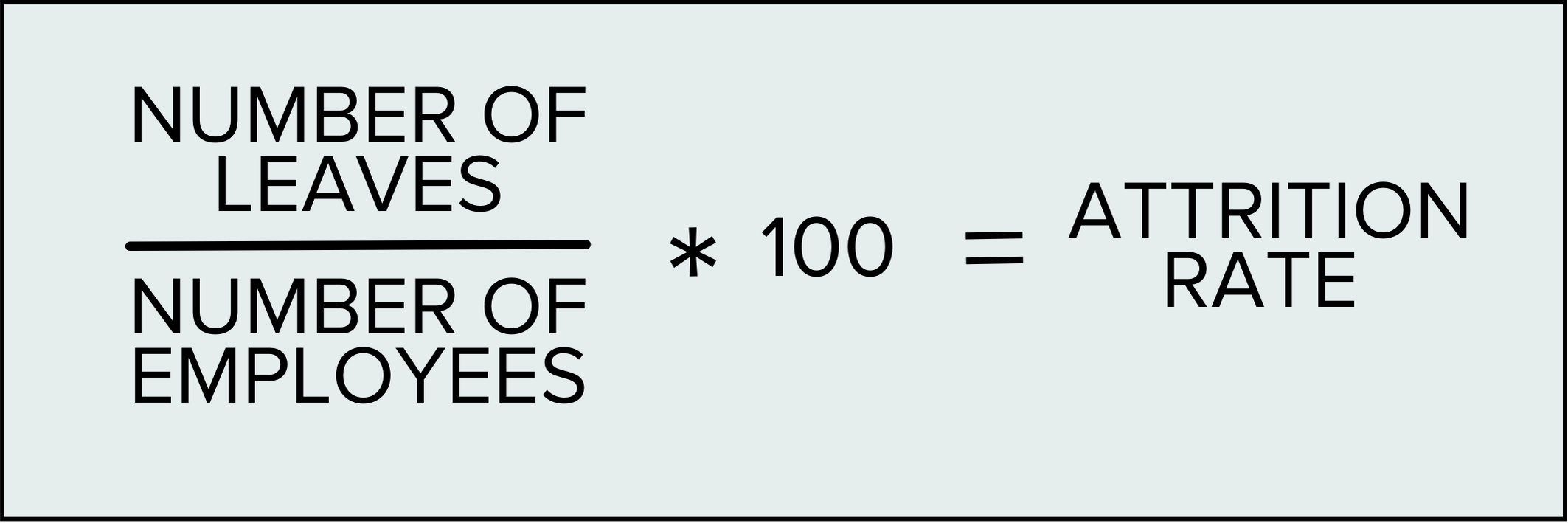
Understanding a company’s attrition rate can be a key performance indicator (KPI) for the business overall.


The following is a formula for measuring the number of employees who have left compared to the average number of employees within a company, multiplied by 100.


Employee Attrition Equation


A high churn rate means a company frequently loses employees, while a low rate indicates employees stay longer. 


If your company’s churn rate is consistently high, you should investigate and develop a strategy to retain your workforce.


Turnover and Layoffs


Other forms of employee exits are turnover and layoffs. Although these terms are similar, they both have distinct differences.


Turnover refers to a scenario in which an employer replaces employees who have left the company. Like downsizing, turnover can be voluntary or involuntary, and backfilling the role is the primary differentiation. 


Layoffs are an entirely different situation. When a company is in a challenging financial crisis, it must dismiss employees (who may be performing as directed) with no immediate plan to re-fill those positions. 


Laying off employees results in attrition as long as the company doesn’t hire as many new employees as were laid off. 


Preventing Attrition


Since we have concluded attrition can be costly and demoralizing for an organization, it is within the employer’s best interest to listen and research the reasons behind a resignation or termination.


Figuring out why employees are leaving an organization is critical. Understanding this valuable component is why many businesses decide to perform an exit interview with each individual who leaves the organization voluntarily or involuntarily. 


Lack of job satisfaction is one of the most common factors for employee attrition. Employees want to enjoy where they work.


Another way to prevent attrition is to provide an excellent work-life balance. Allowing benefits such as working remotely and a flexible schedule can go a long way to enhance employee retention. 


Finally, employees need to have a manager who is willing to go to bat for the benefit of their staff. Good communication is crucial and should be the main priority for a business to enhance team connection and make an employee feel valued. 


Besides recruiting the best people for your company, you also have to nurture and engage your talent to prevent them from leaving. Taking these steps will decrease employee attrition and provide a better overall job experience for the entire organization.


How FINSYNC Can Help


FINSYNC allows you to run your business on One Platform. You can send and receive payments, process payroll, automate accounting, and manage cash flow. To learn more about how we can help your business start, scale, and succeed, contact us today.

The 8 Step Accounting Cycle: Beginners Guide

The world of accounting has many moving parts. Many businesses follow an accounting cycle to keep track of the books and remain on a consistent schedule.


There are eight steps involved in this cycle. Upon completion, a company can ensure that every dollar is accounted for and reflected properly in the financial statements. 


Here is a checklist to use every month or at the end of an accounting period. Once completed, you can move on to the next period with a fresh, clean slate.


1. Transactions


We kick off the process by identifying and analyzing the financial transactions. These transactions include all monetary movement in and out of the organization. 


Activities would include but are not limited to receiving payment for an invoice, paying for utilities, selling products, purchasing equipment, and payroll.


2. Journal Entries


Journal entries are records of the initial transactions. Often, a bookkeeper manages and records these daily transactions and puts them in chronological order. 


Journal entries are a comprehensive way to keep track of money in and out of the company.  


In double-entry accounting, there must be two entries for each transaction. When a credit occurs, there must be a resulting debit. 


3. Posting


Each journal entry is organized and summarized in the general ledger. The general ledger is a record that categorizes all of the transactions into one of the accounts (categories) listed below:


◦ Assets

◦ Liabilities

◦ Equity

Revenue

◦ Expenses


When posting to a general ledger, it is crucial to match the transaction with the correct account and subaccount, such as rent, marketing, loan payments, etc.


4. Trial Balance


At the end of an accounting period, a trial balance assures that all debit and credit totals are equal. Therefore, running this common report makes discrepancies easy to identify. 


The trial balance brings to light the unadjusted ratios for each account and subaccount posted in the general ledger. 


When the total for all credits does not equal the total debits, a mathematical or recording error was made somewhere earlier in the process and must be fixed in order for “the books to balance.”


5. Worksheet


Unfortunately, many times, the first calculation of the trial balance will produce a discrepancy. Meaning the credit total does not equal the debit total. Therefore, adjustments need to be calculated until these equate.


Adjusting these entries is also called the worksheet analysis. Here is where we can identify when payments aren’t received, or a transaction wasn’t recorded. These discrepancies must be identified and eventually corrected before the period ends.


6. Adjusting Journal Entries


Once discrepancies related to cash transactions have been identified and entry adjustments recorded, it is time to recalculate a new trial balance.


You’ll then want to add any journal entries for non-cash transactions, such as a deferral or depreciation.


Once the trial balance is complete and the credits and debits balanced, you can move forward with producing financial statements.


7. Financial Statements


Now that the accounts are adjusted and recorded correctly in the general ledger, we are ready to create the financial statements.  


Financial statements include the following:


◦ Income Statement

◦ Balance Sheet

◦ Statement of Cash Flow

Statement of Retained Earnings (optional)


The insight you and the company’s management will gain from these financial statements will aid in planning the next steps.  


8. Closing the Books


The last step in the accounting cycle is closing the books. Closing ties up all loose ends and occurs at the end of each accounting period. Accounting periods could be every month, quarter, year, or other consistent timeframes.


After the books are closed out, the cycle starts all over again with the new period. New revenue and expense accounts start over with zero balances.


In the most basic terms, the accounting cycle is the process of ensuring the accuracy of the books. This process demonstrates all money going in and out is accounted for and balanced.


Errors made throughout this process typically occur. Therefore, having a procedure for identifying and examining these errors is recommended for all organizations. 


How FINSYNC Can Help


FINSYNC allows you to run your business on One Platform. You can send and receive payments, process payroll, automate accounting, and manage cash flow. To learn more about how we can help your business start, scale, and succeed, contact us today.

What Causes Inflation & How Does It Impact Your Small Business?

Currently, the US inflation rate is the highest it has been in over 30 years. The October consumer price index, which measures changes in the cost of food, housing, gasoline, utilities, and other goods, jumped by 6.2% over the past 12 months. What causes inflation in the first place?


In economics, inflation is the price of goods and services over a period of time. These pricing increases lessen the value of the dollar. Meaning the money saved today will be worth less tomorrow. This often contributes to raising the overall cost of living for citizens everywhere.


Fueled by post-pandemic shopping demand and labor shortages, increased energy costs, and volatile global weather patterns, inflation has many wondering when we should start to worry. 


Supply and Demand


The US continues to recover from the pandemic. The COVID shutdown damaged our global supply chain, contributing to delays in shipping. These delays eventually decreased our overall supply. 


In addition, the labor shortage happening alongside the massive influx of consumer demand exacerbated the problem. Together, this resulted in higher costs for those same goods and services. 


At the same time, the staffing shortages created backlogs of shipping containers on hold in ports, expectantly awaiting a workforce to transfer and unload the merchandise.  


Back in May 2021, travel demands surged as a response to the reopening of small businesses. Coming out of a pandemic, many individuals sought COVID-safe travel options outside of airfare and public transportation.


Suddenly, demand for rental cars and used cars increased dramatically, causing significant price increases in these industries. During this time, it cost 30% more to buy a used car than it did a year prior. 


Our car industry example is a classic illustration of demand-pull inflation or demand caused by a strong consumer desire for a product or service.  


Increased Energy Costs


Another contributor to inflation is the oil companies who lost money during the great lockdown. They are now limiting how much oil they produce, which drives up oil prices or cost per barrel. 


The Washington Post stated that rising energy costs are the main driver of inflation.


Consumers notice these energy price spikes at the gas pump, on utility bills, and at the cash register as shipping rates continue to increase. In essence, anything manufactured or shipped becomes more expensive.


Thankfully, oil refineries on the Gulf Coast have restarted after being shut down in August by Hurricane Ida. This extra supply could ease pressure on gasoline prices.


However, the underlying cost of crude oil will likely remain high, in part because of the continued demand for jet fuel and diesel fuel.


Climate Change


Besides demand-pull inflation, there is a second form of inflation that is currently in effect. Cost-push inflation is when prices increase due to rising costs of production, such as buying raw materials and increasing wages. 


Natural disasters can be a cause of cost-push inflation. Our Gulf Hurricane Ida is an excellent example of this. In the same vein, if a hurricane on the east coast devastates orchards, the supply of apples and peaches will decrease, forcing producers to increase prices to help offset the spike in demand. 


If enough merchants react this way, inflation will ensue. 


Brazil is currently going through a drought, which affects its widely used hydroelectric power. The heightened demand for electricity is causing prices to increase by 11% in some areas. 


We are currently experiencing volatile climate changes all over the world. 


End in Sight


For this inflationary period to end, we need to see both demands wane and the backlog in our supply chains lessening. Eventually, suppliers will adjust, and shortages will dissipate. There is hope on the horizon. 


Companies will begin to manufacture more cars, appliances, and furniture. The central question that continues to plague everyone is how long it will take to catch up.


If the inflation rate gets too high, the Federal Reserve could decide to increase interest rates to slow down the economy. Many of us remember this from the late 1970s and early 1980s. Mortgage rates were advertised at 18% in some areas of the country. This interest boost eventually led to a recession. 


Fortunately, the economy isn’t at that alarming phase yet. Even though prices are currently surging, eventually, this will level out. As long as we have productivity and growth, pricing surges are more than likely temporary. 


Others worry the record deficits to finance emergency coronavirus spending, including PPP loans and the continued low-interest loan rates, are hurtling us toward even more challenging times. 


At present, we are on alert, but there is no panic. The main concern is how much of the inflation rate will stick around. Consumer goods and services are expected to lower as soon as production increases. However, housing prices and rent increases tend to remain constant. 


There is a point where inflation would become a concern for the United States. Economists and policymakers around the world are vigilant and ready to support a sustained and equitable market recovery. 


How FINSYNC Can Help


FINSYNC allows you to run your business on One Platform. You can send and receive payments, process payroll, automate accounting, and manage cash flow. To learn more about how we can help your business start, scale, and succeed, contact us today.

Holiday Pay Rule of Thumb and 2022 Holiday Schedule

Do you have employees who will be working on a holiday? Who is eligible for this time off? How much extra do you pay for working on a holiday? 


This article answers these questions and more to assist you in determining the best holiday pay policy within your organization. 


Definition of Holiday Pay


Holiday pay, sometimes referred to as paid time off, is any alternative compensation an employer offers employees during holidays. This additional pay could be in the form of time-and-a-half when working on a holiday or being paid for the day when not working.


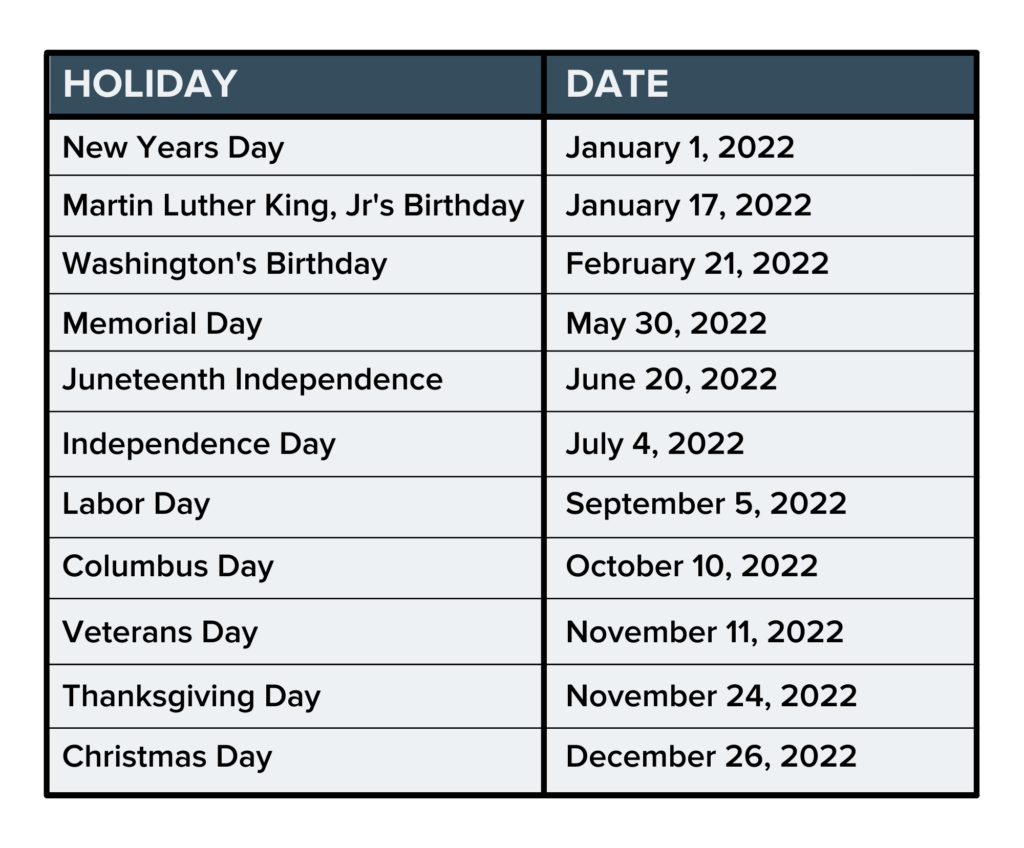
There are eleven federal holidays observed by the US government. While most government offices are closed these days, many small businesses choose to operate “business as usual.” 


The FLSA, or Fair Labor Standards Act does not require payment to employees who do not work during vacations or holidays. This type of paid time off is an agreement between an employer and an employee and is documented before that employee’s first day of work.


Likewise, companies are not required by law to pay extra for regular work hours. Holiday pay is considered a benefit to employees and is entirely voluntary. Sometimes, an employer will pay time and a half or double time for individuals who end up working on a holiday, but this is not required.  


That being said, restaurants’ and retailers’ demand for labor is at an all-time high. It is now highly encouraged to pay employees time-and-a-half or double time when working a holiday shift. 


2022 Holiday Schedule


Here are the dates for the 2022 national holidays.

Holiday Pay Table for 2022 Holiday Schedule

When a holiday falls on a weekend, that holiday usually is observed on the following Monday or preceding Friday.


Eligibility


Anyone who works on a holiday is required to be paid their standard rate of pay. Most often, there is consistency in the paid time off system for all full-time employees. 


An employee should understand the paid holidays a company offers before accepting the position. You do not want to be surprised when a holiday rolls around and you are required to work or learn you are not paid for this time off. 


Contractors and consultants are not subject to holiday pay or any other type of paid time off given to regular employees. Exceptions may be made given in their contractual agreements. 


Part-Time or Seasonal Employees


Since companies are not legally required to provide paid time off for any full-time worker, part-time and seasonal employees are treated the same. Organizations are required to detail their holiday policy in their employee handbook. 


Most companies outline the pay structure for both seasonal and part-time employees. Paying more, even double or triple, during the holidays incentivizes employees to work during these busy periods.


Employers feel more compelled to provide better benefits to all employees in a competitive economy to prevent individuals from jumping ship for a better offer. 


Providing Benefits to a Small Business


A fundamental part of just about any compensation package in this very competitive environment is time-off benefits. Employers can provide vacation and holiday pay to their employees even though this isn’t a federal requirement for all businesses.


Currently, many organizations are struggling to fill career openings. These prevalent openings force companies to compete for local and international talent and make paid time off a standard and consistent practice. 


Even better, studies show that workers who are paid for holidays show increased productivity and morale and feel more valued at work. Paid holidays can be a major motivator to employees since they know that they will be given days to rest without losing out on wages.


For a majority of small businesses, customer needs take top priority. However, this doesn’t leave much time for self-care, which is why holiday pay is so important. It is a chance to relax and recharge while increasing output and overall job satisfaction. 


How FINSYNC Can Help


FINSYNC allows you to run your business on One Platform. You can send and receive payments, process payroll, automate accounting, and manage cash flow. To learn more about how we can help your business start, scale, and succeed, contact us today.
How to Understand Working Capital with Respect to Your Small Business

It is virtually impossible to run a successful business without a continuous supply of cash that is easily accessible. Here is why understanding your company’s working capital is pivotal to creating a powerful organization.


Management teams tend to focus on the profit and loss statements or P&L, which is a formidable picture of what has already happened. However, managing your cash flow requires you to predict the future consistently. If not, cash flow quickly becomes a stratified problem that can have devastating consequences. 


This article will discuss working capital definitions and concepts you can implement in your business to improve cash flow management and reduce volatility and future financial stress.


What Is Working Capital?


Working capital or net working capital (NWC) is the difference between current assets and current liabilities. A liquid asset can be bought and sold quickly without affecting its price. 


Current assets, such as cash, securities, inventory, and accounts receivables, are resources a company owns that can be used up or converted into cash within one year.


Current liabilities are the amount of money a company owes. Examples of liabilities include debt repayment, accounts payable (bills due), and operating expenses due within the year. 


In its most basic form, working capital is part of your cash flow management approach.


Business Uses


NWC can be both positive and negative. The amount an organization needs to run smoothly varies depending on the size of the business and the industry. Of course, the more working capital a company has, the better its financial position. However, this number changes over time.


Retailers, for example, will see higher working capital during the holiday season when sales are at their highest. During these same months, a pool manufacturer will likely have lower liquidity to run their business.


Financial industries will frequently lend money to organizations during these off-peak periods. This movement of funds often requires tight monitoring between the company’s management team and the bank itself.


Businesses watch both their accounts receivable and accounts payable to help forecast future earnings. A shortfall occurs when the amount of money owed by the company is greater than the revenue coming in.


Mistakes to Avoid


Having a positive NWC is the objective, as the company will not need to borrow money. At the same time, an organization doesn’t want too much cash or liquidity. Excessive working capital means funds remain idle, which aren’t earning a profit for the business. 


Regular, high NWC could be used to increase social media marketing or other marketing strategies, provide additional training, or purchase software that could increase efficiency. 


Lastly, and perhaps the most severe working capital mistake is not having a proper cash flow management system in place. Although it may seem to be a good idea to pay bills as soon as they come, you may want to hold off until more invoices are paid. The consequence of paying a bill too soon might mean not having enough money for next month’s inventory or payroll.


Tips to Improve


Since NWC is current assets minus current liabilities, there are mainly two ways to improve your working capital. A business can increase existing assets or reduce liabilities.


A business can also tweak the dates that invoices are due. Companies can offer incentives to their customers to collect the receivables sooner. Conversely, an organization may negotiate a debt extension with creditors or suppliers.


Once you have a solid cash management process in place, you will be able to determine the best course of action for new spending. For example, in the long run, it might be cheaper to buy inventory in bulk; however, after plugging in the numbers, you may determine this would be sacrificing too much valuable working capital, which may result in inadequate NWC to package and ship. 


Overview


Working capital is one of the most critical metrics to running a business. Insufficient EWC amounts to a shortage of resources and even layoffs. At the same time, too much liquidity could mean the company is not reinvesting its money to improve the business.  


Most businesses fail, not because of a lack of profits but because of poor EWC management. Cash flow management is critical, and the sooner you can initiate a consistent process, the more flexibility you will have to expand and grow.


How FINSYNC Can Help


FINSYNC allows you to run your business on One Platform. You can send and receive payments, process payroll, automate accounting, and manage cash flow. To learn more about how we can help your business start, scale, and succeed, contact us today.

How to Calculate Gross Profit with Equations and Examples

If you manage your business finances regularly, the most important thing to focus on is profitability. Understanding gross profit and calculating it consistently is key to building and growing your business.


This guide will explain what gross profit is, how to calculate it, what the “cost of goods sold” means, and why these concepts are important for your business’s future.


What Is Gross Profit?


Gross profit (GP) is the revenue from sales minus the costs to make those sales happen. The costs related to sales are called “Cost of Goods Sold” (COGS), which is usually shown as a separate line on your income statement.


GP tells you how much your company would make without considering administrative costs or other expenses not directly tied to the product or service you sell.


To understand gross profit better, you need to know about your expenses.


Expenses fall into two categories: fixed and variable costs. Fixed costs are operating expenses that stay the same each month. They’re often grouped under “Sales, General & Administrative” (SG&A).


Variable costs, or COGS, include all other expenses related to making sales.


Fixed cost examples (SG&A):

◦ Rent

◦ Office Phones

◦ Salaries

◦ Employee Benefits

◦ Insurance

◦ Payroll Taxes


Variable cost examples (COGS):

◦ Utilities Not Fixed

◦ Hourly Labor

◦ Packing and Shipping

◦ Equipment

◦ Depreciation


Cost of Goods Sold


COGS on an income statement includes all expenses a business incurs to produce, source, and deliver a product to customers. This total is subtracted from the company’s revenue to find the gross profit.


COGS covers everything from raw materials to shipping costs but does not include marketing expenses or overhead. However, it does include labor costs for those who make and assemble the final product.


Understanding COGS is vital because it represents the real cost of running the business. If COGS goes up, gross profit goes down. Knowing these costs helps managers and investors see the company’s financial health clearly.


Calculating GP


The gross profit calculation is one of five equations used to measure a company’s profitability. 


To find GP, subtract the cost of goods sold (COGS) from total revenue


gross profit equation


For example, if you produce coffee beans, you’d add up all the COGS—like purchasing raw beans, utility costs for roasting, labor for packaging, and shipping costs to customers.


If your sales revenue for the month is $800,000 and your COGS is $600,000, your gross profit for that month would be $200,000.


The equation looks like this:


gross profit equation example


Gross Margin


Gross margin is the gross profit expressed as a percentage of revenue and is calculated by dividing the gross profit by the sales or revenue and then multiplying by 100.


gross margin equation


Let’s use our coffee bean manufacturing example again. We would complete the formula by inputting the gross profit and dividing it by the revenue, multiplying it into a percentage. 


gross margin equation example


Therefore, every dollar of coffee bean sales generates about 25% gross margin. 


There are two ways to improve your gross margin. A business can increase its product price or lower the variable costs associated with producing these products. 


Long-Term Effects


Using gross profit as a metric helps manage an organization’s labor and materials more effectively during production. It allows you to pinpoint areas to cut costs and boost revenue when planning.


“We look at gross profit margins on a weekly basis to be adaptable and pivot at speed while providing proactive leadership and fact-based decision making,” says Claude Compton, founder of Pave Projects. “This regularity allows the business to ride out changing tides and isolate any issues before they become a long-term problem.”


By regularly monitoring profit margins for each area of your business, you can gather valuable data to identify and scale the most profitable parts of your organization.


About FINSYNC


FINSYNC is a leading financial technology company dedicated to empowering entrepreneurs through an all-in-one platform that manages banking, payments, cash flow, payroll, accounting, and more. Through its CO.STARTERS Program, FINSYNC is committed to building stronger communities by empowering entrepreneurs with the tools, resources, and networks they need to succeed. For more information, visit FINSYNC.com.


5 Main Differences Between a Bookkeeper and an Accountant

Bookkeeping and Accounting are two very critical disciplines within any organization. Often, these two terms are used interchangeably as they share a common goal in handling a company’s finances.


Accounting is the process of recording, classifying, selecting, measuring, and communicating the financial data of an organization to enable users to make decisions.


Bookkeeping is a component of accounting that maintains and records all daily financial transactions. 


Let’s take a closer look at the distinctions between these two valuable professions and how working with both bookkeepers and accountants will benefit your organization. 


1. Bookkeepers Organize Financial Data


The primary role of a bookkeeper is to record the individual transactions for a business into the general ledger, which summarizes all the financial information you have about your business. 


Examples of these transactions are listed below:


1. Posting debits and credits such as sales or operating expenses

2. Reconciliations or matching the transactions to the bank ledger

3. Delivering reports such as the balance sheet or income statement

4. Calculating and preparing payroll checks


A bookkeeper inputs the financial data on a day-to-day basis. Ensuring the daily monetary transactions is what keeps a business running smoothly. 


2. Financial Statements


Accountants start with the records the bookkeepers create, sometimes changing categorizations and adding non-cash journal entries, to then look at the business from a larger perspective. These records enable an accountant to analyze and interpret the data in reports that become great resources for business managers.


In addition to more specific reports, these financial statements are typically included in a reporting package prepared by an accountant:


◦ Income statement

Balance sheet

◦ Statement of cash flows

Statement of retained earnings – optional


These main financial statements are audited by accountants, government agencies, and other firms to ensure accuracy for tax, financing, or investing purposes. 


3. Analysis


Accountants are proficient in taking the information from the financial statements and general ledger and extrapolating the data to reveal higher-level financial structuring and analysis for a business. 


Accountants will set, organize,  and analyze financial indicators while scrutinizing any inconsistencies or irregularities. 


The result is a better understanding of actual profitability and awareness of cash flow in your organization. This information is essential in forecasting and predicting a company’s future trajectory. 


4. Management Decisions


A business management team will use the data interpreted within the financial statements to make decisions that affect the organization’s future direction. 


Any accountant may summarize their analysis and make recommendations to these decision-makers. They also can investigate any out-of-the-box discrepancies or address complex accounting issues. 


Most importantly, your accountant is a crucial advisor that can help you analyze the future: the impact of purchasing new equipment, hiring new team members, switching vendors, etc.. Accountants can list the financial ramifications of these vital management decisions.


5. Skill Sets


The required credentials between a bookkeeper and an accountant are perhaps the most significant difference between the two roles.


While bookkeeping may require specific skills, software knowledge, and training, no formal education or certification is required. The basic requirements are to be detail-oriented, excel in basic math, and be highly organized.


Accounting positions generally require a bachelor’s degree in accounting or a related field such as auditing. 


In addition, many accountants have a CPA or Certified Public Accountant credentials. Most state boards require at least two years of direct experience before an accountant can sit for the CPA exam. This license should be continually renewed with additional classes and certifications.


Summary


There is a high level of overlap between a bookkeeper and an accountant. But for the most part, bookkeepers are concerned with the day-to-day maintenance of financial data. At the same time, accountants are focused on leveraging the company’s financial metrics to make wise business decisions. 


If you are a small or medium business owner, your finances need to be in order. Without procedures to track transaction activities, a business must guess where its money is coming and going.


It is up to you to decide which expertise your company is ready to employ, as both roles are critical to sustainable business success. However, many organizations can outsource these disciplines during the early stages of development. 


Ultimately, these two disciplines are made to work in tandem. Hiring a bookkeeper can bring peace of mind, knowing your finances are organized and ready for tax season. In addition, a qualified accountant can see financial and tax loopholes that can save your business money. 


How FINSYNC Can Help


FINSYNC allows you to run your business on One Platform. You can send and receive payments, process payroll, automate accounting, and manage cash flow. To learn more about how we can help your business start, scale, and succeed, contact us today.

Apply For Business
Checking Account

Before you get started

1

We are not able to service these businesses at the moment:

  • Crypto Currency and Money Services
  • Privately Owned ATMs
  • Marijuana-Related
  • Gambling
  • Money Services Business
  • Business headquartered outside of the U.S.
2

At this time we are offering online business checking accounts through bank partners in these states:

  • Arizona
  • California
  • Idaho
  • Nevada
  • New Mexico
  • Oregon
  • Texas
  • Utah
  • Washington

Is your business in one of these states?