
5 Primary Benefits of Creating Audit Trails for Your Business

Imagine your business as a thrilling detective story, but instead of chasing criminals, you’re tracking financial moves. That is a good way to think about an audit trail – a detailed record that reveals the “who, what, when, and why” behind every transaction. 


Security and transparency are very important when running a small business, and audit trails can be very helpful tools. In this article, we will talk about audit trails and discover how they can improve your organization’s security and financial control.


Understanding Audit Trails


An audit trail is like a daily journal or diary for your business finances, keeping a record of everything that happens, which is helpful for protecting both your business and your customers. Here’s how it works:


• The “What”: This part of the audit trail records each action taken, like a customer buying something online or an employee restocking items. It gives a clear picture of what exactly occurred at each step.

• The “Who”: It is important to know who did what in your business. The audit trail does this by tagging each action with a unique identifier, like a username, so you can see who was responsible for each action.

• The “When”: Every entry in the audit trail is stamped with the exact time it happened, which helps lay out a clear timeline of events. This makes it easy to track when things occurred and in what order.


By keeping track of these three key details—what happened, who did it, and when—it becomes a powerful tool. For instance, if there is an error in your financial records, the audit trail lets you quickly spot the mistake and figure out who made it and when it happened. This helps you correct the issue, learn from the error, and make your business more financially secure.


Benefits of an Audit Trail


Accountability and Transparency

Audit trails keep a precise record of every action by your team and customers. If a client complains about a problem on a website, referring to these records can reveal the cause, such as using outdated code. Quickly fixing the issue and discussing it openly with the client builds trust and shows your business values reliability.


These explanations show how audit trails are not just about tracking data but are practical tools for improving various aspects of your business, from legal compliance to customer satisfaction.


Enhancing Security

Security is necessary to keep your business and customers safe from online threats. Imagine finding suspicious login attempts on your system one morning. Audit trails are essential here, as they alert you to unauthorized access attempts and other security risks right away. By keeping detailed records of who accessed what and when you can quickly act to protect your business and customer data.


Improving Operational Efficiency

Audit trails do more than just keep you secure; they also make your business run more smoothly. For example, if you run a restaurant and notice you are running out of certain ingredients too quickly, an audit trail can help you figure out why. You might discover it is not a problem with your supplier but an issue with how inventory is reported. Fixing these mistakes helps you work more efficiently, boosting productivity and profits.


Ensuring Compliance

Audit trails help ensure that your business is following the rules. Whether it is protecting customer data under GDPR or keeping medical information secure as required by HIPAA Compliance, audit trails track your compliance. This way, you can prove you are doing things correctly and avoid any legal issues or fines.


Better Decision Making

In a world driven by data, making informed decisions is key. Audit trails give you valuable insights into how your business operates and how customers behave. This information can help you see what customers like and what issues they encounter. For instance, a boutique owner might use an audit trail to see which eco-friendly products have high customer interest, but are not being purchased, perhaps due to high prices. By adjusting prices, the owner can boost sales and customer satisfaction.


Future of Audit Trails in Business


As technology advances, so too does the potential of audit trails. The integration of artificial intelligence and big data analytics offers exciting possibilities, from predictive analytics to even more robust security measures. 


Imagine having a system that tracks every action in your business and uses artificial intelligence and big data to predict trends, identify risks before they happen, and suggest improvements so you can make smart decisions and stay one step ahead. As a business owner, embracing these advancements in audit trail technology could be a game-changer, setting you up for success in a digital-first world.


How FINSYNC Can Help


There are 3 primary ways FINSYNC helps business owners. (1) CO.STARTERS courses through FINSYNC can help turn your business idea or side hustle into a thriving business. (2) On our website, you can also apply for a business bank account. (3) In addition, the FINSYNC software allows you to run your business on One Platform – invoice customers, pay bills, process payroll, automate accounting, and manage cash flow. To learn more about how we can help your business start, scale, and succeed, contact us today.

Smart Strategies for Monitoring High-Cost Expenses

Imagine juggling flaming chainsaws while riding a unicycle on a tightrope. That is what running a small business can sometimes feel like. Between serving customers, managing staff, and keeping up with the latest trends, it is easy to let monitoring high-cost expenses slip through the cracks.


But here is the truth: uncontrolled spending can quickly eat into your profits and hinder your growth. The good news? You can take charge of your finances and keep your business on track by implementing a few smart strategies.


Why Monitor High-Cost Expenses?


Think of high-cost expenses as those expenses that take the biggest bite out of your budget. The most common high-cost expenses are rent, payroll, and inventory. Marketing and utilities are also fairly common. While the specifics will vary depending on your industry, identifying and keeping an eye on these areas is crucial. After all, uncontrolled spending can lead to:


• Reduced profits: Every dollar spent unnecessarily is taken from your bottom line.

• Cash flow problems: Unforeseen expenses can make it challenging to meet your financial obligations.

• Limited growth potential: Without a clear picture of your spending habits, you can not make informed decisions about investing in your business.


How to Identify High-Cost Expenses


High-cost expenses are relative to your business size and industry. A major expense for a solopreneur could be a smaller percentage of the budget for a larger company. The key is to understand where your money goes. By conducting a quick analysis, you can determine where your money is going and identify areas that consume a significant portion of your budget.


This quick analysis involves examining your spending and organizing it into clear categories. Most accounting software and expense-tracking apps can do this automatically. By analyzing this data, you can identify areas that use a significant portion of your budget.


5 Steps to Monitoring Expenses


Now that you know what you are looking for, here are five strategies to more easily monitor your expenses. 


1. Technology to the Rescue


Accounting software and platforms offer features that simplify expense management, such as automatic transaction categorization, spending reports, and budget alerts. Automating part of the process saves time and reduces accounting errors, making it easier to keep an eye on your financial health. Some software companies, like FINSYNC, have an option to get started with a free account.


2. Utilize Spreadsheets


If your budget does not yet allow for software, building a well-organized spreadsheet is a good temporary solution. Label columns for date, vendor, category (rent, payroll, or marketing), amount, and notes. Consistency is key here; you must regularly input your transactions. Later, you can create formulas to automate calculations, turning your spreadsheet into a powerful tool for manual expense tracking. P.S. If creating formulas and automating calculations seems overwhelming, remember that Google and YouTube are your friends.


3. Schedule Reviews


Commit to reviewing your expenses at regular intervals—weekly, monthly, or quarterly, based on your business’s needs. These sessions allow you to examine the data, identify high-cost areas, and compare these to your budget. Regular reviews act as an early warning system for financial issues, allowing you to be proactive.


4. Analyze and Adjust


Based on what you learned, think about ways to tighten up your spending and budget. This could mean cutting unnecessary costs like forgotten subscriptions. Or, you could negotiate better deals with suppliers. Remember, the goal is to keep your business healthy and moving steadily toward growth and profitability.


5. Conduct Periodic Audits


While regular reviews are fantastic for catching everyday spending slips, there’s another tool in your belt: audits. Whether internal or external, audits are great for spotting mistakes, overcharges, and areas where money leaks unnoticed. Regular reconciliations might miss these. Therefore, audits offer a fresh perspective on your money management, revealing opportunities to save or squeeze more efficiency out of your resources. 


Monitoring for the Future 


Keeping an eye on your high-cost expenses helps you understand how your business is doing financially. The more you monitor these expenses, the better information you have for making decisions about your business’s future. This means you can plan your budgets more accurately, use your resources more wisely, and invest your money in the right places.


For bigger financial decisions, a cost benefit analysis helps determine if spending money on something will pay off by bringing in more revenue than it costs. Before you make a purchase, ask yourself: will this expense earn back its cost over time? Using this strategy helps you avoid spending on things that do not add value to your business in the long run.


The Takeaway


Managing your high-cost expenses does not have to be a struggle. By using these strategies and making cost-monitoring a regular part of your routine, you will be on your way to a more financially secure and thriving business.


How FINSYNC Can Help


There are 3 primary ways FINSYNC helps business owners. (1) CO.STARTERS courses through FINSYNC can help turn your business idea or side hustle into a thriving business. (2) On our website, you can also apply for a business bank account. (3) In addition, the FINSYNC software allows you to run your business on One Platform – invoice customers, pay bills, process payroll, automate accounting, and manage cash flow. To learn more about how we can help your business start, scale, and succeed, contact us today.

 

10 Ways a Business Line of Credit Can Solve Your Cash Flow Problems

Cash flow problems are a common headache for small business owners. Keeping your business growing while waiting for payments, covering unexpected expenses, or even grabbing growth opportunities can feel like navigating a minefield. A business line of credit can be a solution to these challenges.


This article will explore ten ways a business line of credit can solve your cash flow problems, ensuring your operations run smoothly and your business thrives.


1. Bridge the Gap During Seasonal Downturns


If your business has slow periods during the year, a business line of credit can give you the money to keep running until things pick up again. Figure out how much money you will need before these slow times and use the credit line to pay for things like salaries and rent when business is slow.


2. Manage Unexpected Expenses


Unexpected costs, such as emergency repairs or sudden tax obligations, can disrupt your cash flow and strain your business. With a line of credit, you gain quick access to funds to cover these costs without draining your operational cash. This flexibility ensures that unexpected costs do not derail your business operations.


3. Bulk Purchase Discounts


Purchasing inventory or supplies in bulk often comes with significant discounts, but the upfront cost can be a barrier. A business line of credit allows you to take advantage of these savings without exhausting your cash reserves. By strategically using your line of credit, you can improve your profit margins by lowering the cost of goods sold.


4. Smooth Irregular Cash Flow


Cash flow can be irregular and unpredictable for businesses with project-based work or lengthy sales cycles. A business line of credit offers a buffer that helps you manage these irregularities. By drawing on your line of credit, you can ensure that employees and bills are paid on time, even when revenue is not coming in steadily.


5. Support Business Growth 


Expansion opportunities can present themselves when you least expect them. Growth requires capital, whether launching a new product line or entering a new market. A business line of credit can provide the necessary funds to seize these opportunities, helping your business grow without compromising your cash flow.


6. Strengthen Supplier Relationships


Maintaining good relationships with your suppliers can lead to more favorable terms and priority service. Using a business line of credit to ensure that suppliers are paid on time, every time, can strengthen these relationships. This reliability can lead to benefits such as discounts, better payment terms, or priority during high-demand periods.


7. Finance Marketing Campaigns


Effective marketing campaigns can boost your sales and enhance brand visibility, but they require an upfront investment. A business line of credit enables you to finance these campaigns, attracting new customers and increasing sales without dipping into reserves needed for daily operations.


8. Upgrade Equipment or Technology


To stay competitive, investing in the latest equipment or technology is often necessary. However, these upgrades can be expensive. A business line of credit provides the funds to invest in necessary equipment or software, improving efficiency and productivity without needing a large upfront payment.


9. Enhance Working Capital


Working capital is essential for your business, supporting everyday operations and meeting short-term needs. A business line of credit can enhance your working capital, giving you the flexibility to cover day-to-day expenses, manage inventory, and respond to opportunities or challenges as they arise.


10. Future Opportunities or Challenges


In business, being prepared can make the difference between thriving and surviving. Maintaining an unused line of credit can act as a safety net, providing peace of mind that you can access funds when needed. This preparedness ensures you can quickly respond to opportunities or challenges without scrambling for financing.


Conclusion


Navigating cash flow problems requires a strategic approach and the right financial tools. A business line of credit offers a flexible and effective solution to manage the ups and downs of business operations. Understanding how to leverage this tool can help with cash flow management and move you one step closer to ensuring your business remains solid.


FINSYNC CollectEarly


Imagine the possibilities for your business when you can access the money from your invoices almost immediately, transforming your cash flow management overnight. FINSYNC’s CollectEarly™ is a compelling alternative to a traditional business line of credit, providing a more affordable way to ensure your business has the funds it needs. 


With CollectEarly™, you can receive funds from invoices deposited into your account in as little as 4 hours for a modest fee of 2.5%, which is much less than most credit card transactions. Why wait weeks for payments when CollectEarly™ makes it possible to get paid now, giving you better control over your finances? Sync up with FINSYNC CollectEarly™ today and take the first step towards faster payments and a healthier cash flow.


How FINSYNC Can Help


There are 3 primary ways FINSYNC helps business owners. (1) CO.STARTERS courses through FINSYNC can help turn your business idea or side hustle into a thriving business. (2) On our website, you can also apply for a business bank account. (3) In addition, the FINSYNC software allows you to run your business on One Platform – invoice customers, pay bills, process payroll, automate accounting, and manage cash flow. To learn more about how we can help your business start, scale, and succeed, contact us today.

 

A Beginner’s Guide to Edge AI

Technology is weaving into every aspect of our lives, from managing marketing campaigns to affecting how we drive; AI solutions are constantly popping up to help businesses thrive. One such innovation, Edge AI, is a specific type of artificial intelligence (AI) technology quickly gaining traction across several industries.


This guide will equip you with the knowledge to understand Edge AI and information to assess its potential impact on your business.


What is Edge AI? 


Edge AI refers to processing data directly at the source where it is generated rather than sending it to a data center for analysis. This on-site processing approach offers potential advantages, including:


• Faster Processing and Real-Time Results: Edge AI promises speedier processing times by eliminating the need to transmit data back and forth. 

• Enhanced Data Security: Since data is processed locally on devices or servers within a business network, Edge AI may reduce the risk of security breaches. 

• Offline Functionality: This technology can potentially function with limited or no internet connectivity. This opens doors for applications in remote locations or situations with unreliable internet access.


Potential Applications Across Industries


Edge AI’s ability to process data locally opens doors for its operation in various sectors. Here are some potential use cases across different industries:


• Retail: Retailers could leverage this new tech to study customer behavior within stores using cameras and sensors. This information could enhance product placement, personalize recommendations based on individual preferences, and even prevent theft through anomaly detection.

• Home Services: Edge AI could improve service delivery and project management. Smart sensors and drones can monitor project progress, material levels, and how well equipment is working in real time. For landscapers, AI technology can check the dirt, the health of the plants, and water consumption. This helps plan better gardens and watering plans, ensuring that your work fits exactly what each customer needs more efficiently.

• Manufacturing: Imagine factories where this AI monitors equipment to predict maintenance and prevent costly downtime. Additionally, it could improve production lines by analyzing sensor data, increasing efficiency, and reducing waste.

• Healthcare: The healthcare sector could employ Edge AI for remote patient monitoring. Wearable devices and sensors could transmit current health data, enabling healthcare professionals to track vital signs and receive alerts in critical situations. This could include early disease detection and improve the overall quality of remote patient care.

• Education: Edge AI in education personalizes learning by processing data on individual devices, eliminating consistent internet needs. It tailors teaching strategies to each student’s learning style, assesses work automatically, adapts to learning behaviors, and predicts future paths. With local data processing, Edge AI makes education more targeted, efficient, and accessible. For example, it serves as an AI math solver, assisting students with mathematics homework.


These are just a few examples, and the potential applications of Edge AI are constantly evolving as the technology trends advance.


Beyond the Buzzword


While Edge AI holds immense promise, it is necessary to approach it with a balanced perspective. This section delves beyond the hype and sheds light on four key considerations to keep in mind:


1. Edge AI Infrastructure and Integration 

Implementing this AI solution might require upgrading or expanding existing infrastructure. This could involve purchasing new devices, local servers, or specialized hardware to support on-site processing, similar to how PTE software requires robust systems for optimal performance. Additionally, integrating AI applications with existing systems and infrastructure might require additional technical expertise.


2. Security and Privacy

Processing data locally comes with its own set of security concerns. Strong data protection measures are necessary to ensure the safety of sensitive information stored and processed on devices or local servers. Businesses must be vigilant about potential vulnerabilities in the Edge AI ecosystem and implement appropriate measures to mitigate risks.


3. Scalability and Cost-Effectiveness

While Edge AI offers benefits, it is important to assess scalability and cost-effectiveness in the long term. Setting up and maintaining this technology across an extensive network of devices could be more complex and expensive than centralized cloud-based systems.


4. Ethical Considerations

As with any new tech, Edge AI raises ethical concerns surrounding data privacy and potential job displacement. Additionally, exploring resources, such as higher education AI guides, can provide valuable insights into how AI is being used responsibly in educational settings, helping businesses understand potential ethical implications in the education sector.


By following these considerations, businesses can make informed decisions about whether and how to integrate Edge AI into their operations.


A Glimpse into the Future 


The field of AI is constantly evolving, and Edge AI is at the forefront of pushing the boundaries of what is possible. As the technology matures, we can expect to see:


• Advancements in hardware and software: More powerful and efficient hardware designed for Edge AI applications will likely become available, making it easier and more cost-effective for businesses to adopt the technology. Additionally, software advancements will likely streamline the development and deployment of this solution, making them more accessible to a wider range of organizations.

• Increased security and privacy: As Edge AI’s use grows, security and privacy concerns will likely receive even greater attention. We expect the development of robust data frameworks and protocols to ensure the safe handling of sensitive data.

• Integration with other emerging technologies: This technology may play a crucial role in developing and integrating other emerging technologies, such as the Internet of Things (IoT) and 5G networks. This convergence could lead to intelligent and interconnected systems capable of real-time data analysis and decision-making, further transforming various industries and aspects of life.


Bottom line


Edge AI stands as a promising innovation in the ever-evolving field of AI, offering a lot of potentials. However, it is still in its early stages of development. A careful review of business needs, available resources, and existing infrastructure is important before implementing new technology. By continuing to explore new technologies and approaching them with a balanced perspective, we can ensure AI continues to evolve as a positive change across different sectors.


How FINSYNC Can Help


There are 3 primary ways FINSYNC helps business owners. (1) CO.STARTERS courses through FINSYNC can help turn your business idea or side hustle into a thriving business. (2) On our website, you can also apply for a business bank account. (3) In addition, the FINSYNC software allows you to run your business on One Platform – invoice customers, pay bills, process payroll, automate accounting, and manage cash flow. To learn more about how we can help your business start, scale, and succeed, contact us today.
 

Time Management Hacks for Busy Accountants

Do you ever feel like there are just not enough hours in the day? Managing multiple clients, meeting tight deadlines, and maintaining accuracy are essential to your role as an accountant, but they can also lead to stress and burnout. Fortunately, with the right strategies and technology, you can control your time and streamline your workflow.

This guide explores practical time management strategies to help you work smarter, prioritize effectively, and achieve a better work-life balance. These tips will optimize your daily tasks, giving you more time to focus on what matters most.


Time Management Fundamentals


Let’s face it: effective time management is crucial for your success. When you are organized and efficient, you can:


• Increase your productivity: Get more done in less time, meaning fewer late nights and more time for what matters.

• Reduce stress: Feeling overwhelmed by your workload is a recipe for burnout. Time management helps you stay organized and maintain a sense of control.

• Improve accuracy: Rushing through tasks can lead to mistakes. Effective time management allows you to dedicate the necessary time and focus to each task, ensuring accuracy.

Enhance client satisfaction: Meeting deadlines and delivering high-quality work strengthens client relationships.


Now, here are the likely culprits stealing your precious time:


• Interruptions: Constant phone calls, emails, and unscheduled meetings can disrupt your workflow and derail your focus.

• Multitasking: While it may seem like you are getting more done, multitasking often leads to decreased efficiency and increased errors. Your brain can only truly focus on one task at a time.

• Procrastination: Putting off important tasks until the last minute adds unnecessary stress and limits your ability to deliver high-quality work on time.

• Disorganized workflow: A messy workflow without a clear way to manage tasks and data can waste time as you hunt for documents and important info.


To combat these time wasters, we need a solid foundation. Enter SMART goals. SMART stands for Specific, Measurable, Achievable, Relevant, and Time-bound. Applying this framework to your goals ensures they are clear, focused, and achievable, keeping you motivated and on track.


Practical Strategies for Maximizing Time


Planning and prioritization are the cornerstones of effective time management. Here are some actionable steps:


Daily To-Do Lists

Start your day by creating a to-do list and prioritizing tasks based on urgency and importance. This helps you stay focused and avoid feeling overwhelmed.


Weekly Planning

Dedicate some time each week to planning for upcoming deadlines, meetings, and client deliverables. This will enable you to anticipate challenges and proactively manage your workload.


Utilize Calendars Effectively

Treat your calendar like your bible. Schedule appointments and deadlines and even block out time for focused work sessions. This helps you visualize your week and avoid overbooking yourself.


Batching Strategy

Batching similar tasks is another powerful strategy. Instead of switching between different tasks throughout the day, group similar tasks together (e.g., returning phone calls and responding to emails). This minimizes context switching and allows you to enter a focused flow state, increasing your efficiency.


The Two-Minute Rule

Many successful accountants swear by the “two-minute rule”: If a task can be completed in two minutes or less, tackle it immediately instead of adding it to your to-do list. This helps clear your mental space and prevents small tasks from accumulating and becoming overwhelming.


Technology

Technology is your friend! Leverage the power of new tech tools like:


• Project Management Software: Platforms like Asana or Trello can help you organize tasks, assign deadlines, and collaborate with colleagues, keeping everyone on the same page.

• Time Tracking Software: Tools like My Hours or Harvest allow you to track the time spent on different tasks. This data can be used for analysis and billing purposes, helping you identify areas for improvement.

• Automation Tools: Many platforms offer features like automatic reminders, email scheduling, and data entry automation. Utilize these features to free up your time to focus on more strategic aspects of your work.


Maintaining a Healthy Work-Life Balance


Achieving a healthy work-life balance, especially in the demanding world of accounting, can feel like an uphill battle. But what if you could find harmony amidst the chaos? 


First, draw a firm line between your professional and personal life. Stick to designated work hours daily and weekly, and resist checking emails or answering calls outside those times. Also, remember your vacation time exists for a reason – use it!


Second, short breaks throughout the day are essential to avoid burnout. Step away from your desk, stretch your legs, or grab a coffee. Even a few minutes can help you refocus and return to your tasks with renewed energy.


Third, do not hesitate to delegate tasks to colleagues or a bookkeeper. This will free up your time to focus on higher-priority tasks requiring your specialized expertise and prevent you from feeling overwhelmed by the workload.


Finally, learning to decline additional work when your workload reaches its limit is important. Taking care of yourself is non-negotiable. 


Closing Remarks


Time management is a journey, not a sprint. Experiment with the above strategies, find what works best for you, and adapt them to your workflow and preferences. By implementing new hacks, you can reclaim control of your time, achieve your goals, and be able to thrive professionally and personally.


Additional Resources


Want to delve deeper into time management mastery? Explore the wealth of online resources specifically tailored to accountants! Here are a few examples to get you started:


1. Webinar: “The Time Management Toolkit for Busy Accountants” Get practical strategies for organization and leveraging technology to boost efficiency.

2. Course: “Time Management for Professionals” by Udemy. This course covers goal setting, time tracking, and creating effective workflows.

3. Podcasts: “The Accounting Podcast” by David Leary and Blake Oliver. This popular podcast features interviews with accounting professionals who share their insights and tips on managing their time and workload effectively.


How FINSYNC Can Help


There are 3 primary ways FINSYNC helps business owners. (1) CO.STARTERS courses through FINSYNC can help turn your business idea or side hustle into a thriving business. (2) On our website, you can also apply for a business bank account. (3) In addition, the FINSYNC software allows you to run your business on One Platform – invoice customers, pay bills, process payroll, automate accounting, and manage cash flow. To learn more about how we can help your business start, scale, and succeed, contact us today.

 

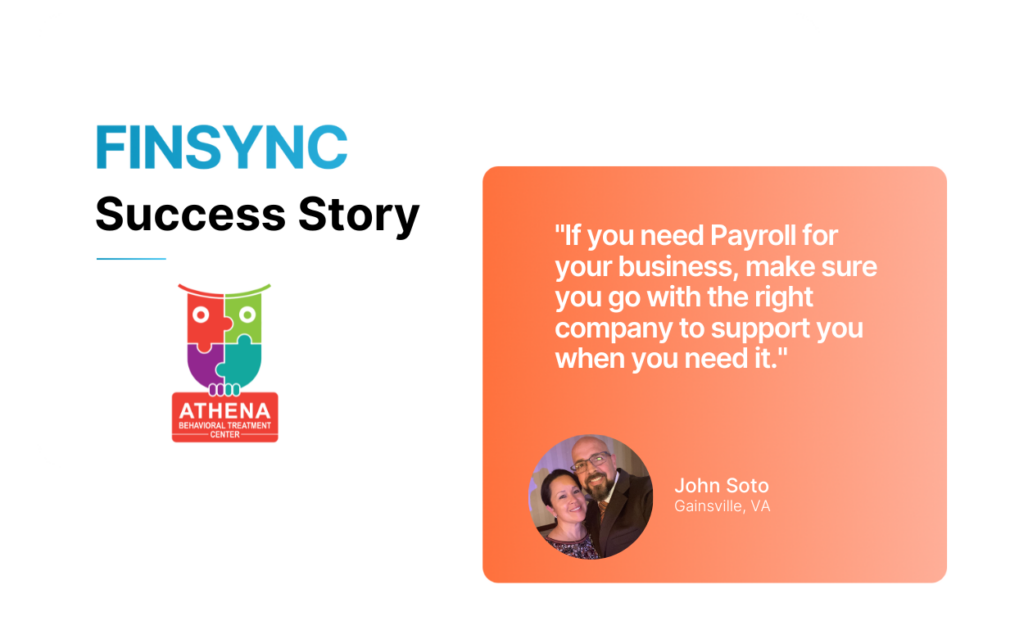
FINSYNC Spotlight Interview with Athena Behavioral Treatment

The selection of the right financial tools can significantly impact the efficiency and success of a company. This sentiment is echoed in our conversation with John Soto, a small business owner who has firsthand experience with the advantages of incorporating FINSYNC into his business operations at Athena Behavioral Treatment Center.


John and his wife, Nydia, run ABTCVA or Athena Behavioral Treatment Center in Gainsville, Virginia. Their organization is dedicated to assisting children with autism. John and Nydia’s journey, which began with a personal recognition of the demand for specialized services, has been marked by an array of challenges and achievements.


What prompted you to start using FINSYNC?

I opened a business checking account with Fulton Bank in Manassas, Virginia. FINSYNC was recommended and decided to go with you.


What about the FINSYNC Platform attracted you?

It is pretty much all in one place, including payroll. This was important to me to find a platform where I could also do payroll, so this was a good option. It is also very user-friendly, which was a plus. 


Tell me about your company and what inspired you to start.

We have a company that provides behavioral health services for kids with autism. My wife and I realized there was a big need for kids to have these services. My wife is a board-certified behavioral analyst. She had experience managing people from prior military and government work, so we decided to do it on our own and launch our own company. So far, so good. 


What are some of the challenges you’ve faced as a small business owner?

Staffing can be a challenge. It is difficult to find people that have a good work ethic. Since COVID, there are a lot of people who want to stay home and don’t want to work. We have been lucky to have found good employees, and we are staffed, but we always need more people, and it can be a struggle to find the right fit. 


What’s the best thing about being a small business owner? 

Being your own boss is great. Grabbing an idea and knowing it is yours from start to finish. Whether it fails or succeeds is on you. You have to work hard, and you see the rewards from the hard work you put in. 


What are the biggest benefits your business has experienced using FINSYNC?

Everything is right there on one platform. This helps us with our reports. The payroll is set up to make sure that all of our employees are paid in addition, our bills are taken care of so we can stay in business.


I have used your customer service. They have always helped me out with any questions I have or any issues that come up. They have always been there for us.


What advice do you have for those thinking about starting their own business?

Do a lot of research. Make sure you know what you are getting into. Knowing what to expect is essential to your success. Passion is also important, but it might not be the right area to open a business even though you love it. So, that is why the research part is just as important as loving what you are doing. 


Also, find good support. Locate a bank that is going to support you. If you need payroll for your business, make sure you go with the right company to support you when you need it.  


FINSYNC allows you to run your business on One Platform. You can send and receive payments, process payroll, automate accounting, and manage cash flow. To learn more about how we can help your business start, scale, and succeed, contact us today.

 

6 Core Business Processes Every Small Business Owner Should Know

Your company’s everyday tasks and routines are its backbone, driving it forward and helping you build strong connections with customers. But, there is an art to fine-tuning the core business processes you perform day after day. Working on these will help set your business on a path toward growth and expansion.


This exploration will uncover some of the fundamental aspects of core business processes, offering insights and strategies to sharpen and uplift your organization.


1. Marketing and Sales


Marketing and sales play a crucial role in attracting potential customers and turning them into loyal fans of your brand.


Developing a Strategy

Crafting your marketing and sales strategy starts with clearly understanding your goal. Align this strategy with your overall business objectives, identify your ideal customers, and highlight what makes your offering unique. This approach ensures your efforts are focused and effective.


Leveraging Digital Tools

Tools like social media platforms, email marketing campaigns, and search engine optimization (SEO) are worthwhile. They allow you to extend your reach far beyond traditional means, connecting with customers where they spend a lot of their time and directing users who are looking for your exact product or service to your website.


Measuring Effectiveness

To understand if your marketing and sales efforts are hitting the mark, lean on analytics. Google Analytics and other tools can track performance and give real-time feedback on what works. Connect GA4 to Looker Studio to organize your data into clear, interactive reports that are easier to analyze. This data can help you make decisions and tweak your strategy for better results.


2. Product Development


Importance of Innovation

Innovation sets your business apart and keeps you relevant in the eyes of your customers. By constantly looking for fresh ideas and improvements, you can meet the changing needs of your market and stay one step ahead of the competition.


Successful Product Development Process

Creating a new product starts with spotting a need in the market that no one else has addressed. From there, you design a product or service that meets that need. Then, listen to what your customers say about it and make changes based on their feedback. This feedback and improvement cycle turns a good idea into a great product.


Balancing Factors

When developing a product, finding the right balance between quality, cost, and how quickly you can bring it to market is critical. High quality is necessary, but it can increase costs and development time. However, you do not want to cut costs so much that a product does not meet customer expectations. Strike the right balance that is both competitive and profitable.


3. Financial Management


Financial management helps your business run, thrive, and make money over the long haul. This includes planning how much money you will spend (budgeting), predicting the money coming in and going out (cash flow management), and planning for what you think will happen in the future (forecasting).


Essential Financial Management Practices

To kick things off, open a separate bank account for your business finances. A business checking account is essential to keep your financial records clean. With a clear separation between business and personal finances, tracking your business’s financial health becomes much more manageable. 


Once you have a business account, knowing where your funds are coming and going is important. Monitoring your cash flow – the real-time movement of money in and out of your business. You can create a budget, for example, or use software, which we will discuss shortly. 


Tools and Software for Financial Tracking

Software like FINSYNC makes financial management easy. These platforms can handle everything from sending out invoices to keeping track of your expenses. They should be user-friendly and designed for people who are not accounting experts.


Tips for Healthy Financial Practices

One of the best habits you can develop is regularly checking your financial reports. These reports give you a snapshot of how your business is doing money-wise. Knowing where your finances are going helps you cut unnecessary costs and plan better for the future. Always try to look ahead and anticipate financial needs before they become urgent. 


4. Customer Relationship Management (CRM)


Customer Relationship Management, or CRM, is a tool to keep up great relationships with your customers. It makes customers want to stick around, which means more sales for your business.


Key Components of an Effective CRM Strategy

To get CRM right, you need to get what your customers seek. This means keeping a record of your interactions with them in a customer database. This technology also makes it possible to reach out and connect with customers in different ways, whether through email, social media, or face-to-face chats.


Tools and Technologies for Optimizing CRM

If you are just starting out, you might use simple spreadsheets to keep track of customer details and conversations. But as you grow, you might look into more advanced CRM software like Salesforce or HubSpot. These tools can do a lot of the heavy lifting for you, organizing customer information in a way that is easy to use and understand. They can help you see patterns in customer behavior and provide better customer service


5. Operations Management


Operations management ensures that your business’s gears turn smoothly. It is where you get the most out of your resources, refine your core business processes, and maintain high standards across the board. This focus might be more fitting for businesses that have surpassed certain milestones of annual revenue or employee count before requiring more structured operations management.


Optimizing Processes

Consider embracing methodologies like Lean and Six Sigma to make your operations as efficient as possible. These approaches focus on reducing waste and boosting quality, making your business leaner and more competitive.


Tools for Process Improvement

There are a variety of tools designed to help you improve your operations. Project management software can keep your team on track, while process mapping tools visualize where your core business processes might lag. Project management integration connects these tools and workflows, helping teams collaborate more efficiently and keep all information in sync. These resources are important to spotting and solving operational inefficiencies.


Overcoming Challenges

Challenges in operations are inevitable, but they are also growth opportunities. Stay ahead by proactively identifying potential roadblocks and being willing to adapt your approach. Flexibility and foresight are your allies in navigating the complexities of operations management.


6. Supply Chain Management


Supply Chain Management, or SCM, ensures your products and services move from those who make them to those who buy them. When you manage this chain well, you can reduce your spending and make operations smoother. SCM strategies often become more applicable and necessary as your business matures or you begin to serve a wider market. Integrating SAP accounts payable automation from TRAILD further enhances efficiency by automating invoice processing and payments across your supply chain.


Strategies for a Resilient Supply Chain

One key strategy is not to put all your eggs in one basket. This means working with various suppliers so that if one has a problem, your business does not have to stop. Another smart move is to check in on how your supply chain is doing regularly. This helps you spot issues before they become problematic. Using supply chain execution software can help streamline operations, providing real-time insights and allowing you to manage and optimize your entire supply chain more effectively.


Embrace Technology

Technology is your friend when it comes to SCM. It can show you where your goods are and how much stock you have. This information is gold because it helps you make fast decisions to keep everything moving as planned.


Here are some example brands of Supply Chain Management (SCM) software:


• Outvio is perfect for small online stores, Outvio automates the post-purchase process, including order fulfillment, shipping, and handling returns.

• ShipStation is a great tool for businesses looking to streamline their shipping processes. It manages orders from multiple sales channels in one place, offering discounted shipping rates and easy-to-use automation features that save time.

• inFlow Inventory is an inventory management system that is designed to help businesses keep an accurate count of stock across multiple locations, create and manage purchase orders, and generate sales reports without the addition of accounting software features.

• Katana allows businesses to manage their materials, product recipes, manufacturing, and other core business processes in one platform, making it easier to ensure that products are made on time and stock levels are kept in check. 


Best Practices for SCM

When you work with suppliers, you want to ensure both sides get a fair deal. Talk openly about what you need and listen to what they need. This partnership is strengthened through ongoing conversations about the performance of your products and exploring avenues for enhancements.


Endnotes


Getting a good handle on these six core business processes is key to boosting your small business. Each area contributes to a strong operation that can adapt to challenges and seize opportunities. As your business grows, continually assess and refine these processes. Your commitment to these areas will lay a solid foundation for long-term success.


How FINSYNC Can Help


There are 3 primary ways FINSYNC helps business owners. (1) CO.STARTERS courses through FINSYNC can help turn your business idea or side hustle into a thriving business. (2) On our website, you can also apply for a business bank account. (3) In addition, the FINSYNC software allows you to run your business on One Platform – invoice customers, pay bills, process payroll, automate accounting, and manage cash flow. To learn more about how we can help your business start, scale, and succeed, contact us today.

 

Simplifying International Payments: Boost Your Business with Remittance Advice & Strategies

Handling international payments can be confusing, especially when navigating through various types of remittance advice. But sending money across borders doesn’t have to be. This guide cuts through the jargon and gives you the practical info you need.


We break down how international payments (remittances) work and show you winning strategies for managing your money smoothly. From boosting cash flow to getting paid faster, this guide can help you better navigate international transactions.


What is Remittance?


Simply put, remittance is the process of sending or receiving money. This is especially relevant when dealing with transactions that cross international borders. Whether you are receiving revenue from a customer in another country or making payments to a foreign supplier, understanding and managing these transactions is helpful.


With a variety of methods available, from online platforms like PayPal to traditional wire transfers, choosing the right approach for your business can save you time and money. Getting this right is your first step towards leveraging international payments for business growth.


The Role of Remittances in Your Business


Effectively managing international transactions with this type of remittance advice is more than just moving money around; it is about ensuring your business stays liquid, playing an important role in three key areas:


Cash Flow Management: By improving how you handle remittances, you can receive payments from international customers more quickly. This helps you keep your cash flow steady and ensures you have the funds to cover your expenses on time.

• Strengthening Relationships: Streamlining your payment processes means your international vendors get their money quicker. This helps avoid any misunderstandings about unpaid bills due to slow transactions, enhancing trust and opening up more business opportunities.

• Legal Compliance: Adhering to international financial laws not only avoids penalties but also builds trust with your partners and customers, confirming your business’s legitimacy.


Top 5 Strategies for Remittance Management


1. Choose the Right Transfer Method: Evaluate the cost, speed, and reliability of different remittance methods to find the best fit for your business. Do not forget to check the exchange rates, as hidden costs can often come in the form of high rates.


2. Leverage Technology: Use platforms and software that streamline your remittance processes. From payment gateways like PayPal and Stripe to currency management platforms like Wise (formerly Transferwise), technology can save you time and avoid common errors.


3. Ensure Compliance and Security: Understand the legal requirements for your transactions and use secure, reputable services to protect against fraud and financial loss.


4. Maintain Accurate Records: Keep detailed records of all transactions and regularly reconcile them with your bank statements to ensure your financial records are accurate and current.


5. Use Remittances to Fuel Growth: Smoother payment processes can save time and money, allowing you to focus more on growing your business, such as exploring new markets or improving your supply chain.


Conclusion


The digital age has simplified the task of engaging in international commerce, making it easier for small businesses to extend their reach and improve their bottom lines through international transactions. By understanding and effectively using this remittance advice, your business protects its financial health and sets the stage for global success.


How FINSYNC Can Help


CO.STARTERS courses through FINSYNC can help turn your business idea or side hustle into a thriving business. On our website, you can also apply for a business bank account. The FINSYNC software allows you to run your business on One Platform – invoice customers, pay bills, process payroll, automate accounting, and manage cash flow. To learn more about how we can help your business start, scale, and succeed, contact us today.


Improve Your Profitability with Financial Planning and Analysis Software

It is easy to get overwhelmed by all the activities it takes to run a successful small business: finding new customers, keeping current customers happy, project management, ordering supplies, managing employees or contractors, paying bills, and collecting invoices.


All these activities take time, yet staying on top of your finances is also really important. That’s where Financial Planning and Analysis (FP&A) software comes in. It is a helpful tool that makes managing your money simpler and less stressful.


FP&A software might initially seem challenging, but it is a game-changer for managing your business finances more efficiently. This article guides you through an introduction to FP&A software to help support your business’s growth.


Understanding FP&A Software


FP&A software is a tool that can help you better grasp the financial status of your business and strategize for its future. It goes beyond simple income and expense tracking. This software equips you with the insights for forecasting, budgeting, and making strategic plans aimed at growth. 


FP&A software differs from traditional accounting tools that focus on past transactions; FP&A software allows you to anticipate the future. It uses your accounting data to provide informed financial forecasts and guide decision-making.


Key Features of FP&A Software


Imagine having a tool that monitors your financial health and predicts future trends. FP&A software gives you a full set of tools to look at your finances, helping you predict income, keep track of spending, and understand your profits. This information can be really valuable for any business aiming for growth. 


Furthermore, real-time financial reporting allows you to base decisions on the most current data rather than solely on historical information. 


Next, we will list how this software can make a big difference in your business.


Benefits of Implementing FP&A Software


Incorporating FP&A software into your business operations unlocks many advantages that can enhance how you manage your finances. Here are a few key benefits:


Improved Decision-Making with Real-Time Data

One of the standout advantages of FP&A software is how it helps with decision-making. It lets you quickly adjust to your customer’s needs because it gives you instant access to the latest data on how much you are selling, what you are selling, to whom, and how much it costs. Switching directions fast is essential to helping you succeed instead of falling behind.


Increased Efficiency

Another significant benefit is the increase in operational efficiency. FP&A software takes over the mundane, repetitive tasks prone to human error, such as data entry and calculations. By automating these processes, the software frees up your time to focus on more strategic activities and lowers the chances of mistakes that can lead to financial issues.


Enhanced Financial Health

The insights provided by financial planning and analysis are valuable for improving your business’s financial health. With features developed to help you manage cash flow more effectively, increase profitability, and maintain financial stability, the software acts as a financial health monitor for your business. It alerts you to potential issues before they become problems and helps you identify growth opportunities.


Cash Flow Management

Managing cash flow is vital for the survival and growth of any small business. FP&A software helps you predict incoming cash and plan for future expenses, clearly showing your financial position. This foresight allows you to make informed decisions about staffing changes, equipment needs, expenses, and savings, helping to keep your business financially healthy.


Profitability

Profitability is the ultimate goal of any business. By analyzing financial data, the software can help you recognize your business’s most and least profitable areas, allowing you to focus appropriately. Understanding where your profits come from enables you to strengthen these areas and cut back on those not performing.


Financial Stability

Finally, financial stability is essential for long-term business success. This software helps you confidently prepare for the future. By planning for potential downturns and identifying strategies for growth, you can ensure that your business remains stable and prosperous in the long run.


Choosing the Right Software 


Choosing the best financial planning and analysis software for your business is crucial. As part of this decision, you should consider the size of your business, your industry, and your financial business goals. 


There are many software options, but not everyone will fit your needs. Try to find software that features accurate financial predictions, the ability to work well with the systems you already use, and reports that are easy to understand.


It is rare, but software, like FINSYNC, offers a FREE plan with services that include payments and cash flow management.


Further, ensure your chosen software comes with free local customer support and training. This kind of comprehensive, cost-free support is invaluable and can significantly enhance your experience with the software. Many companies also collaborate with nearshore technology companies to tailor software solutions to their specific financial workflows and integration needs.


Looking Ahead


Many small businesses have experienced significant improvements by adopting FP&A software. It proves to be a powerful tool for growing a successful business. We hope you are able to use this guide to explore how financial planning and analysis software can enhance your business. 


How FINSYNC Can Help


There are 3 primary ways FINSYNC helps business owners. (1) CO.STARTERS courses through FINSYNC can help turn your business idea or side hustle into a thriving business. (2) On our website, you can also apply for a business bank account. (3) In addition, the FINSYNC software allows you to run your business on One Platform – invoice customers, pay bills, process payroll, automate accounting, and manage cash flow. To learn more about how we can help your business start, scale, and succeed, contact us today.


Increase Website Traffic: 6 Simple Steps with Google Keyword Planner

Want to crack the code for attracting more customers online? The answer lies in the power of everyday words your business already uses. Google Keyword Planner can be your secret weapon to make these keywords work for you and increase your website traffic.


1. Setting Up Google Keyword Planner


Google Keyword Planner is free and ties in with Google Ads, making it perfect for those just getting started. Here is how to use it:


• Create a Google Ads account: You need this to access Google Keyword Planner. It is straightforward and free.

• Navigate to Keyword Planner: Within your Google Ads dashboard, you will find this tool under the “Tools & Settings” menu.

• Familiarize yourself with the interface: Spend a few minutes exploring. You will see options to discover new keywords and view search volume and forecasts.


While this article focuses on Google Keyword Planner, tools such as SEMrush, Ahrefs, and Moz Keyword Explorer can complement and fine-tune your approach.


2. Identify Your Customer’s Search Habits


The key to increasing your website traffic is understanding your customers. Get into their heads. Start by asking yourself what questions your customers might have or what problems they are looking to solve. These are the clues that lead you to the right keywords on which you can focus.


With Google Keyword Planner, discovering these keywords is straightforward. Just type in a general description of your products or services and see what pops up. You will get a list of related terms people are searching for and data on how often they are searching. This step is like being a detective, looking for clues about what your customers really want.


3. Selecting the Right Keywords


Choosing the best keywords for your business is more art than science. You are looking for those gold nuggets – keywords that lots of people type into Google but do not have a ton of competition. Google Keyword Planner is great for this, showing you both the popularity of keywords and how many other sites are trying to rank for them.


Think about the intent behind the searches too. Are people looking to buy something, or are they just gathering information? Keywords that show purchasing intent like, “reasonably priced yoga mats” are often more valuable because they are closer to leading to a sale than, “benefits of yoga mats.”


4. Incorporating Keywords Naturally


Once you have your list of keywords, it is time to start using them on your site. But be careful not to overdo it. Your keywords should fit into your content as naturally as conversations with a friend. They can be integrated into your titles, headings (H1, H2), and throughout your text in content marketing materials, but only in places where they naturally fit.


Remember the behind-the-scenes spots like your meta tags – the title tags and meta descriptions that appear in search results. These should also include your keywords, crafted to be inviting to potential visitors. Even your images can help you rank in searches, so use keywords in your file names and alt text. Using tools like Canva’s one-click image background remover can enhance your images, ensuring they are polished and professional while complementing your SEO strategy.


5. Competitive Analysis


Knowing what keywords your competitors are targeting can give you an edge. Google Keyword Planner even gives you a glimpse into the keywords suggested for your competitors’ sites. This can help you spot any opportunities they might be missing and refine your strategy.


The goal is not to copy what they are doing but to find an opportunity they overlooked. By getting to know the competition, you can find ways to stand out and leave your mark.


6. Tracking Success


Last but not least, you need to make sure all this effort is paying off. Setting up Google Analytics on your site gives you a window into how visitors find you and interact with your site. You can see which keywords draw people in and, just as importantly, which are not.


Watch this data closely, and be ready to change your strategy if needed. The online world is constantly in motion, and staying flexible is how you keep up. If a particular keyword is not bringing the traffic you hoped, it might be time to focus on a different one. It is all about trial, error, and learning as you go.


Making It Work for Your Business


Forget the complexities of SEO. Google Keyword Planner helps you pick the perfect words people use to search online. This way, your website pops up right when someone is looking for exactly what you offer.


Think of it as a secret weapon for getting your business noticed by the right people at the right time. You do not need to be an expert; a few wise decisions can draw in customers looking for exactly what you are selling.


How FINSYNC Can Help


There are 3 primary ways FINSYNC helps business owners. (1) CO.STARTERS courses through FINSYNC can help turn your business idea or side hustle into a thriving business. (2) On our website, you can also apply for a business bank account. (3) In addition, the FINSYNC software allows you to run your business on One Platform – invoice customers, pay bills, process payroll, automate accounting, and manage cash flow. To learn more about how we can help your business start, scale, and succeed, contact us today.


Apply For Business
Checking Account

Before you get started

1

We are not able to service these businesses at the moment:

  • Crypto Currency and Money Services
  • Privately Owned ATMs
  • Marijuana-Related
  • Gambling
  • Money Services Business
  • Business headquartered outside of the U.S.
2

At this time we are offering online business checking accounts through bank partners in these states:

  • Arizona
  • California
  • Idaho
  • Nevada
  • New Mexico
  • Oregon
  • Texas
  • Utah
  • Washington

Is your business in one of these states?