The Benefits of a Strong Payment System for Your Business

Small businesses are the backbone of the American economy, creating two out of three jobs and accounting for half of all private-sector payrolls. Therefore, a strong payment system is vital for smooth and efficient transactions between businesses and their customers, suppliers, and partners.


This article will explore the benefits of a robust payment platform for your business, different types of systems, and how to choose one that will maximize your business’s success.  


What Is a Payment System?


A payment system is a system of transferring money from one party to another through various means, including cash, checks, ACH transfers, wire transfers, credit cards, or other means. The most common payment systems allow for the exchange of fiat currency, such as the U.S. dollar or the Euro. However, several digital payment systems allow for cryptocurrency transfer, such as Bitcoin or Ethereum. 


Payment systems play an essential role in the economy, as they allow for the smooth flow of commerce, including the purchase of goods and services.


Benefits of Payment Systems


Payment systems are the various methods businesses use to send and receive currency. There are various processes, but all of them share the same goal: to facilitate transactions between companies and their clients, vendors, and partners.


There are many benefits to using a payment system. Perhaps the most obvious benefit is that payment systems make it easy for businesses to transact with one another and offer a fast and convenient way to pay and get paid. 


Payments systems also provide a way for businesses to track their spending, which can help them keep tabs on their cash flow management. Tracking and scrutinizing purchases serves as a roadmap to reduce costs and influence future strategies.


Most importantly, implementing a payment system can help your business run more efficiently and effectively. You can save time and money by automating payments so you will have more time to focus on running your business.


Types of Payment Systems


Small businesses that want to integrate a payment system for an automated payment platform should be aware of the different types of payment systems available. 


Here are some of the most common types of payment systems:


• Cash: This is the simplest and most common type of payment. It involves exchanging physical currency for goods or services.

• Credit and debit cards: Traditionally, these payments were tied to a physical, numbered card that could either withdraw funds from a checking account (debit) or access a line of credit. This type of payment is popular because it is fast and convenient for purchasers and sellers to receive funds directly into their bank accounts.

• Electronic: This type uses technology to transfer money between parties who are not in physical proximity and includes credit cards, debit cards, virtual cards, and ACH. ACH utilizes a network of financial institutions to move money rather than through card networks. 

• Mobile: This type of payment allows customers to pay using their mobile devices but is generally tied to one of the “payment rails” mentioned above. This method continues to grow in popularity because of its speed and convenience.


Choosing the Right System


It can be tricky to decide which payment system is right for your business. You need to consider your customers’ needs, the products or services you offer, and your overall budget. 


Here are some tips to help you choose a suitable payment method for your small business:


1. Decide which type of payment system you need. Various systems are available, including online payments, credit card processing, and POS systems.

2. Consider the needs of your customers. Do they need lots of features or a simple interface? What about currency exchanges?

3. Decide how much to spend on payment processing fees. Some systems have lower costs than others.

4. Make sure the payment system is compatible with your accounting software. This will make it easier to track payments and reconcile transactions.


Getting Started


There are a few things you need to do to get started with your payment system. First, you need to set up your account with a payment processor. You can do this by either signing up for an account with a company that provides payment processing services or by setting up an account with a company that specializes in online payments. 


Once you have an account set up, you will need to add your bank account information so that you can start receiving and sending payments. You will also need to add your credit card information so that you can make and record these transactions as well. 


Finally, you will need to set up a merchant account so that you can accept credit card and ACH payments from customers. Once you have all of this set up, you will be ready to start using your payment system to make and receive payments.


Common Mistakes


One of the most common mistakes businesses make when it comes to payments is not considering the needs of their customers. You need to find a system that is both reliable and easy for your customers to use.


Another common mistake is choosing the wrong payment method. There are a variety of platforms available, so do your research and find one that fits the needs of your business.


Finally, businesses often spend too much on payment processing fees. Make sure you shop around and compare rates before settling on a payment system.


Payments play an integral role in the success of any small business. When customers make a purchase, they expect the transaction to be processed quickly and safely, and if it isn’t, they may shop elsewhere. Whether you are sending or receiving money, the process must be efficient so your company can thrive in today’s competitive environment.


How FINSYNC Can Help


FINSYNC allows you to run your business on One Platform. You can send and receive payments, process payroll, automate accounting, and manage cash flow. To learn more about how we can help your business start, scale, and succeed, contact us today.



Elena Aguinaga – WaFd Banker Spotlight Interview

Elena is part of the Caldwell Branch for WaFd and is located in Caldwell, Idaho. Elena enjoys getting to know her banking clients and continues to improve her knowledge so she can consistently make the best recommendations for the people she serves. 


Read on about her story and why she feels FINSYNC is a great resource for small businesses that are just starting out. 


What do you enjoy the most about your job?


I enjoy working with our community, getting to know them better, helping where I can, and really establishing trusting relationships with our clients.


What do you like about being part of the WaFd team?


I like that the WaFd bank experience is more personal. Here, our members often contact their local bank directly if they need help with anything. It’s that comfort in actually knowing the person on the other line that I think makes the difference!


How do you locate business owners who may be a good match for FINSYNC?


I start a conversation. For example, someone I signed up with recently was in the process of creating a new business account for their first company. I asked them if they had already signed up for QuickBooks, and they said they didn’t know anything about QuickBooks but asked me what I recommended. 


What is your approach like?


I tell businesses as they grow, this platform can perform payroll processing, pay their vendors, and everything all in one place. I also tell them if they are considering purchasing a tool or piece of equipment, FINSYNC can show what their finances will be like months down the road if they had actually purchased it.


Do you think your customers struggle with other software solutions, such as Quickbooks?


I don’t know a whole lot about QuickBooks, but I have heard it is a complicated platform to work with. FINSYNC has simplified many of the features that Quickbooks offers. 


What do you like best about FINSYNC?


User-friendliness and great customer service. It is easier to get new businesses on board than it is with more established companies. It is hard to get people to change their ways and learn different software. 


Thank you, Elena, for all that you do! One thing that separates FINSYNC from other competitors is we get on the phone and support our customers. If someone is having trouble with a feature, accounts not syncing correctly, or where to click to be able to pay someone, we will walk you through every step of the process. Our local support team is easy to contact via phone call, email, or chat.


Schedule a demo today if you would like to beef up your FINSYNC knowledge. It only takes about 10 minutes and helps to gain more experience about our features and tools that are available to everyone. 


How FINSYNC Can Help


FINSYNC allows you to run your business on One Platform. You can send and receive payments, process payroll, automate accounting, and manage cash flow. To learn more about how we can help your business start, scale, and succeed, contact us today.

 

6 Ways Artificial Intelligence Can Benefit Small Businesses

The advent of artificial intelligence (AI) is radically transforming the business landscape. This shift is opening up new opportunities for small businesses to get a foothold in the market. With AI-powered tools and services, these businesses can level the playing field and compete with larger organizations. 


To succeed in this new environment, small businesses need to be agile and embrace change. Those who do will find themselves well-positioned to take advantage of the exciting opportunities that AI presents.


Here are six ways that artificial intelligence can benefit small businesses:


Customer Service


Customers are the lifeblood of any business, so it’s important to keep them happy. When customers are happy, they’re more likely to buy from you again. By harnessing the power of artificial intelligence, small businesses can take their customer service to the next level. 


AI-enabled tools can help by providing faster responses to queries, automating repetitive tasks, and offering personalized recommendations. In short, AI provides a better customer journey and personalized experience.


In addition to automating basic tasks, artificial intelligence can be used to provide 24/7 customer support. A chatbot, for example, can answer questions and solve problems.


Sales


Every small business looks for ways to increase sales and revenue. But did you know that AI can help you do just that? By providing targeted product recommendations, upselling opportunities, and personalized discounts, businesses can make the most of their limited resources. Additionally, this technology can help identify areas of improvement and potential growth.


According to a McKinsey report, companies that used artificial intelligence achieved a 20 percent operating profit margin, compared to just 2 percent for companies without AI. The increased performance is due in large part to the ability to offer customers more personalized services and products than ever before.


Reduce Costs


As small businesses strive to cut costs, artificial intelligence can be a valuable tool for automating tasks, eliminating manual data entry, and reducing the need for customer support staff. By taking advantage of AI technology, small businesses can save time and money while improving their efficiency and productivity.


Companies that are constantly collecting data from customers, such as through transactions or web forms, can analyze all that data to identify patterns and trends. Using this analysis, artificial intelligence can predict customer behavior and streamline your marketing campaigns across all platforms. 


Better Decision Making


Good decision-making is critical for any business owner or manager. AI can help by providing data-driven insights that can guide decision-making in areas like marketing, product development, and operations. ​​It can also help assemble the best teams to increase productivity.


Increasing Efficiency


Efficiency is key for any business, large or small. AI-enabled tools can help small businesses increase their efficiency by automating and optimizing processes and providing real-time results.


Small businesses can see a 40% increase in productivity by utilizing AI in various ways. For example, AI can speed up processes and tasks that would otherwise be slow and tedious for human workers. In this way, businesses can operate more efficiently and get more done in less time. Implementing this technology into small businesses can be a game-changer in terms of productivity and output.


Security


As businesses become increasingly reliant on technology, security concerns are top of mind for many companies. AI can help small businesses enhance their security measures by providing fraud detection, intrusion detection, and data encryption capabilities. By incorporating AI into their security protocols, small businesses can give themselves a much-needed boost in the ever-evolving digital landscape.


Final Thoughts


The adoption of artificial intelligence by organizations can have a significant impact on their business profitability. AI will likely benefit all businesses by making life easier, increasing efficiency, and improving productivity.


Artificial intelligence is no longer a futuristic concept; it is permanently changing the landscape of business. Capitalizing on the power of AI is a key strategy for small businesses looking to grow and succeed. The benefits that AI can bring to an SMB are many. Begin exploring how artificial intelligence can help your business grow today.


How FINSYNC Can Help


FINSYNC allows you to run your business on One Platform. You can send and receive payments, process payroll, automate accounting, and manage cash flow. To learn more about how we can help your business start, scale, and succeed, contact us today.

Spotlight on Small Business Owners – Jackie Arredondo with JPA Traffic Services

For those of us who have never worked with large corporations, we probably never would have considered the logistics of moving thousands of employees in and out of the parking lots during a shift change. 

Well, this is precisely what Jackie and Daniel Arredondo focus on daily. They created a traffic planning business, and it is now a hugely successful operation that spans 14 states. 


Photo of JPA Traffic Services directing traffic


Read below about their small business journey and how Jackie used FINSYNC to help navigate the ins and outs of creating their business.

Tell me about your company and what inspired you to start

My husband, Daniel, started our company, JPA Traffic Services. We employ off-duty police officers to do security, traffic control, parking lot control, and for anything else you would want a police officer. 

We started this because my husband was a police officer for 32 years and saw a need. Our major client is Amazon. We created a traffic plan to get their influx of over 1,000 employees in and out of the parking lot within a short period of time. 

It all began with one facility in San Marcos, TX, and has grown significantly over the past few years. We are now in 23 facilities in 14 states. 

Daniel goes to all of the facilities and creates the plan. I do all the books to ensure everyone is licensed with tax information and other paperwork is in order and up-to-date. 

What are some of the challenges you’ve faced as a small business owner?

We weren’t ready for the amount of growth that we went through. Previously, I managed retail stores, so I had experience with businesses and accounts receivable. But I had to learn to come at it from a small business perspective. Then we didn’t stay small for very long!

It was especially challenging during COVID when we had two kids at home. I had to help him run the business and try to teach my kids. It was a handful.  

What’s the best thing about being a small business owner?

I enjoy being able to do things when I need to do them. The flexible schedule allows me to take care of my kids and even take them to the pool. I worked this morning, and then I will work again just before midnight. It is so convenient to do things on my time when I need to.

What prompted you to start using FINSYNC?

We can link up our business account with FINSYNC and see everything in one place. It is easy for me because I can pay my officers all over the country as long as I have their email addresses. It is easy for them to sign up and not have to wait for a paycheck. UPS and FedEx aren’t the best way to send hundreds of thousands of dollars. 

What are the biggest benefits your business has experienced using FINSYNC?

I like how everything is itemized, just like it would be with a regular account. I can go in and categorize every transaction. Then our bookkeeper can run the reports and run everyone’s 1099. It is so convenient to do everything in one place.

What financial institutions do you have connected to FINSYNC?

For such a long time, we have been with RBFCU or Randolph Brooks Federal Credit Union. We have our mortgage, vehicles, and both personal and business accounts. We like them a lot and everyone there is very helpful. They recommended FINSYNC to us, saying it was a service offered to business customers. We were growing and trying to find an easier way than handwriting checks every day. 

How does having FINSYNC connected to the accounts mentioned above make your business life easier? 

A couple of times, the officers didn’t put in their account information in time or correctly, so we have been able to utilize your customer service. They fix things for us and have helped merge the account and sync it. I am not very tech-savvy, so FINSYNC customer support has pretty much-done everything for me and made my transition very smooth. 

What advice do you have for those who are thinking about owning their own business?

Take your time and look at all of your options when choosing a financial platform. Make sure you are picking the best model that will be the best for you. The services are there to be helpful and support you, so choose the one that will do the most for you.


Free up time to focus on mission-critical areas by putting administrative tasks on autopilot with intuitive online tools like FINSYNC that can do the heavy lifting for you.


Inventory Management: The Process from Raw Materials to Finished Products

When consumers purchase a product, many things happen behind the scenes before that box hits their front porch. Manufacturers need to order materials and components for producing the product, receive them, house them in a warehouse, and assemble and distribute the final product. 

During this process, there is a lot of data to keep track of, such as lot numbers, serial numbers, costs, quantities, expiration dates, etc. This data needs to be tracked and continually updated after every step to ensure efficient production. 

Inventory management is the process of tracking and managing inventory from the time it is acquired to the time it is sold. Inventory includes raw materials, work in progress, and finished products.

Establishing an accounting system for inventory is essential to maximizing profit. In this article, we will discuss the entire inventory management process, from tracking raw materials and the benefits of implementing an inventory system. Additionally, we will walk you through selecting a system that works for you and your organization. 


Benefits to Managing Inventory

There are many benefits to managing inventory and putting a system in place that is consistently updated when changes are made. Inventory management systems can help businesses track their inventory levels and prevent stockouts.

Inventory systems can also help businesses save money by reducing the number of raw materials and finished products that need to be stored while still ensuring enough product is on hand to meet demand.

Creating a consistent process will help businesses maximize their income by ensuring that finished products are sold quickly while preventing a surplus of stock from being moved.


Initial Steps

The first step in inventory management is acquiring and tracking raw materials. Raw materials can be purchased from suppliers or extracted from the environment. Once raw materials are received, they must be stored until required for production. Inventory systems track all raw materials’ quantity, location, and condition.

After receiving materials, they need to be stored in a warehouse or facility until it is time to assemble the final products. 

During production, the process from storage to the assembly line is called work in process. Production can be done in-house or outsourced to manufacturers. In either case, inventory management systems track the progress of production and the finished products as they are completed. Integrating tools like visual CPQ (Configure, Price, Quote) can enhance inventory management by enabling detailed customization options during the production phase, ensuring that specific customer requirements are considered efficiently. Visual CPQ can streamline product configuration and provide a visual representation of the final product, reducing errors and ensuring accuracy in tracking work in process.

Once production is complete, the finished products must be stored until sold. It is essential to track all final products’ quantity, location, and condition. When customers purchase products, the system is updated to reflect the decrease in inventory after distribution.


Selecting a System

If you are interested in implementing an inventory management system in your business, keep a few things in mind. The central place to start is determining what type of system you want to use. 

Inventory management systems can be either manual or automated. Manual methods are typically less expensive to implement, but they require more time and effort to maintain. Automated systems are the opposite, more expensive to implement, but they can save you time and money in the long run.

Additionally, it would be best to establish how often to update your inventory levels. Inventory levels can be updated daily, weekly, monthly, or quarterly. Updating stock levels more frequently will require more time and effort, but it can help you track your inventory better.


Inventory Accounting

Once you have decided on a system, you need to track three things:

1. Inventory Quantity – can be tracked through your method of choice, either manually or automated.

2. Cost of Inventory – includes the purchase price, transportation costs, and storage costs.

3. Value of Inventory – the inventory’s selling price minus the cost.

Choosing the right inventory valuation method is a crucial step as it can significantly impact your reported profitability. There are two main inventory valuation methods, LIFO (Last-In-First Out) and FIFO (First-In-First Out). These terms originate from when goods were moved around on shelves in stores. The method determines the price point of the product. An item can be sold at a higher price due to increased demand or at a lower price due to expiration, storage costs, etc. 

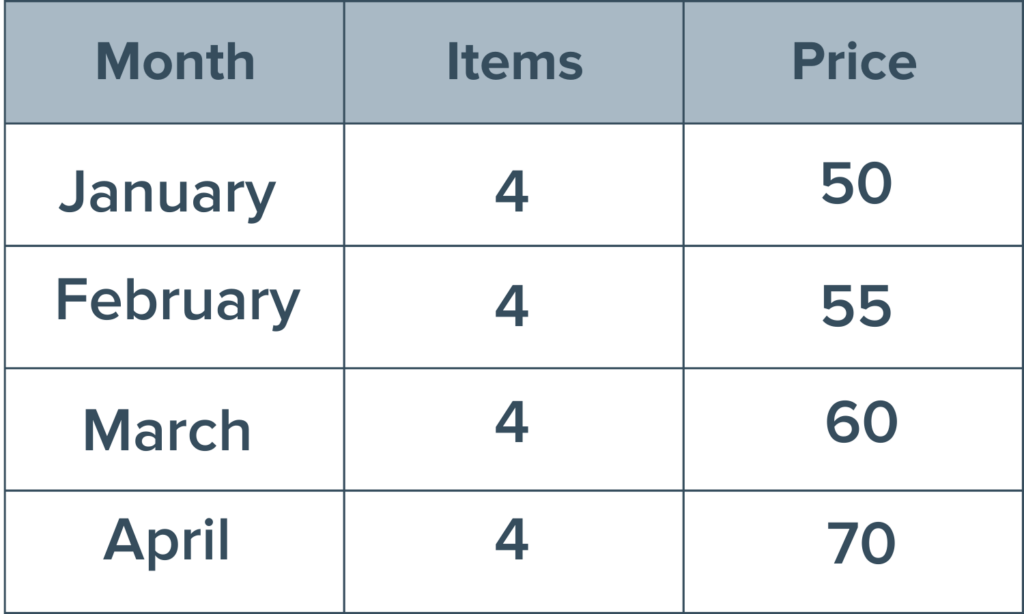
Here is a simple example to illustrate the difference between FIFO and LIFO. Let’s say a toy company buys and sells drones for kids. This company has purchased four drones per month in January, February, March, and April. However, due to inflation, the cost of the toy for the company got more expensive. There is a consistent cost increase for each successive month. Refer to the table below.

FIFO example


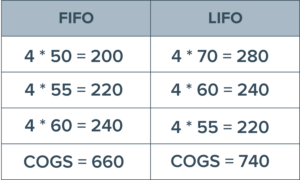
The toy company just got a shipment request for 12 drones. Refer to the table below to see the difference in COGS for the FIFO method compared to LIFO. 

FIFO LIFO Graph to explain example


Using this example, the toy company would probably institute the LIFO method as this number reflects a higher inventory cost, meaning less profit and fewer taxes to pay at the end of the period.

Conclusion

Overall, inventory accounting aims to keep track of the cost of goods sold (COGS), which includes the cost of acquiring, storing, and selling inventory. COGS is a crucial metric for businesses because it directly impacts profitability. As a result, companies must carefully track their inventory levels and monitor their COGS to ensure they are maximizing profits.

Inventory management is an essential part of any business. Businesses must have an accurate picture of their inventory levels and costs to make informed decisions about purchasing, pricing, and selling products. This system is critical for any business that sells physical products; accounting for them consistently can be the difference between success and failure. 


Learn more about accounting with FINSYNC’s cloud-based accounting platform to help you better manage your business operations.


Business Principle #9: Plan for success.

This is part nine of ten in a series on foundational principles of being an entrepreneur.

Whether you’re just getting started or you are well into your business, you’re probably already feeling it. It’s always there. It wears on you. 

The pressure of the to-do list. 

No matter how much you accomplish, more is waiting to be done. Since your business starts with you, you may feel like it’s up to you to do everything. And sometimes—especially at the start—it is.

For many entrepreneurs, the large volume of work leads to a start-and-stop approach. Instead of following a project or task through to completion, they only partly finish before jumping to something more pressing. Many things get started, but few finished, compounding the overwhelming feeling of the to-do list. 

Without a boss (you are the boss!), staying accountable for completing your work can be tough. 

If this describes you, there’s good news! A few simple tactics can help you manage your workload and plan for success. 

Get It Out of Your Head

The first step is to get all the information out of your head and onto a place where you can see it. Grab a sheet of paper, dictate a note on your phone, or open up a Google doc. The mechanism is less important than the activity of making the list. 

When you’re done, leave it for a bit. Go on a walk. Make dinner. Sleep on it. As other things come to you, add them to the list. Part of that overwhelming feeling is keeping everything in your head and worrying you’ve forgotten something. 

Set Priorities

If your list is long, writing it down may initially add to your stress. But being able to see everything in one place can help you categorize and prioritize. 

The truth is, you can’t do everything. At least not at the same time. You have to figure out what is most important. 

Look at your list. What are the one or two most important things that, if left unfinished, keep your business from moving forward? 

For example, suppose you want to open a coffee roastery. Items on your long list might include: coming up with a business name, securing a space to roast in, leasing the equipment, sourcing beans, and creating packaging. 

All of these items are important. But some are dependent on others. If you don’t have space to roast in, where are you going to put the roasting equipment (and the beans)? If you don’t have a name, how can you create packaging? What are you going to put in the packaging if you don’t have space to roast in or beans sourced? 

By looking at everything at once, you can figure out what should come first—and what can be done more efficiently if you wait. 

A helpful method is to think about what you need to do in the next 30 days. Which things need to be done this month? Which things are others dependent on? What should be done 60 days from now? 90 days?

Going back to the coffee roastery example, focusing on the business name and finding space are foundational for the rest of the items. Using the first 30 days to complete these two projects will make the other items go much more smoothly. 

Don’t Tackle Too Much

Perhaps you looked at the example list above and thought more could be done in the first 30 days. 

A common mistake entrepreneurs make is trying to do too many things at once. The more items you tackle at the same time, the less focused you’ll be. You only have so much time and energy. Identifying what is most critical, strategic, or important to do at the moment—and focusing on that—will get you further faster.

Think in terms of milestones. A milestone is a significant development or marker on a journey. It typically marks a turning point or an accomplishment. Once you pass it, you don’t circle back again.

What milestones must you reach to move your venture forward? Focus on the big items, not the details. And only one or two at a time. 

Break It Down into Manageable Tasks

You’ll know it’s a milestone because it can’t be completed in one sprint; you have to finish smaller projects to be able to reach it. These smaller to-dos are your tasks

For example, if the milestone for the coffee roastery is securing a space to roast in, tasks might include: doing research on what roasteries need, defining the specifications of the space (what it needs to have, where it needs to be), getting recommendations for a commercial realtor, interviewing realtors, touring potential spaces, etc. All of these items are tasks that help you accomplish the bigger milestone. 

Be SMART 

Once you have your tasks, get SMART about them. Make sure each task is Specific, Measurable, Actionable, Realistic, and Timely. 

When a task is SMART, it’s easy to know whether or not you’ve completed it. For example, the task “tour potential spaces” can be made SMART by adding some details: “tour 3 potential spaces that fit the specifications by September 12.” 

Plan for Success

Identifying what needs to be done is one thing. You’ll maximize the chance of staying on track if you also identify when you will do it. Due dates are important, but actually blocking time on your schedule to do the tasks will get you further and help you stay on track. 

Lots of great tools can help with this (including this one that we created), or a simple method is to timeblock. All you need to do is block out time to work on each task on your calendar or whatever you use to plan your days.

When it’s time to work on a task, turn off your phone, email, or anything that distracts you and focus on getting it done. Prioritize it as you would a client meeting, a doctor appointment, or anything else you wouldn’t skip. 

If something important comes up, make sure that block gets rescheduled for another date and time. 

The to-do lists will not get shorter with time. Entrepreneurs by nature are always trying to build and improve. But with the right strategies and enough practice, you’ll find the right rhythm and discover what works for you.

How to Account for Inflation & Improve Your Business Cash Flow

Wherever you look, prices of gas, transportation, essential materials, products, and services are shooting up at rates unseen in over a decade. Large corporations have already become proactive, bracing for impact as stocks continue to plummet due to inflation and Fed rate hikes. 

Is there a concrete method to prepare your organization for inflation? 

First, let’s look at why inflation is so high, how inflation accounting can help, and finally, ways to restructure your cost analysis for inflation within your organization. 

Why Inflation Is High

Rising prices at the gas pump and in grocery stores have been one problem, but inflation has spread beyond, to housing, car sales, and many other areas. The primary reason is that the nation still has not been able to keep up with consumer demand after COVID. 

Supply chain interruptions, labor shortages, increase in shipping and insurance rates, along with China’s lockdowns have all negatively affected production lines for goods and services. Even though wages are rising, many companies are unable to retain employees. Take truck drivers, for example; there are 80,000 unfilled trucker vacancies in the US alone. Globally, the shortage is wider spread.

Another cause of high inflation has to do with Russia’s attack on Ukraine, which both directly and indirectly fuels inflation. Russia is an important manufacturer of natural resources like oil, coal and gas. In addition, Ukraine is one of the largest exporters of grains and fertilizers. Together the war-driven instability in these countries is enough to destabilize the global supply chain system for decades.

Despite global challenges, there are steps small businesses can take to help weather the storm and even come out ahead.  

Inflation Accounting

A great place to start tackling inflation is accounting for it correctly in your operations. Many companies take advantage of what is known as inflation accounting, which is when financial statements are adjusted according to price indexes rather than traditional cost accounting. These adjustments paint a clearer picture of a firm’s financial position during high inflationary periods.

Here are the two main methods used in inflation accounting:

1. Current Purchasing Power (CPP)

Under this cost method, monetary and nonmonetary items are separated. Monetary items are subject to the recording of a net gain or loss. Whereas nonmonetary items, or items that do not have a fixed value, are updated into figures with an inflation conversion factor related to the consumer price index (CPI).

2. Current Cost Accounting (CCA)

This approach values assets at their fair market value (FMV) rather than historical cost, and fixed assets are recorded at replacement cost value on the balance sheet. Additionally, depreciation of fixed assets is to be calculated at replacement value.


To calculate the inflation rate, divide the CPI at the end of the period by the CPI at the beginning of the period multiplied by 100.  

Formula for Inflation Rate

By adopting inflation accounting, you can match your business revenues accurately compared to current costs to provide a more realistic profitability breakdown. 

Comprehensive Cost Analysis

There are hundreds of inflation articles centered around businesses employing price increases. The reason is this tactic helps an organization in the short term. Even consumers might be on board with the higher prices, especially if they believe these are only temporary. 

However, to overcome inflation in the long run, a company must look beyond price increases to reduce the financial volatility across the entire organization. 

Short-Term 

The beginning of an inflation crisis is a great time to get granular about your organizational costs. Don’t just look at the price your suppliers and competitors are charging, but perhaps create alerts to be notified of price fluctuations for raw materials and other supply chain data. Getting ahead of these increases will provide valuable information such as surfacing a supplier who is price gouging unnecessarily. 

Another initial cost strategy is to understand your capital structure. Take a deep dive into your cash, credit, and debt to determine which loans need immediate repayment. Restructure your financial management by obtaining new lines of credit as a fallback in case situations last longer than anticipated.

Long-Term

Keep morale high to prevent employee attrition. The last thing your company needs right now is to lose its top talent to a competitor who is almost surely hiring. Losing employees could mean months of lost productivity and massive resource expenditure on identifying, hiring, and training replacements.

It may also be time to update your technology stack. Take a lesson from Tesla, which now utilizes robots and AI to construct and build electric vehicles. Start learning new applications like automating your HR and payroll, or integrate new software to help roll out digital marketing strategies.

Another cost-saving tool is to redesign products to reduce the impact of expensive materials. Go back to the drawing board to create innovative products that retain their quality without the dependence on finite resources. 

Overall, inflation can present a valuable opportunity for many organizations to nail down their cost structure. Regardless of whether inflation is here to stay, companies that adapt their business operations quickly and decisively to rising costs will be in the best possible position to maintain margins and growth.


How Marginal Cost and Marginal Revenue Affect a Business’s Bottom Line

Whether your company is merchandising, manufacturing, or service-based, keeping track of your production costs is vital. To optimize your total output and expenditures, you need to understand and track marginal cost and revenue. 

Whenever a company increases its production, there is always an increase in production costs that must be recognized. Marginal and variable costs consider these increases and determine the optimal amount of units or labor required to keep production costs as efficient as possible. 

We have already covered the importance of tracking variable costs within your organization. Now we will discuss the importance of marginal cost and marginal revenue and why they are critical concepts in managerial accounting. 

Importance of Marginal Cost

Marginal cost refers to the additional cost to produce each additional unit. In other words, this cost shows the increase or decrease in the cost of making one more item in production. The formula for calculating marginal cost is below:

Marginal Cost Formula

For example, if the cost for a company to produce 10 units of a product or service is $5,000, and the cost to build 11 units is $5,010. In this case, the marginal cost for that additional unit is $10.

Marginal Revenue Example
Marginal cost plays a crucial role in an organization, especially when a company must decrease its costs. Fixed costs are constant regardless of production levels; higher production leads to a lower fixed cost per unit as the total expenses are allocated across more units. 

The marginal cost of production includes all expenses not fixed. For example, if a company needs to buy a new piece of equipment to produce more units, this is a marginal cost. The marginal cost varies according to the volume of the products constructed.

Marginal Revenue

Marginal revenue (MR) is essentially the opposite of marginal cost. MR is the increase in revenue that results from the sale of one additional unit of product and is calculated by dividing the change in the total revenue by the difference in the quantity.

Marginal Revenue Formula

While marginal revenue can remain constant over a certain level of production output, it follows the law of diminishing returns, which states that any production increase will result in smaller increases in output. It means the company has surpassed its optimal level.

Example: A lava lamp business brings in $30 in revenue by producing its first lamp. Initially, its marginal revenue will be $30. If the same company makes a second unit and brings in another $25 in revenue for a total of $55, then the marginal revenue gained from that additional unit is $25. 

Marginal Revenue Example plugged into formula

Over time as the demand for lava lamps increases, output increases, and eventually, there will be a point when the business incurs more significant variable costs. For example, if the company is now producing 1,000 lava lamps per day, they eventually need to hire extra staff to package or run quality control checks. Thus the marginal revenue decreases to $23, then $22. The curve begins to slope upward when operations become less efficient and profitability decreases.

Working Together

Both marginal cost and marginal revenue work in tandem to help businesses set their output target in production. These two metrics are adjusted as production costs fluctuate. The ultimate goal is maximum profitability when marginal cost and marginal revenue are equal. 

If marginal revenue were greater than marginal cost, then that would mean the company can continue making more units until the marginal cost is higher than marginal revenue. As we discussed previously, this diminishing returns point is where the company is losing money in producing more units and should scale back on output or increase the sales price. 

Although having a high marginal revenue over a long period is not always a good thing, this discrepancy shows that the company is continually not meeting its customer demand. 

On the other hand, when marginal revenue falls below the expected value, it is important to conduct a market analysis to determine the reason. Possibly there are too many competitors saturating the market, or the market trend for the product has peaked. Either way, the cause must be revealed in order to prepare for the next steps.

Conclusion

Every organization must focus on increasing revenue and net income to improve profitability. Therefore, businesses need to concentrate on how each sale affects the bottom line to produce stable sales revenue flows. To do this, you must track marginal revenue and marginal cost.

Ultimately, analyzing these two numbers and how they impact each other is critical to maximizing your profit, optimizing your team’s performance, and overall your company’s productivity.


Now that you are familiar with marginal cost and marginal revenue, it is time to put this into action. Signup for a FINSYNC free trial to experience financial harmony with your business. 

Establishing Great Customer Relationship Management

Most of us understand the key to business growth and success is developing excellent customer relationships that lead to long-term client retention. But where does this burden fall? Sales? Marketing? 

The simple answer is everyone. Companies make mistakes in only developing a relationship during the transaction. But with digital tools like CRMs, content management systems (CMS), and demand experience platforms (DXP) becoming easily accessible, it is pretty clear this landscape has changed. These important relationships begin before the initial purchase and can be fruitful as a source of referrals long after their initial transaction.

This article dives into the benefits of establishing a customer relationship management process and how to implement one within your organization. 

Importance of Customer Relationship Management

Customer relationship management (CRM) is a process for managing all your company’s relationships and interactions with current and potential customers. By increasing this bond or connection with your customers, you decrease the amount of work it will take to make a purchase.

By implementing a solid CRM process, you build brand loyalty with your audience. This strong association users have with your company has many advantages, such as being top of mind when faced with a related problem. This scenario exemplifies the importance of social media and how your audience views your brand. 

Recent studies have shown that a prospect needs to see or hear the advertiser’s message at least seven times before they will take action to buy a product or service. Therefore, consistency is key to refining campaign strategies around vibrant images and product videos that are memorable and initiate buzz.

Finally, the better your relationships are, the more comfortable customers will be when addressing an issue with one of your products or services. Do not underestimate the power of a good review. When you engage with your customers, even if you are troubleshooting problems, this valuable time can set them at ease and provide the potential for you to improve your merchandise.

Principles of Good Customer Relationships

Each time a potential customer interacts with your business, whether on your website, social media, email campaigns, or newsletters, their experience must be consistently enjoyable. In providing a service such as real-time customer support, you begin building a mutually beneficial relationship. You learn something about the customer, and they discover a new product or offering within your company.

Here is a short list of things to consider when fostering these relationships.

    1. A customer’s need for a positive experience far outweighs the goods and services you offer.
    2. Get inside their head and convey that you understand their pain points while being able to offer appropriate solutions.
    3. Personalize your communication by customizing your omnichannel messages about the different products you offer. 
    4. Share knowledge in an email, newsletter, or blog article, and keep your audience updated on the latest research and industry trends.
    5. Exceed expectations by building rapport and always going above and beyond in all areas of your organization.
    6. Listen and learn what your customers value the most.

Using these principles throughout your organization will keep your sales pipeline full of new leads and referrals. Building a solid relationship with your clients earns their trust that you will eventually save them time and money in the long run. 

Customer Retention

Customer retention is the ability to retain customers over time. This concept is a percentage of how many customers are retained and focuses on the long-term strategy of good relationship management practices. 

The best consumers don’t just buy one product or use your service once. The average repeat customer spends 67% more in the 31st-36th months of their relationship with a business than in months 0-6. Therefore, customer relationship management is a slow, consistent process that needs to be encouraged and nurtured.

Not only do repeat customers come back again and again, but they also refer more people and bring in new business. Ask for regular feedback from the entire customer team. Once buyers develop a sense of trust, the word will spread.

Implement the Right Tools

CRM tools are the most extensive and fastest-growing enterprise application software category. Around 65% of businesses adopt these customer platforms within the first five years. Proving there is a clear need for companies to work with large volumes of customer data all in one place. 

These software tools allow you to see the entire customer journey in a way that has never been possible in the past. Choosing the correct software for your business centers around your goals, how you implement your customer experience, individual processes, and reporting capabilities. 

Over the past 5-10 years, customer relationship management has become a vital part of sales and marketing initiatives to develop engaging customer experiences. Receiving consistent, up-to-date, reliable information is critical for optimizing your systems, processes, and understanding of your customers. 


If you’re looking for more helpful tips, the FINSYNC blog is a great resource to learn more about industry trends and other tools to help your business succeed.


Business Principle #8: Get the funds you need.

This is part eight of ten in a series on foundational principles of being an entrepreneur.

Finding the funds to start or grow your business can be a challenge. While some businesses can naturally grow slowly through sales, others need significant cash up front before they can open their doors. Most fall somewhere in between. When you need cash, it can be tempting to give up on your business altogether. 

The good news is that there are many sources of funding (also known as capital) available for small businesses. The trick is to figure out which will work best for your personal situation. 

Start by considering the following questions. 

How’s your credit score?

One of the most common sources of funding for businesses is bank loans or lines of credit. A bank determines how much money a business can borrow and gets paid back over time with interest. But many entrepreneurs don’t realize that banks won’t lend to businesses that lack a financial track record. If you’re just getting started, this means your business itself can’t borrow money. 

But you, the entrepreneur, can. 

This is where your credit score becomes important. Based on your past history of borrowing money, a credit score lets a financial institution know whether or not you’re safe to lend to. The higher your score, the better. 

If your credit score is too low (or nonexistent), getting a bank loan may not be an option for your business—at least until the business has a long enough track record to vouch for itself. 

Are you willing to give up ownership?

If you’ve ever watched Shark Tank, you may be familiar with the entrepreneur’s dilemma: how much ownership to give up in exchange for an investment in the business. An equity investment can provide a big injection of cash, but it comes at a price. You have to give away part of what you’re building and entrust it to someone else. 

A good investor typically brings more than money—experience, industry knowledge, and connections. These assets might be worth exchanging some ownership for; with an investor’s  help, you may achieve greater growth than if you were to do it alone. 

However, when you bring on an investor, you will likely give up some flexibility, as well as control. You’ll need to justify your actions and negotiate with your investors on all major decisions. Depending on how much ownership you give away, you could even be outnumbered and overruled. 

Do you have something that you can presell?

If you have something you can presell (sell before you make it), crowdfunding might be an option for you. Crowdfunding provides a way for people to pre-purchase your product through pledges, giving you the funds needed to make it. Because crowdfunding relies on people paying up front, it can also help you quickly determine the level of actual interest in your product. The added bonus is that it provides great marketing opportunities while allowing you to maintain complete ownership and control of your business.

However, crowdfunding requires a significant initial investment of time and money to launch. Poor campaigns can even hurt a business, alienating potential customers. Also, if you fall short of your goal, you may get nothing. Even if you meet your goal, delivering your rewards and paying for your campaign may use most of the raised funds. If anything goes wrong in production, you might have some angry customers on your hands. 

How will you use the funds?

Be clear on how the money you’re getting will help your business make enough money to pay it back—especially if you are seeking a loan or investors. 

When running the numbers for the business, one of the primary gaps most entrepreneurs see at the start is the money needed to pay themselves a salary. But using borrowed or invested money for payroll is risky. When the money’s gone, it’s gone. 

On the other hand, using the money to purchase the equipment needed to make your product not only helps build your business, but it also has resale value. If something goes wrong, the equipment could be sold to help repay lenders. 

Be strategic about where you invest borrowed dollars. When you arrive at answers to these questions, you’ll be well on your way to the right funding solutions for your venture. If none of these seem to work for your situation, don’t despair! You can always start small and grow smartly, one sale at a time. There’s always a way forward.

Apply For Business
Checking Account

Before you get started

1

We are not able to service these businesses at the moment:

  • Crypto Currency and Money Services
  • Privately Owned ATMs
  • Marijuana-Related
  • Gambling
  • Money Services Business
  • Business headquartered outside of the U.S.
2

At this time we are offering online business checking accounts through bank partners in these states:

  • Arizona
  • California
  • Idaho
  • Nevada
  • New Mexico
  • Oregon
  • Texas
  • Utah
  • Washington

Is your business in one of these states?