Top Cybersecurity Trends Small Business Owners Need to Know

Cybersecurity is no longer an option for small businesses – it is a necessity. With so much of our lives existing in the digital space, small business owners must take steps to protect their businesses from potential attacks. 


Everyone can do a few simple things to stay safe online, like using strong passwords and being cautious about what information you share. This article will walk you through all the major threats that have emerged in recent years because being unprepared can have devastating consequences for your organization. 


Malware Attacks 


Malware is short for malicious software and refers to any harmful code installed on your computer without your knowledge. Malware can take many forms, but some of the most common types include viruses, Trojans, worms, and adware. Once installed, malware can damage your computer system or give hackers access to sensitive information stored on your hard drive. Always be cautious of links or downloads sent to you via email or direct message, as these may be malicious. If you’re unsure about a link, hover over it to see where it will take you before clicking on it.


Ransomware


Ransomware is a type of malware that encrypts or exfiltrates data and then demands a financial ransom, often cryptocurrency, for the data to be decrypted. Ransomware attacks can upset a small business’s digital infrastructure as they cause significant financial loss and downtime.


To protect your business from a ransomware attack, you should back up all of your data regularly. It would help if you also had security measures, such as firewalls and antivirus software. Also, employee education should be a priority. This alone will lessen the chance of someone clicking on a suspicious link or opening email attachments from unknown senders. 


IoT Devices 


IoT devices are connected to the internet and often collect and share data. Examples of IoT devices include thermostats, fitness trackers, and smart TVs. While IoT devices can be convenient, they also present a potential security risk. Hackers can gain access to IoT devices and use them to collect sensitive data or launch attacks on other devices on the network. 


Protection measures from IoT threats include purchasing devices from reputable manufacturers. You should also ensure that all IoT devices are properly configured and guarded with solid passwords. 


Denial-of-Service (DoS) Attacks 


This type of cyberattack is when an assailant seeks to make a machine or network resource unavailable to its intended users by temporarily or permanently disrupting services. DoS attacks can involve flooding the target with requests for information or resources so that it becomes overwhelmed and unavailable. 


Prevention of these types of attacks can be difficult, as they often exploit weaknesses in network infrastructure and take time to fix. However, there are some steps that organizations can take to reduce their vulnerability to DoS attacks. One is to segment their networks so that an attacker would need to compromise multiple systems to bring down the entire network. Another is to use techniques like rate limiting and traffic shaping to control the volume of traffic allowed to reach the target system. Finally, it is crucial to have a good incident response plan in place so that if an attack occurs, the damage is minimal, and systems are quickly returned to normal.


5G 


5G networks are the latest and greatest in wireless technology, offering faster speeds and greater capacity than ever before. However, they also present a new vector for cybersecurity attacks. 5G networks rely on small cell towers scattered throughout an area, making them more vulnerable to physical tampering. The high speeds of 5G make it difficult to detect malicious activity; therefore, more data can be stolen within a shorter period. 


One way for businesses to protect themselves from 5G-related attacks is to use a Virtual Private Network (VPN), which encrypts data and helps to conceal your location. Consider installing a firewall detection system. These systems work by monitoring traffic flows and identifying anomalous behavior. By analyzing traffic data in real time, a detection system can quickly identify potential threats and take appropriate action. Adopting these precautions can help ensure that your data remains safe even as 5G becomes more widespread.


Phishing Scams 


Phishing scams are still one of the most common types of cyber attacks, and they continue to be successful because they are constantly evolving. In a phishing scam, a hacker will pose as a legitimate entity (e.g., your bank, Google, or even the IRS) in an email or text message and trick you into clicking on a malicious link or attachment. Once you click on the link or attachment, the hacker will access your computer system. 


SQL Injection


SQL injection is an attack that allows attackers to execute malicious SQL code on a database server. This attack exploits vulnerabilities in web applications that use SQL databases. By injecting malicious SQL code into an input field, attackers can gain access to sensitive data, such as passwords and credit card numbers. They can also delete or modify data stored in the database.


To protect against SQL injection, developers should implement input validation, database security controls, and application firewalls. Input validation confirms that only valid data is entered into the database, and database security controls restrict access to the database and prevent unauthorized users from accessing sensitive data. Application firewalls block SQL injection attacks by inspecting traffic and filtering out malicious requests. 

In addition to these measures, container security tools provide an extra layer of protection by securing the environments where applications run, helping prevent vulnerabilities from being exploited within containerized infrastructures.


Man-in-the-Middle (MitM) Attacks


A man-in-the-middle (MitM) attack is when an attacker intercepts communications between two parties to eavesdrop on them or alter the communications without their knowledge. MitM attacks can occur over any communication channel, including email, text messaging, and even voice calls. In many cases, MitM attacks use public WiFi networks. 


Firstly, always check that the website you are visiting is using HTTPS. This means that the connection is encrypted and less likely to be intercepted by an attacker. Secondly, avoid using public WiFi networks as they are often not secure. If you must use public WiFi, use a VPN to encrypt your traffic. Finally, it is important to use secure communications protocols that employ encryption. By following these simple steps, you can help to protect yourself from MitM attacks.


Conclusion


As a small business owner, you are responsible for safeguarding your customers’ personal information. With the rise of cyber attacks, it is more important than ever to be aware of the latest security trends. Understanding the threats and taking steps to protect your data can help keep your business safe. 


Hackers are constantly finding new ways to exploit vulnerabilities in our digital landscape. Outdated software is one of the most common ways hackers gain access to systems. Assure you have the latest security patches, and consider investing in cyber insurance if necessary. Taking these steps can help create a safer environment for your business and customers.


How FINSYNC Can Help


FINSYNC allows you to run your business on One Platform. You can send and receive payments, process payroll, automate accounting, and manage cash flow. To learn more about how we can help your business start, scale, and succeed, contact us today.

 

Expedite Electronic Payments with FINSYNC’s Digital Lockbox

Is your business still depositing checks the old-fashioned way? If so, you’re not alone. Luckily, a payment solution can help expedite the process: FINSYNC Lockbox. 

With Lockbox enabled, your customers who desire to pay via check will see your Lockbox address on your invoices. The paper checks are routed directly to us. We convert them to ACH payments and match the payment to its invoice in your FINSYNC account. 

Lockbox eliminates the need for you to spend valuable time processing and reconciling your accounts. Whether you receive a few checks or hundreds of monthly payments, Lockbox allows you to receive this money quickly and easily without touching envelopes or manually making bank deposits.

Learn what Lockbox is, how it works, and the advantages it can bring to you and your organization.

What Is Lockbox?

Lockbox is traditionally a service offered by banks only to large companies that receive many check payments. Your business adopts the service, and the bank receives your checks at a PO box they control and then deposits them for you.

FINSYNC’s Lockbox is available to all subscribing businesses, regardless of size or check volume.

Simply enable FINSYNC’s Lockbox on your invoice settings, and you’ll see your remittance address (mailing address) has changed to an Atlanta PO box controlled by FINSYNC.

Besides being available to small businesses, FINSYNC is also unique in offering a Lockbox that is tied to your accounts receivable in your accounting software. When a check reaches your FINSYNC Lockbox, it’s automatically applied to the invoice (changing its status to paid), and the corresponding bank deposit is already matched to the invoice.

In other words, you no longer have to go through unidentified deposits on your bank statement and match them to invoices!

Companies today are always looking for ways to streamline their operations and reduce costs. One way to do this is by automating your payment process. This can save your organization considerable time and money and provide greater control over your accounts. 

At its core, Lockbox is a payment processing service that streamlines the accounts receivable process for businesses. 

How Lockbox Works

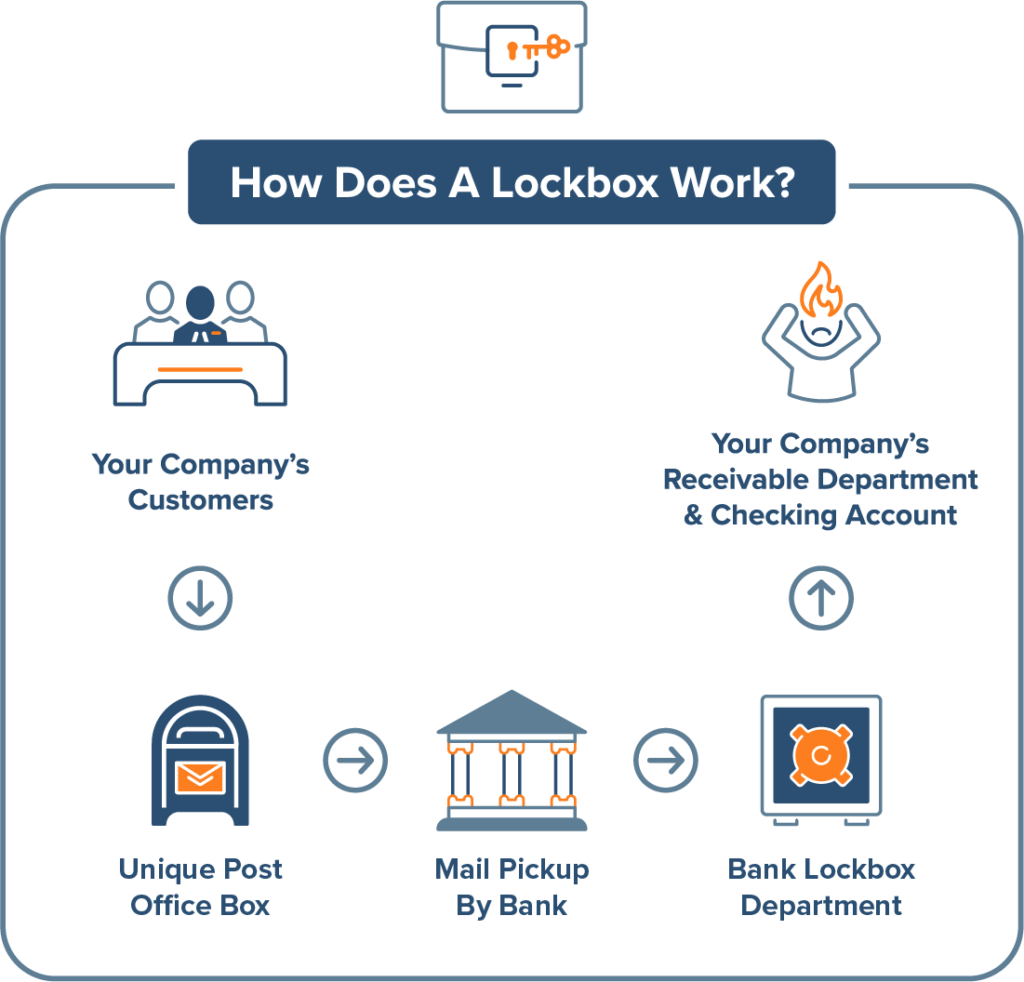
Businesses that use the FINSYNC Platform can take advantage of our company’s existing P.O. Box to receive payments. Your customers will first mail their checks to the address indicated on the invoice. The remittance documents are scanned, and the payment information is captured automatically. The amount is quickly transmitted to the business account, making it easy to keep track of incoming payments. The cost is only $1.00 per check deposited, scanned, and matched to a transaction on your behalf.

Here is a snapshot of the Lockbox process offered through FINSYNC.

lockbox graphic

Lockbox enables gig workers, digital nomads living abroad, and organizations with corporate clients in the US to get paid quickly. You must be a subscriber of FINSYNC’s Payments plan ($10/month) to use Lockbox. There is a $1 per check-deposited fee thereafter.

Advantages to Lockbox

There are several advantages to using FINSYNC’s Lockbox service to collect paper checks. We have listed a few ways this feature can help you stay ahead with your business’s financial management. 

Reduced processing time: When checks are sent directly to a business, they may need to be sorted and deposited manually, which can take time and potentially visits the bank. Checks deposited into a lockbox are typically processed faster, allowing business owners to skip the hassle of accepting paper checks.

Improve cash flow management: Since the funds are available more quickly, businesses can better manage their expenses and avoid bouncing checks or incurring late fees.

Fewer accounting errors: Having a third party handle check deposits can help to reduce accounting errors. 

Increase worker efficiency: Using a lockbox service can free up employees’ time that would otherwise be spent matching unidentified deposits or visiting the bank.

Conclusion

Despite the move towards digital invoices and payments, paper checks are still extremely popular in the United States. Some sources say 50% of all business-to-business transactions are still processed via check. Used by businesses of all sizes, Lockbox is a service offered by FINSYNC that allows customers to outsource the processing of their payments and can be a great way for businesses to streamline their payment processing and get paid faster.


Enable FINSYNC’s Lockbox, which is accessible for businesses of all sizes, to save you time for what matters the most.

8 Advantages of Implementing Digital Invoicing for Your Business

In today’s world, it is essential to be efficient and effective with our time. Paperwork is a hassle, and fortunately, there are ways to get it done without losing days, wearing down our patience and productivity. One solution for this would be implementing a digital invoicing system, which allows a quick transfer of funds between computers automatically or upon request.


Digital invoicing or electronic invoicing (e-invoicing) allows companies to electronically transfer bills between one another without having a physical paper trail slowing the process. Speed and efficiency are paramount, which is why more and more companies are looking to ditch traditional paper invoicing in favor of digital options. Using tools like an invoice generator can further streamline the process, ensuring accuracy and saving valuable time. Here are eight advantages of switching to a digital invoicing system for your business. 


Lower Expenses


Implementing a digital invoicing initiative will allow businesses to save money by cutting out the printing, paper, and postage costs.


If you are worried about losing the personal touch that comes with sending paper invoices, never fear; you can always include a handwritten message or add your company logo to your digital invoices to provide a professional and polished look.


Speed


The most obvious advantage of digital invoicing is that it is much faster than its paper counterpart. Once you have created your invoice and input the necessary information into the software, the system will take care of the rest, generating and sending invoices in a matter of seconds. 


This process can be a huge time-saver, especially for businesses that regularly send out large volumes of accounts payables. Imagine having to print off an invoice, stuff it in an envelope, go to the post office to mail it to a client, all to find out you made an error and now have to restart the process from the beginning. Time to move away from this outdated and extremely slow system. 


Audit Trail


For businesses, invoices are an essential part of day-to-day operations. These documents not only track payments and purchases but they are used to provide proof of delivery or service. However, without an audit trail, it can be difficult to spot errors or view the history of an invoice. 


An audit trail records all the steps to create an invoice, from origination to completion, with time stamps documenting each stage. Having an audit trail, you will easily be able to identify potential mistakes, view the invoice’s history, or even track down a lost document. 


Reduce Fraud


Digital invoices are very difficult to forge or alter. That is because digital invoices employ encryption software with multiple built-in security features, making it difficult for anyone to tamper. These features help reduce fraud and ensure that businesses are paid for their products and services. 


One such security feature is a digital signature. A unique code is assigned to each invoice, and the authorized recipient can only decode it. This signature acts as a “seal of approval” and helps to ensure that the invoice has not been altered in any way. 


Save Space


Another advantage of digital invoices is that they take up less storage space. With paper documents, you need to find a place to store them where they won’t get damaged or lost. The more documents you have, the more challenging this feat will be. 


With digital files, you can store them on your computer or in the cloud, making them much easier to store and categorize when you need to revisit them. In addition, cloud-based storage makes sharing with clients and colleagues easy and fast, so making the switch is a great way to save space and increase productivity in your business.


Improve Cash Flow Management


Due to the advent of digital invoicing, payments are received much sooner. This is a significant benefit when managing cash flow, as businesses can access the funds they need more quickly. 


As discussed in previous articles, managing cash flow is essential to keeping operations running smoothly. Therefore, receiving payments on open invoices as swiftly as possible is critical to guarantee you have enough liquid cash flow to pay employees and vendors 6-10 months down the road.


A healthy cash flow helps to avoid penalties and late fees and illustrates to creditors that you are a responsible and reliable borrower. Not to forget, timely payment of invoices helps to build and maintain good relationships with suppliers and other business partners.


While managing cash flow can be challenging, it is essential to the success of any business. And ensuring timely payment of invoices can help keep your operation running effectively and avoid many potential problems down the road.


Lower Your Carbon Footprint


An overlooked reason is that electronic invoicing is more environmentally friendly than traditional methods. By eliminating the need for printing, paper, and postage, businesses can reduce their carbon footprint and do their part to protect the planet. And with more and more consumers becoming concerned about sustainability, switching to digital invoicing can also be a great way to boost your company’s green credentials.


Easily Trackable


The competition in all industries is fierce, and in order to compete, businesses need to find ways to improve the level of service they provide to their customers. By moving to a digital system, companies can direct their customers to an online portal where they can track their invoices and receive support from customer service


Going the extra mile can be valuable for customers who frequently have questions about their invoices or need help tracking their payments. As a result, switching to digital invoicing can be a win-win for both businesses and their customers.


As detailed, switching to digital invoicing offers plenty of advantages. Not only is it more efficient and convenient for both businesses and customers, but it also helps to reduce paper waste and save money in the long run. The digital age is upon us, so why not give yourself every opportunity to succeed?

6 Ways Artificial Intelligence Can Benefit Small Businesses

The advent of artificial intelligence (AI) is radically transforming the business landscape. This shift is opening up new opportunities for small businesses to get a foothold in the market. With AI-powered tools and services, these businesses can level the playing field and compete with larger organizations. 


To succeed in this new environment, small businesses need to be agile and embrace change. Those who do will find themselves well-positioned to take advantage of the exciting opportunities that AI presents.


Here are six ways that artificial intelligence can benefit small businesses:


Customer Service


Customers are the lifeblood of any business, so it’s important to keep them happy. When customers are happy, they’re more likely to buy from you again. By harnessing the power of artificial intelligence, small businesses can take their customer service to the next level. 


AI-enabled tools can help by providing faster responses to queries, automating repetitive tasks, and offering personalized recommendations. In short, AI provides a better customer journey and personalized experience.


In addition to automating basic tasks, artificial intelligence can be used to provide 24/7 customer support. A chatbot, for example, can answer questions and solve problems.


Sales


Every small business looks for ways to increase sales and revenue. But did you know that AI can help you do just that? By providing targeted product recommendations, upselling opportunities, and personalized discounts, businesses can make the most of their limited resources. Additionally, this technology can help identify areas of improvement and potential growth.


According to a McKinsey report, companies that used artificial intelligence achieved a 20 percent operating profit margin, compared to just 2 percent for companies without AI. The increased performance is due in large part to the ability to offer customers more personalized services and products than ever before.


Reduce Costs


As small businesses strive to cut costs, artificial intelligence can be a valuable tool for automating tasks, eliminating manual data entry, and reducing the need for customer support staff. By taking advantage of AI technology, small businesses can save time and money while improving their efficiency and productivity.


Companies that are constantly collecting data from customers, such as through transactions or web forms, can analyze all that data to identify patterns and trends. Using this analysis, artificial intelligence can predict customer behavior and streamline your marketing campaigns across all platforms. 


Better Decision Making


Good decision-making is critical for any business owner or manager. AI can help by providing data-driven insights that can guide decision-making in areas like marketing, product development, and operations. ​​It can also help assemble the best teams to increase productivity.


Increasing Efficiency


Efficiency is key for any business, large or small. AI-enabled tools can help small businesses increase their efficiency by automating and optimizing processes and providing real-time results.


Small businesses can see a 40% increase in productivity by utilizing AI in various ways. For example, AI can speed up processes and tasks that would otherwise be slow and tedious for human workers. In this way, businesses can operate more efficiently and get more done in less time. Implementing this technology into small businesses can be a game-changer in terms of productivity and output.


Security


As businesses become increasingly reliant on technology, security concerns are top of mind for many companies. AI can help small businesses enhance their security measures by providing fraud detection, intrusion detection, and data encryption capabilities. By incorporating AI into their security protocols, small businesses can give themselves a much-needed boost in the ever-evolving digital landscape.


Final Thoughts


The adoption of artificial intelligence by organizations can have a significant impact on their business profitability. AI will likely benefit all businesses by making life easier, increasing efficiency, and improving productivity.


Artificial intelligence is no longer a futuristic concept; it is permanently changing the landscape of business. Capitalizing on the power of AI is a key strategy for small businesses looking to grow and succeed. The benefits that AI can bring to an SMB are many. Begin exploring how artificial intelligence can help your business grow today.


How FINSYNC Can Help


FINSYNC allows you to run your business on One Platform. You can send and receive payments, process payroll, automate accounting, and manage cash flow. To learn more about how we can help your business start, scale, and succeed, contact us today.
How to Account for Inflation & Improve Your Business Cash Flow

Wherever you look, prices of gas, transportation, essential materials, products, and services are shooting up at rates unseen in over a decade. Large corporations have already become proactive, bracing for impact as stocks continue to plummet due to inflation and Fed rate hikes. 

Is there a concrete method to prepare your organization for inflation? 

First, let’s look at why inflation is so high, how inflation accounting can help, and finally, ways to restructure your cost analysis for inflation within your organization. 

Why Inflation Is High

Rising prices at the gas pump and in grocery stores have been one problem, but inflation has spread beyond, to housing, car sales, and many other areas. The primary reason is that the nation still has not been able to keep up with consumer demand after COVID. 

Supply chain interruptions, labor shortages, increase in shipping and insurance rates, along with China’s lockdowns have all negatively affected production lines for goods and services. Even though wages are rising, many companies are unable to retain employees. Take truck drivers, for example; there are 80,000 unfilled trucker vacancies in the US alone. Globally, the shortage is wider spread.

Another cause of high inflation has to do with Russia’s attack on Ukraine, which both directly and indirectly fuels inflation. Russia is an important manufacturer of natural resources like oil, coal and gas. In addition, Ukraine is one of the largest exporters of grains and fertilizers. Together the war-driven instability in these countries is enough to destabilize the global supply chain system for decades.

Despite global challenges, there are steps small businesses can take to help weather the storm and even come out ahead.  

Inflation Accounting

A great place to start tackling inflation is accounting for it correctly in your operations. Many companies take advantage of what is known as inflation accounting, which is when financial statements are adjusted according to price indexes rather than traditional cost accounting. These adjustments paint a clearer picture of a firm’s financial position during high inflationary periods.

Here are the two main methods used in inflation accounting:

1. Current Purchasing Power (CPP)

Under this cost method, monetary and nonmonetary items are separated. Monetary items are subject to the recording of a net gain or loss. Whereas nonmonetary items, or items that do not have a fixed value, are updated into figures with an inflation conversion factor related to the consumer price index (CPI).

2. Current Cost Accounting (CCA)

This approach values assets at their fair market value (FMV) rather than historical cost, and fixed assets are recorded at replacement cost value on the balance sheet. Additionally, depreciation of fixed assets is to be calculated at replacement value.


To calculate the inflation rate, divide the CPI at the end of the period by the CPI at the beginning of the period multiplied by 100.  

Formula for Inflation Rate

By adopting inflation accounting, you can match your business revenues accurately compared to current costs to provide a more realistic profitability breakdown. 

Comprehensive Cost Analysis

There are hundreds of inflation articles centered around businesses employing price increases. The reason is this tactic helps an organization in the short term. Even consumers might be on board with the higher prices, especially if they believe these are only temporary. 

However, to overcome inflation in the long run, a company must look beyond price increases to reduce the financial volatility across the entire organization. 

Short-Term 

The beginning of an inflation crisis is a great time to get granular about your organizational costs. Don’t just look at the price your suppliers and competitors are charging, but perhaps create alerts to be notified of price fluctuations for raw materials and other supply chain data. Getting ahead of these increases will provide valuable information such as surfacing a supplier who is price gouging unnecessarily. 

Another initial cost strategy is to understand your capital structure. Take a deep dive into your cash, credit, and debt to determine which loans need immediate repayment. Restructure your financial management by obtaining new lines of credit as a fallback in case situations last longer than anticipated.

Long-Term

Keep morale high to prevent employee attrition. The last thing your company needs right now is to lose its top talent to a competitor who is almost surely hiring. Losing employees could mean months of lost productivity and massive resource expenditure on identifying, hiring, and training replacements.

It may also be time to update your technology stack. Take a lesson from Tesla, which now utilizes robots and AI to construct and build electric vehicles. Start learning new applications like automating your HR and payroll, or integrate new software to help roll out digital marketing strategies.

Another cost-saving tool is to redesign products to reduce the impact of expensive materials. Go back to the drawing board to create innovative products that retain their quality without the dependence on finite resources. 

Overall, inflation can present a valuable opportunity for many organizations to nail down their cost structure. Regardless of whether inflation is here to stay, companies that adapt their business operations quickly and decisively to rising costs will be in the best possible position to maintain margins and growth.


Establishing Great Customer Relationship Management

Most of us understand the key to business growth and success is developing excellent customer relationships that lead to long-term client retention. But where does this burden fall? Sales? Marketing? 

The simple answer is everyone. Companies make mistakes in only developing a relationship during the transaction. But with digital tools like CRMs, content management systems (CMS), and demand experience platforms (DXP) becoming easily accessible, it is pretty clear this landscape has changed. These important relationships begin before the initial purchase and can be fruitful as a source of referrals long after their initial transaction.

This article dives into the benefits of establishing a customer relationship management process and how to implement one within your organization. 

Importance of Customer Relationship Management

Customer relationship management (CRM) is a process for managing all your company’s relationships and interactions with current and potential customers. By increasing this bond or connection with your customers, you decrease the amount of work it will take to make a purchase.

By implementing a solid CRM process, you build brand loyalty with your audience. This strong association users have with your company has many advantages, such as being top of mind when faced with a related problem. This scenario exemplifies the importance of social media and how your audience views your brand. 

Recent studies have shown that a prospect needs to see or hear the advertiser’s message at least seven times before they will take action to buy a product or service. Therefore, consistency is key to refining campaign strategies around vibrant images and product videos that are memorable and initiate buzz.

Finally, the better your relationships are, the more comfortable customers will be when addressing an issue with one of your products or services. Do not underestimate the power of a good review. When you engage with your customers, even if you are troubleshooting problems, this valuable time can set them at ease and provide the potential for you to improve your merchandise.

Principles of Good Customer Relationships

Each time a potential customer interacts with your business, whether on your website, social media, email campaigns, or newsletters, their experience must be consistently enjoyable. In providing a service such as real-time customer support, you begin building a mutually beneficial relationship. You learn something about the customer, and they discover a new product or offering within your company.

Here is a short list of things to consider when fostering these relationships.

    1. A customer’s need for a positive experience far outweighs the goods and services you offer.
    2. Get inside their head and convey that you understand their pain points while being able to offer appropriate solutions.
    3. Personalize your communication by customizing your omnichannel messages about the different products you offer. 
    4. Share knowledge in an email, newsletter, or blog article, and keep your audience updated on the latest research and industry trends.
    5. Exceed expectations by building rapport and always going above and beyond in all areas of your organization.
    6. Listen and learn what your customers value the most.

Using these principles throughout your organization will keep your sales pipeline full of new leads and referrals. Building a solid relationship with your clients earns their trust that you will eventually save them time and money in the long run. 

Customer Retention

Customer retention is the ability to retain customers over time. This concept is a percentage of how many customers are retained and focuses on the long-term strategy of good relationship management practices. 

The best consumers don’t just buy one product or use your service once. The average repeat customer spends 67% more in the 31st-36th months of their relationship with a business than in months 0-6. Therefore, customer relationship management is a slow, consistent process that needs to be encouraged and nurtured.

Not only do repeat customers come back again and again, but they also refer more people and bring in new business. Ask for regular feedback from the entire customer team. Once buyers develop a sense of trust, the word will spread.

Implement the Right Tools

CRM tools are the most extensive and fastest-growing enterprise application software category. Around 65% of businesses adopt these customer platforms within the first five years. Proving there is a clear need for companies to work with large volumes of customer data all in one place. 

These software tools allow you to see the entire customer journey in a way that has never been possible in the past. Choosing the correct software for your business centers around your goals, how you implement your customer experience, individual processes, and reporting capabilities. 

Over the past 5-10 years, customer relationship management has become a vital part of sales and marketing initiatives to develop engaging customer experiences. Receiving consistent, up-to-date, reliable information is critical for optimizing your systems, processes, and understanding of your customers. 


If you’re looking for more helpful tips, the FINSYNC blog is a great resource to learn more about industry trends and other tools to help your business succeed.


The Value of Goal Setting & How to Employ within Your Organization

An organization in which all members understand and act upon their roles and potentials is unstoppable. Additionally, employees who feel valued about what they do, drive performance and productivity and positively influence the health of the entire business.

By setting goals for your organization in a clear and concise format, you will empower your staff to excel at time management, improve their focus, and provide a framework for their future accomplishments.

Continue reading to learn more about the goal-setting process and how it enhances your team members and overall organization. By the end, you will understand why goal-setting yields success and how setting a strategy for reaching your individual and organizational goals increases your business success.

Importance of Goal Setting

Setting goals is vital for your business in that they establish direction for the company to expand and grow. It is essential to know where you are headed so your team can accurately visualize the destination.

In creating a growth process that is transparent and inclusive, your team will be much more motivated to establish ownership. Deadlines trigger behavior, so something as easy as creating a time block specific to achieving a task can significantly impact the ability to accomplish the goal.

Goals guide focus and create momentum throughout your company. When we complete an objective, satisfaction happens when we check it off the list. Then immediately after, we are naturally focused on the next step.

Finally, goals promote self-mastery. Instead of just going through the motions with the day-to-day, prioritizing responsibilities enables your team to decide what is important to them. By establishing a goal framework, like OKR or SMART, employees will accomplish the organizational targets while boosting their skills and abilities.

SMART 

We couldn’t mention goal-setting without including the SMART goals framework. This acronym stands for Specific, Measurable, Achievable, Relevant, and Time-based. These elements work together to help you and your team create your goals.

  • Specific

Define clear, specific, and unambiguous goals. There should be no room for interpretation. Think about who, what, when, where, why, and how. If your main goal is to implement a DXP, the specific rendition would be: I am going to transfer all marketing materials from our existing CMS to a new DXP over the next three months.

  • Measurable

Determine which metrics you will use to measure your goal. Setting up milestones will help you stay on track and keep up motivation. Apply distinct metrics such as moving over 200 documents per week or instruct individual access and profiles set up by the end of the week.

  • Achievable

Before working toward a goal, decide if it is achievable now or whether there are preliminary steps to complete first. If your team does not currently have the experience needed to work with a new interface, the first step is to set up training sessions.

  • Relevant

Is the goal within the big picture of what we want to accomplish for the business? If a goal doesn’t contribute to the broader objectives, it might not be worth pursuing. For example, if your marketing department doesn’t currently optimize multiple marketing channels, then perhaps a digital marketing platform is not the correct tool.

  • Time-based

How often do individuals create new goals every year without time constraints? If there isn’t an urgent need to accomplish these objectives, they will likely not be achieved. Therefore, it is helpful to define what should be accomplished halfway through the process. If setting up a DXP is the goal in three months, then at six weeks, you should have 50% of the information transferred over. 


When it comes to defining SMART goals, be prepared to ask yourself and your team many questions. This framework sets boundaries and defines each step along the way.

Business Value

As an employer, it can be challenging to keep your staff motivated and locked in a space where they are consistently contributing. This is why aligning your mission keeps everyone on the same road and discourages the divergence and distraction that can derail progress and overall results.

Businesses set goals to impact the organization, and if your company regularly tracks its goals, you can utilize past pursuits to dictate your decision-making process. For example, suppose your marketing team has been monitoring sales, impressions, CTR, traffic, social media, etc. Now you can use that information to set your business strategy for the next year based on this performance.

Therefore, the key benefit of using business objectives is to align teams towards a common goal. These goals act as a contract between employees, managers, and the organization. They provide the framework for accountability and promote conversations between team members to survey progress throughout the year.

Last Words

We are at a critical moment where industry leaders, company management, and even those that govern us are not always acting in our best interest. Often, this is because they have taken us to the wrong objective or sometimes with no goal at all. Thus without a specific target or direction, we tend to drift aimlessly.

Goals keep individuals within and outside our organizations accountable and enable us to get back on the right track to accomplishing what matters the most.


Stay up-to-date with the latest trends and other tips and tricks FINSYNC brings to small businesses.


OKR Meaning, Examples & How to Measure Results within Your Business

OKR – another business acronym to learn, break down, and apply. But is it really worth your time?


Objectives and Key Results (OKRs) are the driving force behind the sustained growth of companies Amazon, SpaceX, and Google sustain their growth over time. This article will explore what OKRs are and how they can help your organization implement and achieve its strategic goals effectively.


Definition of OKR


OKRs are a goal-setting methodology that can help your team set and track measurable goals. The benefit of this framework is that it’s easy for your employees to laser focus on the results they obtain from their efforts. Essentially, OKRs bridge the gap between the long-term vision and the day-to-day activities of your staff. 


Managing workload and timelines has evolved towards aligning project scope, people, and resources in the project management arena while producing successful results. It is easy to have project goals. But how do you create measurable objectives every week to ensure you hit these goals?


The answer is objectives and key results.


Objectives are where you want to go with the project, i.e., increase brand awareness, and create more followers. Objectives are qualitative and time-bound goals, either weekly, monthly, or quarterly. A set of key results supports each objective.


Key results are how you plan to achieve your goals. Each key result is a metric that points to specific tasks or initiatives to measure your progress toward your objective. 


All Hands on Deck


It is critical to implement goal initiatives that are transparent and clear to all those involved, which is why everyone in your organization needs to be engaged with OKR. All employees need to have input on what is achievable over the next quarter and 12 months.  


After leadership sets the OKRs, teams and individuals can determine where they will achieve the most significant impact. Empowering employees can facilitate purpose and ownership to their everyday tasks. 


OKR vs. KPI


KPI stands for key performance indicator, and at first glance, OKRs appear synonymous with KPIs; however, there are distinct differences. The main difference is that KPIs tend to look at what has happened or how things were. Whereas OKRs define where you visualize something in the future. 


Similar to how a balance sheet is a snapshot of the company’s financial position at a single point in time. A KPI is a snapshot of how your project operates toward your goals without focusing on the result. 


KPIs are quantifiable ways to measure your initiative against results, and OKR goals are broader and focus more on the company’s future. However, both can be useful in organizational strategy and measurement.


Examples


To create a development process of OKRs, start with your objective, then select 3-5 key results that definitively define your goal’s success. The key results are milestones that guide your process and align your team. 


Here are a few examples of this process in action:


Objective: Increase sandal purchases by 25% for Q2

Key results

◦ Add 500 sandals to the online store

◦ Create 50% more digital ads on social media

◦ Run a 2-week promotional campaign


Objective: Launch a new mobile app in 12 months

Key results

◦ Complete wireframe and design

◦ Connect prototype with existing APIs

◦ Test and optimize the mobile app before the launch


Objective: Improve customer experience

Key results

◦ Send out a feedback survey to customers and non-customers

◦ Reduce cart abandonment by 30%

◦ Increase customer retention by 50% 


Initiatives


Initiatives are optional steps that offer more granular checkpoints to help move the needle for your key results. Examples would be individual tasks, projects, and anything else that helps ​​define the work needed to maintain progress.


Now that the rules are set and each team member understands their role, weekly initiatives contribute to the overall plan. Therefore, it is important to develop a system in which each employee can track and check off the components daily or weekly.


Each initiative on your checklist should be measurable, specific, and within your control. In addition, these tasks must be flexible and incorporate new developments quickly. 


Final Thoughts


Knowing where you want to go is of little value unless you understand how you will get there, making the OKR a valuable tool for any organization that wants to meet its goals consistently. 


The OKR framework differs from other goal-setting techniques because it pushes team members past their comfort zone and enables them to accomplish more than they thought possible. 


The result is an empowered team with a holistic goal-setting framework that they help construct. Connecting the work to your company’s big-picture goals drives employee motivation, delivers better outcomes, and increases your company’s success.


About FINSYNC


FINSYNC is a leading financial technology company dedicated to empowering entrepreneurs through an all-in-one platform that manages banking, payments, cash flow, payroll, accounting, and more. Through its CO.STARTERS Program, FINSYNC is committed to building stronger communities by empowering entrepreneurs with the tools, resources, and networks they need to succeed. For more information, visit FINSYNC.com.

Omnichannel Marketing Definition & 7 Tips to a Campaign

Marketing your business in 2022 is vastly different from five years ago, and the way consumers shop today has changed how we communicate with our customers. However, one marketing trend that hasn’t slowed and continues to challenge the best marketing companies in the world is omnichannel marketing. 

Over the past two years, we have seen a dramatic increase in customer communication delivery options, new digital applications, as well as in online shopping. Adjusting to these technological and consumer behavior changes is paramount to promoting and succeeding within your business. 

This article concentrates on the definition of omnichannel marketing, how it differs from a multichannel strategy, and seven tips to help kick off your marketing campaign.

Defining Omnichannel Marketing

When we talk about channels, this is essentially a medium through which a brand can communicate with its customers. Omnichannel marketing uses a cross-channel content strategy to improve the customer experience and drive better relationships across all possible touchpoints. 

The channels included are a website, newsletters, email, phone calls, webinars, traditional advertising, social media, banner ads, physical and online experiences, etc.

Integrating all available marketing channels increases commitment, engagement, and convenience throughout the customer journey.

Multichannel vs. Omnichannel 

Multichannel marketing is different from omnichannel in that the different channels are separate and do not interact with one another. For example, a radio ad may not necessarily relate to an online banner ad in a multichannel environment. 

However, the omnichannel strategy integrates the different channels to provide a seamless customer experience.  

Multichannel marketing focuses on customer engagement, and the strategy is primarily to cast a vast net to encompass as many qualified potential customers as possible. Therefore, customer engagement metrics like shares, comments, and likes are appropriate within the multichannel approach.

Omnichannel marketing concentrates on creating a consistent customer experience. Instead of increasing awareness, this strategy communicates with the people already interacting with your brand to ensure their experience is sound.

Customer First

If your business involves retail sales, omnichannel marketing will put the customer at the center of the strategy to ensure they are not encountering any friction with their purchase. 

For example, a potential customer is searching for a new dress on her home laptop. She opens an email ad that discloses Macy’s is having a sale on dresses, and she opens her social media to read the rave reviews. Next, this potential customer has her location services on her phone turned on to send her to the address of the closest Macy’s store, which is where she can try on the dress. Later she would receive an email rating her experience at that specific store.

It is essential to create an omnichannel strategy to ensure the user receives the correct marketing information at the correct time within the proper channel. 

Tips for a Successful Omnichannel Campaign

1. Map the customer journey

    • Map the stages of the communication touchpoints between customers and brands across all marketing channels.
    • Choose the appropriate channels to engage with these customers throughout their journey, from brand awareness to conversion. 

2. Measure everything

    • Data analytics allows you to personalize emails and create messages for your customers who are more likely to respond.
    • Utilizing the right metrics enables you to better report on the successes and failures of your campaign. This data is vital for campaign optimization.

3. Segment your audience

    • Once you analyze your data, you can segment users into different categories based on common behavior patterns such as demographics, lifestyles, and location.
    • Track customer behaviors such as cart abandonment, subscribers to blog articles, and those who have not purchased within the past year.

4. Personalize the messaging

    • Ensure the context of your messaging is relevant to the user.
    • Send messages via the appropriate channel when they are the most active.

5. Select tools

    • Today’s organizations should utilize software tools that consider factors such as budget, target audience, and KPIs.
    • Customer relationship management (CRM), content management system (CMS), or demand experience platform (DXP) all work to keep track of the different marketing sectors you employ.

6. Testing

    • For your marketing strategy to improve over time, you need to test each campaign to determine which segment is performing the best and other crucial information.
    • Is social media getting enough engagement or do you need to create specific ads and landing pages for each product? 

7. Response

    • Provide ample customer support throughout the entire customer journey. Do not fall back on robots if a user has a problem. 
    • Many customers now seek support on social media so make sure you quickly respond to any questions, issues, or concerns right away.


Overall omnichannel marketing allows you to connect with your customers through a personalized experience that they will enjoy. This strategy creates lifelong relationships that will keep them coming back year after year.

Customers remember how they feel after encountering a brand at various connected touchpoints, this pivotal shift will allow your company to remain relevant and competitive in this ever-growing venture.


Free up time to focus on mission-critical areas by putting administrative tasks on autopilot with intuitive online tools like FINSYNC that can do the heavy lifting for you.

Radical Candor – How to Be a Great Leader in Your Business

It can be challenging to manage people. If you provide too much criticism, you can offend your staff, making it difficult to retain current employees. However, if you do not give enough feedback, their career objectives may not be met, resulting in inferior products and services. 


Many great managers have learned to embrace change and adopt a new communication tool called radical candor to avoid this. Former Google and Apple leader Kim Scott initially coined this term. In 2017, Scott published her book Radical Candor, and even though it was a global sensation, most businesses today still struggle to adopt this type of communication structure.


This article focuses on what radical candor is, how to give constructive feedback, and, at the same time, respond positively to criticism. You will also learn steps to implement radical candor in your organization to start building the best relationships of your career. 


What Is Radical Candor?


As a business owner or manager, the most critical factor that determines the success of an organization is the relationships you have with your team members. It would help if you established an unwavering commitment to being genuine, caring, and reliably honest. These are all elements that represent radical candor.


Radical Candor is about caring personally and challenging directly, about soliciting criticism to improve your leadership, and also providing guidance that helps others grow. It focuses on praise but doesn’t shy away from criticism―to help you love your work and the people you work with.  Kim Scott


Within an organization that practices radical candor, the purpose of management is to guide individuals to become better at what they do and enjoy their jobs more. Managers must “care personally” and “challenge directly” and develop these relationships with their team members. This level of trust and support is ever-present, even when delivering criticism. 


For example, you hired a new salesperson to sell your product, and she is doing a phenomenal job. You have tripled your sales this month alone, and she is just getting off the ground. However, you noticed that she says the word “like” a lot during her presentations. After a while, you lose track of what she is saying because all you hear is “like” repeatedly.


Many owners and managers would ignore it because she still produces impressive results. However, you must care about the individual personally and challenge them directly under radical candor. You would be doing your salesperson a disservice if you did not communicate this with her because you can directly see how she is holding herself back. 


Radical candor is the ability to establish trust and open the door for more direct conversations with your employees to manage them more effectively. 


How to Provide Feedback


Most of us were told that if you can’t say anything nice, then don’t say anything at all. However, radical candor flips the switch and says if you can’t say anything nice, it is your job to say something. 


To make the unnatural the norm, a great place to start is to ask for and encourage feedback from your employees. Doing this will create a platform for welcoming and delivering constructive criticism, providing team members with a safe space to embrace honesty.


A great way to employ this cultural shift during one-on-one sessions is to ask them to provide feedback they are afraid to give because they think it will offend them. Give them time to answer and, most importantly, respond positively.


Responding to Criticism


Many of us have been conditioned to avoid hurting people’s feelings since childhood, even if it makes us disingenuous. However, when that happens, we stop improving because we cannot see these weaknesses. 


This is why it is essential to respond properly when guidance is offered. 


• Repeat the feedback to them out loud to ensure you heard them correctly.

• Thank them for their radical candor, as most people have difficulty presenting this information.

• Lastly, tell them what you intend to change after receiving this feedback.


A good rule of thumb is the worse the criticism is, the more you need to hear it. 


Imposter syndrome is typical when starting a new role or a new company. Many individuals become fearful when they are being challenged by their co-workers, fearing losing respect from their team. Therefore, responding to this criticism can unleash many pent-up emotions and expose a confidence gap. 


However, consistently providing this guidance is a great way to confront and rout imposter syndrome. Radical candor takes away personal attachments and concentrates on the methodologies and areas that need more individual attention. 


If done correctly, radical candor feedback becomes a welcomed act. Many workers know that something is missing or holding them back from advancing. Identifying this is a sort of freedom, not a question of the individual’s value or worth. 


Steps to Implement


1. Train all new employees on radical candor. The first time you introduce this concept can be a shock because people tend to avoid hurting other people’s feelings. Therefore, you must create this understanding on Day One when a new person starts work. The more it is practiced, the less of a shock it will be for someone to implement. 

2. Lead by example. Communicating that you want to improve will demonstrate your seriousness about the cultural shift. Create monthly meetings where your staff is encouraged to provide feedback in areas that require improvement. 

3. Commit to the journey. It is vital to explain to your team that this new communication approach does not hurt their confidence but builds it up. Employing a consistent two-way communication policy will increase team harmony and decrease employee attrition. 

Conclusion


Receiving praise and criticism in your business is a powerful tool that makes your organization stronger and better. But receiving this feedback isn’t always easy to manifest. Learning how to encourage this guidance with your employees is a critical step to employing radical candor within your company.


We were instructed to “be professional” when we were young, just entering the workforce. We then translated this phrase to “be emotionless” or leave your identity behind. However, being professional doesn’t mean we need to show up to work like a robot. We need to be more than professional and create an environment where we can develop genuine human relationships at work. 


The kinds of relationships that are achieved with radical candor are not trivial. It is the difference between workers punching a clock and individuals striving to realize their purpose and dreams. 


How FINSYNC Can Help


FINSYNC allows you to run your business on One Platform. You can send and receive payments, process payroll, automate accounting, and manage cash flow. To learn more about how we can help your business start, scale, and succeed, contact us today.

 

Apply For Business
Checking Account

Before you get started

1

We are not able to service these businesses at the moment:

  • Crypto Currency and Money Services
  • Privately Owned ATMs
  • Marijuana-Related
  • Gambling
  • Money Services Business
  • Business headquartered outside of the U.S.
2

At this time we are offering online business checking accounts through bank partners in these states:

  • Arizona
  • California
  • Idaho
  • Nevada
  • New Mexico
  • Oregon
  • Texas
  • Utah
  • Washington

Is your business in one of these states?