What Is Bank Reconciliation? Balance Your Bank Statements in 7 Easy Steps

While they might seem intimidating, bank reconciliations are an invaluable tool for bolstering the precision and dependability of your financial records. This process empowers you to maintain the accuracy and reliability of your capital, which can provide you with a clear and accurate picture of your business health. 


Through a systematic approach and the right set of practices, you can become an expert at this task. Here we explain what is bank reconciliation and how to balance your bank statements in 7 easy steps. 


What is Bank Reconciliation?


Bank reconciliation represents a pivotal process in your small business’s financial management. At its core, it involves matching your internal financial records with the statements provided by your bank. By meticulously comparing these two data sources, you can reveal, address, and prevent discrepancies that might otherwise impact your business’s standing, such as accounting errors or fraudulent transactions.


Having up-to-date financial statements is not just about complying with regulations or preparing for tax season. It’s about simplifying your cash flow management, enabling you to make informed decisions and plan strategically for growth. 


Here are 7 easy steps to balance your bank statement and maintain the financial health of your business.


1. Gather Your Records

Before reconciling, you must have all your ducks in a row. Start by assembling the relevant records, such as your bank statement and internal documents, including your general ledger or accounting software records.


2. Check Starting Balances 

Beginning with the opening balance, compare your bank statement and internal records to spot any discrepancies. Common differences might stem from outstanding checks, deposits in transit, bank fees and charges, interest income, and electronic transactions.


If the starting balances do not align, this indicates a discrepancy that needs immediate attention. It is crucial to identify and correct these issues to ensure accuracy in your financial statements.


3. Match Transactions 

Methodically review each transaction listed on your bank statement, and match it with its counterpart in your accounting records. Verify the amounts and dates of each transaction and confirm the payees’ details; this step helps ensure that each payment has reached its intended recipient. 


4. Document Discrepancies 

If you encounter any transactions that don’t match, document these inconsistencies. Make a note of the transaction details, as this will serve as a roadmap in your investigation into the root cause of the discrepancy and assist in ensuring that any accounting errors or issues are effectively resolved.


5. Rectify Errors 

For each discrepancy, it is important to investigate further to uncover its underlying cause. This process could lead you to discover input errors in your accounting records or late transactions due to processing delays. 


Once you’ve identified the error, proceed to fix it promptly. This may involve correcting an input mistake in your records, following up on a delayed transaction, or contacting your bank to resolve the issue. Swiftly addressing these discrepancies ensures your financial records remain reliable.


6. Update Records 

Updating your financial records may involve actions based on your resolved discrepancies. You should mark certain transactions as cleared, indicating they have been processed and reconciled. 


For example, you might discover missed transactions in your original entries. Therefore, you must input the new transactions into your accounting records and update your ledger. You are laying a solid foundation for your financial management by carefully keeping these records updated.


7. Confirm Final Balances 

Finally, after all the adjustments have been made, take a moment to compare the ending balance of your accounting records with the final balance on your bank statement. This crucial step ensures that all transactions have been accounted for and all discrepancies resolved. If these two figures align, you can be confident in the accuracy of your records. 


Conclusion


Performing bank reconciliations is a critical component of maintaining accurate financial records and ensuring your business’s money outlook. By following a step-by-step approach, you can streamline the process and improve your economic control. 


Regular reconciliations not only help identify errors and detect fraud but also ensure compliance and support better decision-making. As a business owner or finance professional, mastering this art is an essential skill that will benefit your organization in the long run.


How FINSYNC Can Help


FINSYNC allows you to run your business on One Platform. You can send and receive payments, process payroll, automate accounting, and manage cash flow. To learn more about how we can help your business start, scale, and succeed, contact us today.


7 Things to Consider When Choosing a Business Checking Account

Leading a successful business goes beyond having an outstanding product or service. It demands the skillful handling of financial resources. One fundamental part of this financial management is choosing a business checking account. This decision, seemingly straightforward, carries substantial implications for your business’s daily functioning.


In your quest to find the best business checking account for your organization, it is vital to consider numerous factors. Here we delve into 7 things to consider, assuring that the account you open suits your business needs.


1. Fees


Start by examining the fees associated with the account. Banks often charge a variety of fees, including monthly maintenance fees, transaction fees, ATM fees, and more. These fees can add up quickly and can eat into your profits, particularly if your business conducts a high volume of transactions. So it’s essential to understand the bank’s fee structure.


2. Deposit Limits


Next, consider the account’s deposit limits. Some bank accounts restrict the amount of money you can deposit daily or monthly. If your business generates substantial revenue or deals with significant cash transactions, these limits could prove inconvenient, requiring you to make multiple deposit transactions each week. Hence, make certain that the deposit constraints of the account are a good match.


3. Daily Balance Minimums


Some business checking accounts require maintaining a minimum daily balance, which could be as high as $5,000. Falling below this balance could result in penalties, affecting your bottom line. If your business’s cash flow fluctuates significantly or if you are just starting out and don’t have a substantial cash reserve, an account with a high minimum balance requirement may not be the best fit. Always read the fine print before committing to an account to avoid unexpected charges.


4. Interest Rates


While business checking accounts generally offer lower interest rates than personal savings accounts, some banks do offer attractive rates for higher balances. If you plan to keep a substantial amount of money in your account, the interest earned could be a beneficial income source. It’s worth comparing interest rates from different banks to identify an account that offers competitive returns.


5. Online Banking


The convenience of online banking isn’t merely a bonus, it is a must-have for modern business operations. It allows owners to manage their finances conveniently, regardless of location. With online banking, you can review your account balance, conduct fund transfers, pay bills, and deposit checks, all without visiting a physical bank branch.


You should also consider the online banking platform’s compatibility with your chosen accounting software. Integrating these tools can make the management of your finances more efficient and effective.


6. Customer Service


Customer service is another critical factor. It is important to assess the potential bank’s responsiveness and helpfulness in addressing any questions or concerns you may have. Consider contacting other business owners within your network and asking about their experiences with different banks to gather valuable insights and recommendations.


Additionally, to get a better understanding of a bank’s customer service quality, it can be helpful to seek reviews from reputable sites such as Trustpilot, BBB (Better Business Bureau), or Yelp for feedback and experiences shared by other customers.


7. Room to Grow


As your business grows and evolves, your banking needs may change. Therefore, it’s important to choose a bank that can grow your business. Consider not only your immediate needs but also what services you might need in the future, such as business loans, credit cards, ACH lockbox, or credit card processing. The right bank should be a partner in your business’s growth, providing the support and services you need to flourish.


Summary


Ultimately, opening a business checking account will depend on your business’s unique needs and circumstances. By considering the factors above, you can select an account that aligns with your business needs, helping ensure your financial operations run smoothly. Remember, the best account is one that simplifies your operations, minimizes fees, and supports your business’s growth and profitability.


How FINSYNC Can Help


FINSYNC allows you to run your business on One Platform. You can send and receive payments, process payroll, automate accounting, and manage cash flow. To learn more about how we can help your business start, scale, and succeed, contact us today.

 

When and Why to Open a Business Checking Account

Embarking on a new business venture can be an exciting journey filled with endless opportunities. As an entrepreneur, you can explore your passions and make money while being your own boss. However, managing finances is a significant responsibility that should never be taken lightly.


Opening a business checking account is a critical step toward financial management, but timing is everything. Understanding when to open a business bank account and the benefits of having a separate account is crucial to your success. Let’s dive in and discuss valuable insights on these topics.


When to Open a Business Account?

This decision can impact your financial operations, taxes, and personal liability. Hence, opening a business account as soon as you start earning or spending money for your business is advisable. This ensures that your personal and business finances are separated, making it easier to keep track of your business expenses and profits.


Waiting too long to open a business checking account can cause confusion and make it challenging to differentiate between personal and business transactions. You may find yourself in a position where you need to track down specific business expenses, and it can be challenging to do so if they are mixed in with personal transactions. 


Benefits of Business Bank Accounts

You may think you do not need to open a separate business account because your business is still in its infancy or you are still operating as a sole proprietor. However, accuracy is paramount when it comes to accounting, and having a separate business account can provide you with several advantages. 


Protection

One of the most significant benefits of having a business checking account is protection. If your business operates as a sole proprietorship, your assets are at risk in case of legal issues or bankruptcy. By separating your personal and business finances, you can protect your capital from any financial problems your business may face.


Professionalism and Credibility

A separate business checking account shows potential clients, partners, and investors that you take your business seriously and are committed to its success. It also makes it easier to receive client payments, close open invoices, and pay expenses related to your business.


Tax Simplification

Detaching your personal and business finances makes it easier to keep track of your business expenses and earnings. This will make it more manageable to file your taxes and potentially lower your tax liability.


Purchasing Power

Having a business checking account also gives you purchasing power. You can use your account to pay for business expenses like supplies, equipment, and rent. Some banks also offer credit cards and loans for business owners, which can help you grow your business.


Prepare for Growth

Finally, having a separate business checking account helps you prepare for growth. As your business grows, your financial needs will change. Having a separate account for your business makes it easier to track your finances, apply for loans or credit, and manage your cash flow.


Final Thoughts


Opening a business checking account is necessary to manage your finances as a business owner. Even if you are just starting out, separating your personal and business finances can help you keep track of your income and expenses and avoid confusion.


If you’re ready to take this step, be sure to check out our article “How to Open a Business Bank Account.” We provide step-by-step instructions on gathering the necessary documents and opening an account. With the right business checking account and banking partnership, you can set your business up for success.


How FINSYNC Can Help


FINSYNC allows you to run your business on One Platform. You can send and receive payments, process payroll, automate accounting, and manage cash flow. To learn more about how we can help your business start, scale, and succeed, contact us today.

Why Reconciling Your Bank Statements is Essential for Small Business Owners

Your small business is a well-oiled machine, but even the best machines need regular maintenance to keep them running smoothly. One often overlooked yet crucial aspect of maintaining your company’s financial health is reconciling your bank statements for your business bank account. This essential process holds the key to ensuring your internal balances align with your bank balances, keeping your business on the path to success.


Imagine bank statement reconciliation as the unsung hero of cash flow management, tirelessly working behind the scenes to catch inconsistencies that could otherwise spell disaster for your business’s growth. By taking a short break from your daily operations to reconcile your bank statements, you are investing in the long-term prosperity of your company.


What is Bank Statement Reconciliation?


Bank statement reconciliation is the process of comparing your internal banking records with your bank statement. This is done to ensure records match and that there are no discrepancies between the two systems.


Typically, a company will receive a monthly bank statement from its financial institution showing all the transactions that have occurred during the month. The company’s owner or accounting team will then compare this statement to their own records of transactions, including deposits, withdrawals, and any other activity on the account.


Here are several methods that assist small businesses in enhancing their financial oversight by reconciling their bank statements.


Save Time


Embracing the power to save time with monthly bank reconciliations can revolutionize your financial management, streamline your tax filing process, and improve your cash flow monitoring. 


Failing to embrace the time-saving power of regular bank reconciliations can result in inaccuracies in your financial reports, severely impacting your business and consuming time to rectify. Regular reconciliations offer the advantage of early detection of discrepancies, saving you time and preventing errors in your financial statements.


Security


Ensuring your bank statements are accurately reconciled regularly is important for safeguarding against employee or outsider theft, which can compromise your company’s financial health. Reconciliations also provide an extra layer of security to help smooth money transfers between accounts, keeping your bottom line healthy. 


Not reconciling your bank account may leave you unaware of uncleared transactions, leading to overdraft fees and other bank charges compromising your financial security. Additionally, inadequate bank account reconciliation can put you at risk of non-compliance with government regulations, jeopardizing your entire organization.


Accuracy


Keeping an accurate budget is pivotal to managing your money responsibly, especially if cash flow is a challenge. Regularly reviewing your bank statements through the reconciliation process helps ensure that all transactions made from your accounts are accurate, allowing you to trust the information provided by your financial institution


This also helps you avoid mistakes that can hinder effective business finance management, leading to cash flow issues and financial difficulties down the line. Furthermore, Producing imprecise financial statements and reports can erode confidence from customers, vendors, and other stakeholders in the business.


Growth


Reconciling your bank statement is not only crucial for effective cash flow management, but it is also an integral part of the growth of your organization. Going over your individual transactions line-by-line can help keep your spending under control and ensure that your total expenses stay within the parameters of what you allocated in your budget. 


Moreover, identifying and tracking trends in your cash flow is a great way to learn how you spend your money and make more informed financial decisions, which can support your business growth.


Failing to reconcile your bank statements can have multiple negative consequences for growth. Not only may you overlook trends or patterns in your business finances, leading to missed opportunities for growth, but also, not reconciling can result in errors that erode customer confidence, vendors, and other stakeholders. This, in turn, can ripple across your organization, potentially jeopardizing its overall success and financial stability.


Conclusion


Ultimately, reconciling your bank statements should be a core component of any business. It is an essential piece of going beyond just monitoring income and expenses to keeping up with overall financial stability. Beyond the security benefits, the practice provides accurate information about your financial standing. Reconciliation can give you unshakable peace of mind and empower you to make bold, informed decisions about growing your business.


How FINSYNC can help


FINSYNC allows you to run your business on One Platform. You can send and receive payments, process payroll, automate accounting, and manage cash flow. To learn more about how we can help your business start, scale, and succeed, contact us today.

 

How to Open a Business Bank Account

A business bank account is the foundation of any small business. It is an invaluable tool for ensuring your personal and professional finances remain separate, allowing you to stay organized and protect yourself from potential tax problems while maintaining a good credit score.


However, before opening your account, it is important to think through choosing the right bank, types of accounts available, required documentation, digital banking tools, and more. Here are the important things to know when you open a bank account for your business.


Why Open a Business Bank Account

Managing a successful company requires keeping your finances in order. Establishing a dedicated business bank account helps streamline the process by protecting personal assets while ensuring accuracy when calculating income, expenses, and taxes. Investing in this small detail will provide tangible returns down the line. 


With a business bank account, you can easily manage the day-to-day finances of your enterprise. It provides an organized overview for tracking cash flow, analyzing expenses, and producing financial statements. In addition, having a dedicated account for your business conveys trustworthiness and stability to customers, suppliers, and lenders.


Also, a business bank account allows you to accept customer payments via check, credit card, and ACH, both in person and with digital invoicing. Embracing the power of modern technology will reduce your time spent collecting payments and improve customer satisfaction. 


Finally, lenders typically look for evidence of financial stability to secure a business loan or credit card. A business account provides an organized record of transactions, giving potential creditors confidence in the strength and reliability of your venture.


Choose the Right Bank

Once you have decided on the right time to open a bank account for your business, it’s time to find the perfect bank, your new partner. Thoroughly research all financial institutions that interest you, looking closely at fees, reputation for customer service, and convenience for both you and customers/clients. Other things to consider are competitive rates of return, such as interest yield, and additional business banking services available. 


You should also inquire about online or mobile banking options, including compatible software that may be available. Digital banking is becoming more popular and convenient for managing finances. The right bank will help you maximize your business’s potential, so it pays to compare every potential detail thoroughly. To dive in more on this topic, here are 7 things to consider when choosing an account. 


Account Types

After you’ve chosen a bank, you should decide which type of bank account, or accounts, are best suited for your operations. There are two main types of business accounts.


  1. Business checking account – These accounts provide higher transaction limits than personal alternatives and sometimes benefit from accruing interest on balances. This allows you to capitalize on small profits over time as your organization grows. 
  2. Business savings account – This type of account allows businesses to store funds in an interest-bearing account and is invaluable when planning long-term goals or cash flow emergencies. These accounts are designed to keep funds in one place for a more extended period of time and usually have limits on the number of monthly transactions. 


You could also benefit from having one of each account type. Your new partner, your banker, can assist you with the pros and cons of both options.


Required Documentation


Setting up a business bank account requires more than just filling out forms. Business owners must provide the following documents for review. 

  • Copy of a government-issued ID
  • Business license (if applicable)
  • Certificate of formation or incorporation 
  • Employer Identification Number (EIN) from the IRS
  • The operating agreement, partnership agreement, or corporate resolution authorizing the opening of an account
  • Bank statement from a personal account to verify identity and address
  • Some financial institutions require your articles of organization 


Additional documentation, such as financial statements or tax returns, might be required depending on the processes of an individual bank or the amount of money you plan to deposit.


The Bottom Line


Owning a small business is an exciting and rewarding venture but can come with unique financial challenges. A dedicated bank account makes managing your business much easier and provides an organized space to track income and expenditures better while keeping your personal finances separate.


Opening a bank account for your business is essential to remain in good standing with the IRS and maintain strong financial health. It will also help you stabilize your future plans and keep on top of your financial obligations. Your success as a small business owner may depend on it! 


FINSYNC is a cloud-based platform that allows you to send and receive payments, process payroll, automate accounting, and manage cash flow. To learn more about how we can help your business start, scale, and succeed, contact us today.

6 Benefits of Cloud Based Accounting Software

Managing hospitality business finances can be complicated and time-consuming. Nevertheless, accounting software can make it easier for hospitality retailers, such as hotels and restaurants, to stay on top of their money. Features like cloud finance and automated reporting give business owners the benefit of accessing up-to-date financial data to promptly make informed decisions. 

With accounting tools available on mobile devices, hotels and restaurants can set up automated processes from anywhere. Ensuring all their financials are always up-to-date and accurate. Not only does this save time previously spent crunching numbers, but it also allows business owners to make better decisions based on this reliable data.

Here are 6 benefits of cloud-based accounting software for this hot industry:


Streamlining Financial Processes

In hospitality, bars, hotels, and restaurants, business owners are constantly juggling a multitude of tasks and responsibilities. With the advent of cloud-based accounting software, they can automate and streamline their financial processes from anywhere with their desktop or mobile device. Hotel owners can also integrate hotel revenue management software with their accounting systems to optimize room pricing, forecast demand, and maximize revenue, giving them greater control over their overall business performance.

This saves time, ensures accuracy, and significantly reduces the risk of errors. As such, hospitality owners have more time to focus on running their businesses and staff, recruiting staff with a master of international hotel management in hospitality, making it easier than ever to manage their organization.


Real-time Data

Real-time updates give business owners a powerful tool for monitoring their business performance. Detailed data is essential in arming owners with the information they need to make sound decisions. Nowhere is this more important than in the hospitality industry, where rapid pricing and inventory changes can profoundly impact revenue

Regular tracking of these parameters can mean the difference between financial success and failure. Controlling these variables as they occur rather than retrospectively provides an added layer of responsiveness and agility when making critical decisions.


Improved Cash Flow Management

Accounting software that is online and in the cloud can be an enormous help for professionals in hospitality. First, this frees up valuable time by automating many of the mundane tasks associated with accounting. Second, it gives business owners a much deeper understanding of their day-to-day finances. 

Thanks to cloud-based software, owners can keep track of their restaurant operations without being present. Comprehensive account reconciliations ensure no discrepancies are missed, even if orders arrive while the owner is away. 

These automated checks and balances assist business owners in managing their cash flow more efficiently. Online accounting features allow entrepreneurs to accurately track their accounts payable and receivable while providing reliable data for tax filing, which is an absolute game-changer!


Cost Savings

Thanks to cloud technology, hotel owners can keep their documents, such as receipts and invoices, safe and secure without needing physical storage space. Additionally, more money is saved by paying for services in the cloud rather than purchasing hardware such as servers or IT infrastructure.

Since cloud software is typically subscription-based, owners can scale their usage and only pay monthly for what they need. For example, if a company is not ready to hire employees, they do not need to pay for payroll services. With traditional methods becoming increasingly obsolete, the investment in cloud technology can provide significant savings over time.


Better Financial Reporting

Accurate reporting and financial statements are invaluable to business owners looking to maximize profits and minimize costs. Generating such reports is incredibly useful, allowing businesses to identify trends or issues that need urgent attention quickly. With timely financial reporting at their disposal, business owners can adequately plan and make decisions on crucial strategies that have far-reaching impacts. 

Furthermore, hospitality owners can take a proactive approach, adjust their strategies, and instantly recognize any areas requiring adjustments. This way, they can maximize their success in the present moment and anticipate what lies ahead.


Improved Collaboration

Cloud-based accounting solutions are revolutionizing the hospitality sector, making it easier for business owners to bring their accounting teams into a collaborative and efficient digital space.  

These solutions make it easier for team members to share expenditure information and track changes, and enable workers to make decisions with confidence. Business owners reap the rewards through increased accuracy and unified operations, assisting them in succeeding. 


Final Thoughts

As the hospitality industry continues to evolve, business owners must stay ahead of the curve regarding their finances. Cloud-based accounting software helps them do that, providing immediate updates and powerful financial insights at every step. This empowers leaders to make sound decisions quickly while keeping costs low – enabling a competitive edge over rivals in an ever-changing environment.


Ready to increase the efficiency of your business by automating your financial management? Take FINSYNC for a test drive with a free 7-day trial.


How to Determine Profitability for Your Marketing Agency

Tap into the hidden power behind your marketing agency’s success! Get a comprehensive knowledge of how to calculate profits, allowing you to make smart investments that will maximize returns. Now is the time to uncover profitable opportunities and grow your business like never before.

This article reveals the challenges within the digital marketing industry, keeping up with technology and pricing changes and calculating the key metrics you should be tracking to determine your business’s profitability.  

Challenges

Calculating the profitability of a digital marketing agency is no small feat. With multiple interconnected income streams from different services and clients, measuring a real return on investment can be very complex. 

Add to this the dynamic nature of a digital agency, in which new product offerings, changing advertising strategies, and rapidly evolving trends can lead to unpredictable fluctuations in income and costs. 

Despite the complexity of the task, it’s still crucial for agencies to gather this data periodically so they can plan appropriately and make knowledgeable decisions that help them sustainably grow their business. 

Pricing Switch

As technology continues to impact many industries, the digital industry has been particularly affected in recent years. Many businesses are moving away from time-based billing and opting for flat-rate pricing models. 

    • Time-based billing measures progress by answering the question, “How long did this project take?”
    • Value-based pricing recognizes that particular work may require more or less time, depending on individual variables, and places a greater focus on the perceived benefits of a job. 
    • Flat rate pricing goes one step further by lumping deliverables into established packages with fixed prices. 

Moving away from charging for specific hours produces a win-win situation for both customers and vendors. Customers will know how much they will consistently pay, while agencies can predict revenue and more easily set competitive prices without worrying about chasing hours for payment. 

As businesses become more creative about how they charge for their services, these new models will drive innovation in the digital industry for some time. 

However, your agency’s success depends directly on your profitability. Let’s explore the steps needed for this essential process.

Gross Profit Margin (GPM) 

The first metric to consider is gross profit margin or GPM. Gross profit margin is a great way to gain insight into the efficiency of your business operations. By subtracting costs directly related to production from total revenue, you can get an accurate representation of efficiency; if the GPM percentage increases, then your processes become more profitable.

Project Scope 

Determining gross profitability at the client or project level can be a valuable tool for understanding the financial performance of your business. Accounting software programs like FINSYNC offer an easy way to track this data, providing insightful metrics that allow you to assess better how much value each customer is bringing in and how cost-efficiently you are running your operations. 

As part of your analytics inventory, this knowledge will provide you with a clear roadmap to success. Understanding gross profitability and overall project scope, a process that helps determine the overall project goals, can empower you to refine your budgeting measures and make decisions that drive increased profit and return on investment (ROI).

Marketing Agency Rule of Thirds

What is a successful marketing agency’s gross profit margin? Here we coin an old photography phrase, the rule of thirds, which has adapted to several different industries. This simple concept suggests that your business income should be divided into thirds. One-third is directly transferred to your employee wages, one-third to overhead, and the final third is your desired profit margin. 

The rule of thirds permits businesses to make enough profit while still having the resources to build their agencies in other areas. It also encourages reinvestment so agencies can continually improve while still having room for revenue growth. Finally, this method allows you to adapt quickly if market conditions change. 

Knowing what ideal profit margin you would like to achieve before determining expenses can be instrumental in setting yourself up for long-term success in the digital marketing space. Overall, marketing agencies often succeed with net profit margins ranging from 6-10%, with digital firms pushing the envelope even further, achieving 20% net profit or higher.

Conclusion 

At the end of the day, your business boils down to one thing – profit. Gross Profitability and strategic project scope give us a vivid reflection of how well your efforts are performing. This information can then be used to target resources, drive decision-making, and inform future projects in a way that keeps the company running efficiently and successfully. 

Furthermore, state-of-the-art accounting software helps businesses go beyond simple revenue and cost analyses to drill down into the details of their performance. Utilizing gross profit metrics and project or client costing insights gives business owners invaluable information on what’s leading them toward greater success.


FINSYNC continues to assist businesses in staying ahead of their competitors. Don’t miss out on future tips and tricks. Sign up for our small business blog


The Difference Between Point Solution and Platform Solution

Managing a small business is no easy feat. From managing cash flow and employees to keeping customers satisfied, entrepreneurs must juggle multiple tasks to keep their businesses up and running. Whether it be a point solution or a platform-based foundation, organization is critical, and a consistent process must be utilized. 

With the vast array of tools available, modernizing your operations with technology can be overwhelming. Finding what fits best for you amidst all this noise is key to effortlessly optimizing business processes and increasing efficiency.

Do you need a platform or point solution? What’s the difference between the two, and which is right for your business? Keep reading to learn more.

What is a Point Solution?  

A point solution is a single software application that serves a specific purpose, such as Skype or Slack. These software solutions are typically easy to set up and self-contained, with no additional programs required to run and use, but have little customizability or scalability. Point solutions might be right for businesses with very specific needs that can be met by one particular application. 

Point Solution Pros and Cons

Point solutions have a few advantages over platforms regarding running your business. First, point software is designed for specific tasks, so it tends to be simpler to use than platforms, even for people with little technical expertise. 

However, some disadvantages are associated with using point solutions compared to platforms for your business needs. 

Initially, software presents a convenient approach to completing specific tasks, yet its lack of flexibility can prevent it from having the extensive capabilities that platforms provide. 

Also, while most software programs offer regular updates and security patches free of charge, some older programs may no longer receive these updates. This older, outdated software can sometimes leave your business vulnerable if you continue using them. 

A great example of this is running an old, out-of-date accounting software like Quickbooks Desktop that is not cloud-based or even online. It is imperative to resolve this situation by switching to newer versions or an alternative program if you are currently in this situation. 

Platform Solution

A platform is a type of software that provides a foundation on which other applications can be built. Developers often use platforms to create new applications or house existing applications in one place. However, businesses can also use them to develop internal tools, APIs, or integrations with other systems. Popular examples of platforms include SalesForce, HubSpot, and Google’s Android operating system.

Advantages of Using a Platform

There are several advantages to using a platform over traditional software for your business:

    1. Platforms tend to be more flexible than software. This means that you can often customize them to fit your unique needs.
    2. Because platforms are designed to support multiple applications, they offer greater functionality than most software programs.
    3. Platforms are often easier to use than software because they provide users with a consistent interface across all applications.

Many businesses have begun to rely on platforms for their operations instead of traditional software. This shift has provided more benefits, including cost savings, improved performance, and better customer experience.

Scalability

With a platform solution, you can easily scale up or down as needed to meet the demands of your changing business needs. For example, suppose you need additional users or employees or have access to new features such as payroll. A platform solution allows you to purchase these without buying an entirely new system or worrying about compatibility issues with existing systems. 

This built-in flexibility helps ensure that your business remains agile, allowing you to pivot quickly when faced with changes, demand shifts, or other outside influences. Platform solutions can provide an excellent foundation for businesses looking for agility and flexibility in the ever-changing market.

Time Savings & Security 

Protecting your data is paramount, and platform solutions are designed to keep it secure. They’re hosted on highly guarded servers with built-in firewalls and safeguards against cyber security threats like malicious software or data breaches, giving you the utmost peace of mind that your information stays safe.

Additionally, because everything is under one roof with platform solution providers, including customer service, this removes the need for managing multiple vendors who offer point solution services which can save time in the long run.

Conclusion

When looking for an accounting service that is easy to use and offers all the benefits of point solutions and platform integration, look no further. FINSYNC’s business platform gives you the best of both worlds. You get user-friendly software with an all-in-one convenience explicitly designed for small businesses like yours. 

We know firsthand how challenging it can be to start your own business, especially on a tight budget. That’s why we offer a powerful platform with affordable packages that will fit any size company regardless of their financial situation. 


FINSYNC is the only all-in-one platform that helps businesses sync all their finances, centralize cash flow control, and automate payments and payroll for your organization.

The 2023 Holiday Calendar & Voting Day Dilemma


Knowing what holidays are coming up in the year ahead is essential for small business owners. Not only do you need to plan for your own operations, but you also need to be aware of the holiday landscape to plan and pay your employees. 


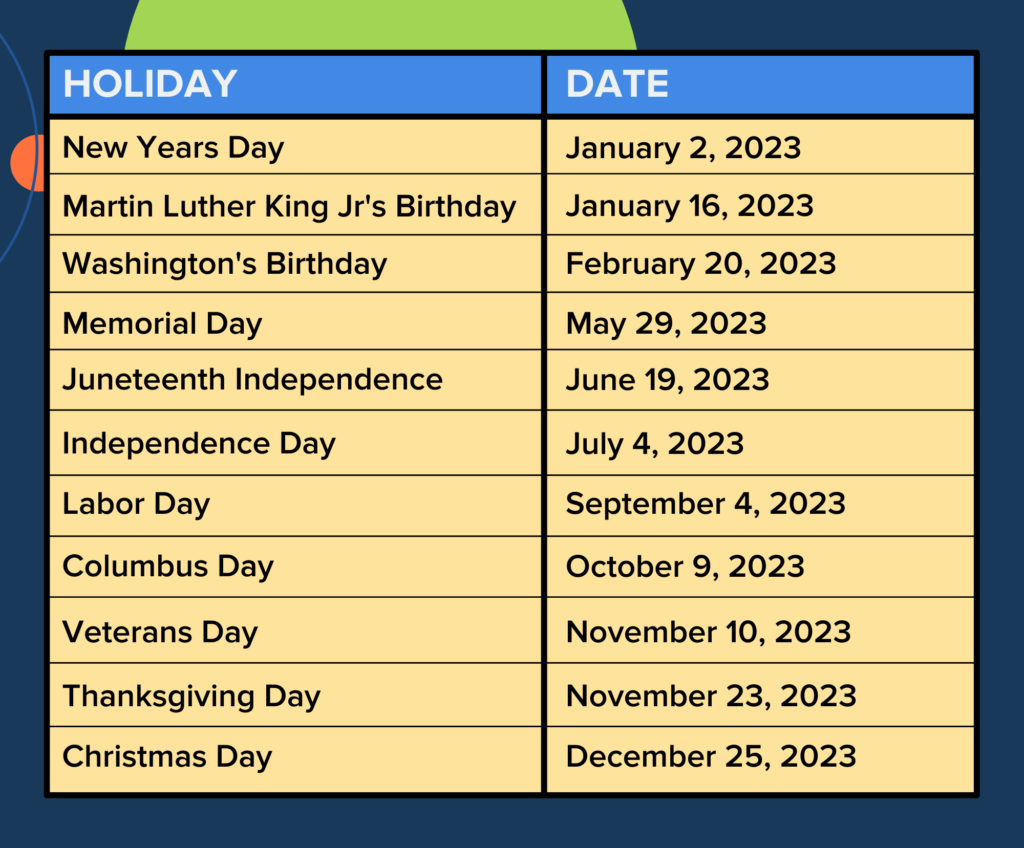
In this article, you will find the 2023 holiday calendar, a detailed overview of Juneteenth, discuss holiday pay in certain industries, and examine the argument that US voting day should be a federal holiday. 


2023 Holiday Calendar


Juneteenth’s History and Significance


Juneteenth (June 19) is a day of commemoration and celebration for African Americans. It marked the anniversary of enslaved people in Texas finally being granted freedom on June 19, 1865. This date occurred two years after President Abraham Lincoln signed the Emancipation Proclamation. 


Juneteenth has become a symbol of resilience and liberation throughout the United States. Also known as Freedom Day or Emancipation Day, celebrations occur across cities nationwide. In addition to commemorating emancipation from slavery, Juneteenth is also celebrated as an important milestone in American civil rights history.    


Holiday Pay in Certain Industries 


Specific industries are required by law to pay employees time-and-a-half wages if they work on major holidays such as Christmas or Thanksgiving. This includes retail stores and restaurants with more than 500 employees worldwide; hotels with more than 100 rooms; hospitals; nursing homes; transportation companies; oil refinery workers; and workers employed by large amusement parks or theme parks (as defined by federal labor laws).


All other employers are not legally mandated to pay their employees extra for working on holidays unless their contracts specify otherwise. However, many small businesses have included this as a paid holiday for their employees to minimize signs of burnout


Therefore, it is critical to understand what kind of payment you will provide your employees throughout the year. Make sure to research local labor laws regarding overtime pay to ensure compliance with all regulations while still providing fair compensation for your staff. 


Voting Day Controversy


Nearly two centuries ago, Congress decided to create Election Day in 1845 to keep democracy fair and equitable. This life-changing legislation had the primary purpose of warding off any issues with early voting results influencing turnout or swaying opinion in later states, which could have potentially determined the fate of national elections. By setting one day for everyone nationwide, the Tuesday following the first Monday in November, Congress ensured that each individual’s vote would carry the same weight.


There has been a growing movement in recent years that calls for making Election Day a federal holiday so that citizens have more time to exercise their right to vote without worrying about taking time off from work or school. There are numerous arguments both for and against this new holiday creation. 


Proponents argue that giving citizens an extra day off would boost voter turnout significantly. At the same time, opponents claim it would be too costly and impractical due to logistical issues associated with running elections on one specific day each year. The debate continues; however, no changes have yet been made regarding this issue thus far.    


Conclusion


Holidays are essential to any small business owner’s operations planning process, especially regarding payroll management and scheduling employee shifts accordingly. We hope you found this information useful. By getting familiar with all upcoming holidays now, you’ll be better prepared when it comes time to make those critical decisions in just a few short weeks. 


How FINSYNC Can Help


FINSYNC allows you to run your business on One Platform. You can send and receive payments, process payroll, automate accounting, and manage cash flow. To learn more about how we can help your business start, scale, and succeed, contact us today.

New Invoicing Approach to Assist Construction Companies

Construction companies continuously struggle with labor shortages, rising inflation costs, and supply chain disruptions. But now you can help offset a significant obstacle within this industry–waiting for your customer to pay on an invoice.

Owning a construction business, you probably are already aware that sometimes it can take weeks or even months to receive payment on projects. This can make it challenging to keep up with production or invest in new growth opportunities.

However, there is a solution.

CollectEarly™ offers a way to get paid on your invoices immediately, so you can keep your business moving forward. With more liquid capital, you can easily adjust to new project demands and comfortably pursue new customers. CollectEarly™ is an essential tool for any business owner.

CollectEarly™

There is no need to wait to get paid. CollectEarly™ offers a solution to business cash flow problems by allowing owners to collect payment on their invoices ahead of time. This means construction companies can keep projects moving forward without waiting for payments, which makes CollectEarly™ a valuable tool for companies of all sizes.

Construction Expenses

Construction companies often have to juggle a lot of balls when it comes to managing cash flow. They have to pay for materials and labor while also dealing with the often-lengthy timeline of waiting for client payments. This can result in construction projects grinding to a halt due to a lack of funds, which can be frustrating for the workers, the company, and the client.

CollectEarly™ counteracts this problem by allowing owners to collect payment on their invoices on the same day. This means construction companies can keep projects moving forward without waiting for net 30 payments, which makes CollectEarly™ an essential tool for any construction company that wants to keep its projects on track.

Technology & Growth

The construction industry has long been known for needing to be faster to adopt new technologies. Although construction is highly technical, business owners have hesitated to invest in new tech that will eventually be cost-effective.

There are several reasons for this reluctance, which are listed below.

    1. First, construction is a high-risk business: any mistake can be costly, so business owners are understandably hesitant to embrace new technologies.
    2. The construction industry is fragmented, with many small businesses competing for work. This fragmentation makes it difficult for companies to justify the expense of investing in new tech.
    3. Third, the construction industry needs to be faster to professionalize, making it harder for companies to attract and retain talented employees who are comfortable working with new construction technologies.
    4. The final reason is where CollectEarly™ can really make a difference and this is in the lack of consistent cash flow.

You can’t afford to wait to invest in the latest tech that will save you money in the long run. So the more options you have, the better you will be able to be proactive with your capital.

Final Thoughts

As you are already aware, waiting for customers to pay their invoices can strain your resources, especially in the construction industry, where the labor demand is typically high. CollectEarly™ is the perfect tool to collect payments quickly and efficiently. Whether you’re looking for a simple way to collect payments immediately or need a more robust system for tracking invoices, FINSYNC has you covered. Stop waiting for customers to pay their invoices and start collecting early today.


Learn more about CollectEarly™ and start getting paid on your invoices in 4 hours versus 4 weeks.

Apply For Business
Checking Account

Before you get started

1

We are not able to service these businesses at the moment:

  • Crypto Currency and Money Services
  • Privately Owned ATMs
  • Marijuana-Related
  • Gambling
  • Money Services Business
  • Business headquartered outside of the U.S.
2

At this time we are offering online business checking accounts through bank partners in these states:

  • Arizona
  • California
  • Idaho
  • Nevada
  • New Mexico
  • Oregon
  • Texas
  • Utah
  • Washington

Is your business in one of these states?