
FINSYNC Spotlight Interview – Patrick Tuure, Out There Web Designs

The journey of entrepreneurship is seldom a straight or predictable one. Founders sometimes find their businesses evolving in ways they did not initially envision, and success often hinges on embracing opportunities as they arise. This beautifully sums up the entrepreneurial journey of Pat Tuure, the owner of Out There Web Designs.


Pat’s business story is not one that was carefully planned; instead, it’s a testament to the power of seizing the moment. A pivotal factor in Pat’s success narrative is the role played by FINSYNC. This digital platform has been instrumental in helping him manage and streamline his operations, providing a robust foundation upon which his dream continues to flourish.


Tell me about your company and what inspired you to start.

I started Out There Web Designs in 2010 and pretty much fell into it. I had a friend of mine that asked me to build a website. I had no idea how to at the time. I said yes, figured out how to build it, and never stopped learning from there. A few years ago, I started bringing on other team members. Now I have two W2 employees and four contractors. 


What’s the best thing about being a small business owner? 

I set my own schedule. You have many responsibilities as a business owner but also a lot of freedom. If I want to walk away for an afternoon, the work will still be there, but I can still walk away and take breaks when needed. 


What are some of the challenges you’ve faced as a small business owner?

The biggest challenges I run across are cash flow management and stabilizing the business in order to scale. 


What prompted you to start using FINSYNC?

My credit card processor, Jeremy Felix with BancCard, recommended FINSYNC to me. After the third time, Quickbooks Online raised their rates, I decided I was done. I asked Jeremy if he knew of another system. I also wanted to use a platform that included payroll in an all-in-one solution. 

What about the FINSYNC Platform attracted you to it?

FINSYNC is all-in-one, includes payroll, and the price is affordable. I own a small business, so cash flow management is always a concern. 


What financial institutions do you have connected to FINSYNC?

Clearent is my credit card processor through Swipe Central. The other two banks I use are Chase and a local credit union called Kemba. 


How does having FINSYNC connected to your accounts make your business life easier?

I use the income report because it has some customization that I can do. I have also used your customer service. Clark is great. I only had one issue with tax withholding, and he solved it quickly.


What are the biggest benefits your business has experienced using FINSYNC?

Not having to worry about payroll is a big benefit. I just have to make sure the timecards are entered correctly and everything is covered, then we are good. For the most part, Payroll works smoothly. Once it is set up, you pretty much don’t have to worry about it.  


What advice do you have for those thinking about starting their own business?

Learn everything you can. You need to have an accounting system in place because an Excel spreadsheet will not be enough. You need to have better tracking of your accounting and see a decent income statement so you know where you stand. As you grow, you want to hire an accountant and hire a coach. When you start growing, these are a must. 


FINSYNC allows you to run your business on One Platform. You can send and receive payments, process payroll, automate accounting, and manage cash flow. To learn more about how we can help your business start, scale, and succeed, contact us today.


The Future of Artificial Intelligence in the Accounting Industry

As we venture further into the digital age, Artificial Intelligence (AI) continues to reshape various industries, with accounting and bookkeeping being no exception. Over the next five years, AI is not just set to revolutionize these fields, but it also promises to serve as an ally to accounting professionals, enhancing their efficiency, refining their decision-making capabilities, and transforming risk management.


Transaction Management

In the near future, AI-powered systems will likely manage the bulk of transactional data, tackling reconciliations and allowing bookkeepers to channel their expertise into analysis and strategy. 


Financial Forecasting

AI can also enhance the accuracy of financial forecasting. By studying and understanding historical data patterns, AI can help predict future trends with remarkable accuracy. As this technology becomes increasingly important for financial forecasting and budgeting, accountants will be empowered to make even more precise, data-backed decisions.


Auditing

The auditing process, often laborious and time-consuming, is another area that stands to benefit from AI. The ability to rapidly scan large datasets to identify anomalies and compliance issues will streamline the auditing process. As future AI systems hone their skills, they will become even better at detecting irregularities and potential fraud, enhancing the reliability and integrity of the auditing process.


Customer Service

Artificial Intelligence can potentially elevate customer service for accounting firms. AI-powered chatbots can respond to routine customer queries swiftly, providing immediate responses and ensuring 24/7 availability. Over the next few years, these digital assistants will evolve, delivering increasingly personalized and efficient customer interactions.


The Human Element

Despite these technological advancements, the human element within accounting and bookkeeping remains invaluable. AI is a powerful assistant designed to augment the capabilities of accountants, not replace them. As AI shoulders routine tasks, professionals can invest their time in more high-value work. This shift could lead to richer, more rewarding careers for accountants and bookkeepers and amplify the service they provide to their clients.


Summary

In conclusion, the next few years present an exciting era for the accounting and bookkeeping industry, with AI steering the transformation. This wave of innovation promises to amplify efficiency, sharpen decision-making, and facilitate a higher focus on strategic value. As we navigate this promising future, the key will be to view AI not as a replacement but rather as an empowering partner that complements human expertise.


FINSYNC Accounting Partner Program

We understand accounting professionals’ critical role in a business’s success. This is why we have designed the FINSYNC Accounting Partner Program. Where a dedicated Account Manager will help you achieve your firm’s goals. FINSYNC’s platform consolidates all financial operations into an all-in-one system, ensuring smooth financial management while connecting businesses with the right financial experts. 


What Is Bank Reconciliation? Balance Your Bank Statements in 7 Easy Steps

While they might seem intimidating, bank reconciliations are an invaluable tool for bolstering the precision and dependability of your financial records. This process empowers you to maintain the accuracy and reliability of your capital, which can provide you with a clear and accurate picture of your business health. 


Through a systematic approach and the right set of practices, you can become an expert at this task. Here we explain what is bank reconciliation and how to balance your bank statements in 7 easy steps. 


What is Bank Reconciliation?


Bank reconciliation represents a pivotal process in your small business’s financial management. At its core, it involves matching your internal financial records with the statements provided by your bank. By meticulously comparing these two data sources, you can reveal, address, and prevent discrepancies that might otherwise impact your business’s standing, such as accounting errors or fraudulent transactions.


Having up-to-date financial statements is not just about complying with regulations or preparing for tax season. It’s about simplifying your cash flow management, enabling you to make informed decisions and plan strategically for growth. 


Here are 7 easy steps to balance your bank statement and maintain the financial health of your business.


1. Gather Your Records

Before reconciling, you must have all your ducks in a row. Start by assembling the relevant records, such as your bank statement and internal documents, including your general ledger or accounting software records.


2. Check Starting Balances 

Beginning with the opening balance, compare your bank statement and internal records to spot any discrepancies. Common differences might stem from outstanding checks, deposits in transit, bank fees and charges, interest income, and electronic transactions.


If the starting balances do not align, this indicates a discrepancy that needs immediate attention. It is crucial to identify and correct these issues to ensure accuracy in your financial statements.


3. Match Transactions 

Methodically review each transaction listed on your bank statement, and match it with its counterpart in your accounting records. Verify the amounts and dates of each transaction and confirm the payees’ details; this step helps ensure that each payment has reached its intended recipient. 


4. Document Discrepancies 

If you encounter any transactions that don’t match, document these inconsistencies. Make a note of the transaction details, as this will serve as a roadmap in your investigation into the root cause of the discrepancy and assist in ensuring that any accounting errors or issues are effectively resolved.


5. Rectify Errors 

For each discrepancy, it is important to investigate further to uncover its underlying cause. This process could lead you to discover input errors in your accounting records or late transactions due to processing delays. 


Once you’ve identified the error, proceed to fix it promptly. This may involve correcting an input mistake in your records, following up on a delayed transaction, or contacting your bank to resolve the issue. Swiftly addressing these discrepancies ensures your financial records remain reliable.


6. Update Records 

Updating your financial records may involve actions based on your resolved discrepancies. You should mark certain transactions as cleared, indicating they have been processed and reconciled. 


For example, you might discover missed transactions in your original entries. Therefore, you must input the new transactions into your accounting records and update your ledger. You are laying a solid foundation for your financial management by carefully keeping these records updated.


7. Confirm Final Balances 

Finally, after all the adjustments have been made, take a moment to compare the ending balance of your accounting records with the final balance on your bank statement. This crucial step ensures that all transactions have been accounted for and all discrepancies resolved. If these two figures align, you can be confident in the accuracy of your records. 


Conclusion


Performing bank reconciliations is a critical component of maintaining accurate financial records and ensuring your business’s money outlook. By following a step-by-step approach, you can streamline the process and improve your economic control. 


Regular reconciliations not only help identify errors and detect fraud but also ensure compliance and support better decision-making. As a business owner or finance professional, mastering this art is an essential skill that will benefit your organization in the long run.


How FINSYNC Can Help


FINSYNC allows you to run your business on One Platform. You can send and receive payments, process payroll, automate accounting, and manage cash flow. To learn more about how we can help your business start, scale, and succeed, contact us today.

7 Things to Consider When Choosing a Business Checking Account

Leading a successful business goes beyond having an outstanding product or service. It demands the skillful handling of financial resources. One fundamental part of this financial management is choosing a business checking account. This decision, seemingly straightforward, carries substantial implications for your business’s daily functioning.


In your quest to find the best business checking account for your organization, it is vital to consider numerous factors. Here we delve into 7 things to consider, assuring that the account you open suits your business needs.


1. Fees


Start by examining the fees associated with the account. Banks often charge a variety of fees, including monthly maintenance fees, transaction fees, ATM fees, and more. These fees can add up quickly and can eat into your profits, particularly if your business conducts a high volume of transactions. So it’s essential to understand the bank’s fee structure.


2. Deposit Limits


Next, consider the account’s deposit limits. Some bank accounts restrict the amount of money you can deposit daily or monthly. If your business generates substantial revenue or deals with significant cash transactions, these limits could prove inconvenient, requiring you to make multiple deposit transactions each week. Hence, make certain that the deposit constraints of the account are a good match.


3. Daily Balance Minimums


Some business checking accounts require maintaining a minimum daily balance, which could be as high as $5,000. Falling below this balance could result in penalties, affecting your bottom line. If your business’s cash flow fluctuates significantly or if you are just starting out and don’t have a substantial cash reserve, an account with a high minimum balance requirement may not be the best fit. Always read the fine print before committing to an account to avoid unexpected charges.


4. Interest Rates


While business checking accounts generally offer lower interest rates than personal savings accounts, some banks do offer attractive rates for higher balances. If you plan to keep a substantial amount of money in your account, the interest earned could be a beneficial income source. It’s worth comparing interest rates from different banks to identify an account that offers competitive returns.


5. Online Banking


The convenience of online banking isn’t merely a bonus, it is a must-have for modern business operations. It allows owners to manage their finances conveniently, regardless of location. With online banking, you can review your account balance, conduct fund transfers, pay bills, and deposit checks, all without visiting a physical bank branch.


You should also consider the online banking platform’s compatibility with your chosen accounting software. Integrating these tools can make the management of your finances more efficient and effective.


6. Customer Service


Customer service is another critical factor. It is important to assess the potential bank’s responsiveness and helpfulness in addressing any questions or concerns you may have. Consider contacting other business owners within your network and asking about their experiences with different banks to gather valuable insights and recommendations.


Additionally, to get a better understanding of a bank’s customer service quality, it can be helpful to seek reviews from reputable sites such as Trustpilot, BBB (Better Business Bureau), or Yelp for feedback and experiences shared by other customers.


7. Room to Grow


As your business grows and evolves, your banking needs may change. Therefore, it’s important to choose a bank that can grow your business. Consider not only your immediate needs but also what services you might need in the future, such as business loans, credit cards, ACH lockbox, or credit card processing. The right bank should be a partner in your business’s growth, providing the support and services you need to flourish.


Summary


Ultimately, opening a business checking account will depend on your business’s unique needs and circumstances. By considering the factors above, you can select an account that aligns with your business needs, helping ensure your financial operations run smoothly. Remember, the best account is one that simplifies your operations, minimizes fees, and supports your business’s growth and profitability.


How FINSYNC Can Help


FINSYNC allows you to run your business on One Platform. You can send and receive payments, process payroll, automate accounting, and manage cash flow. To learn more about how we can help your business start, scale, and succeed, contact us today.

 

When and Why to Open a Business Checking Account

Embarking on a new business venture can be an exciting journey filled with endless opportunities. As an entrepreneur, you can explore your passions and make money while being your own boss. However, managing finances is a significant responsibility that should never be taken lightly.


Opening a business checking account is a critical step toward financial management, but timing is everything. Understanding when to open a business bank account and the benefits of having a separate account is crucial to your success. Let’s dive in and discuss valuable insights on these topics.


When to Open a Business Account?

This decision can impact your financial operations, taxes, and personal liability. Hence, opening a business account as soon as you start earning or spending money for your business is advisable. This ensures that your personal and business finances are separated, making it easier to keep track of your business expenses and profits.


Waiting too long to open a business checking account can cause confusion and make it challenging to differentiate between personal and business transactions. You may find yourself in a position where you need to track down specific business expenses, and it can be challenging to do so if they are mixed in with personal transactions. 


Benefits of Business Bank Accounts

You may think you do not need to open a separate business account because your business is still in its infancy or you are still operating as a sole proprietor. However, accuracy is paramount when it comes to accounting, and having a separate business account can provide you with several advantages. 


Protection

One of the most significant benefits of having a business checking account is protection. If your business operates as a sole proprietorship, your assets are at risk in case of legal issues or bankruptcy. By separating your personal and business finances, you can protect your capital from any financial problems your business may face.


Professionalism and Credibility

A separate business checking account shows potential clients, partners, and investors that you take your business seriously and are committed to its success. It also makes it easier to receive client payments, close open invoices, and pay expenses related to your business.


Tax Simplification

Detaching your personal and business finances makes it easier to keep track of your business expenses and earnings. This will make it more manageable to file your taxes and potentially lower your tax liability.


Purchasing Power

Having a business checking account also gives you purchasing power. You can use your account to pay for business expenses like supplies, equipment, and rent. Some banks also offer credit cards and loans for business owners, which can help you grow your business.


Prepare for Growth

Finally, having a separate business checking account helps you prepare for growth. As your business grows, your financial needs will change. Having a separate account for your business makes it easier to track your finances, apply for loans or credit, and manage your cash flow.


Final Thoughts


Opening a business checking account is necessary to manage your finances as a business owner. Even if you are just starting out, separating your personal and business finances can help you keep track of your income and expenses and avoid confusion.


If you’re ready to take this step, be sure to check out our article “How to Open a Business Bank Account.” We provide step-by-step instructions on gathering the necessary documents and opening an account. With the right business checking account and banking partnership, you can set your business up for success.


How FINSYNC Can Help


FINSYNC allows you to run your business on One Platform. You can send and receive payments, process payroll, automate accounting, and manage cash flow. To learn more about how we can help your business start, scale, and succeed, contact us today.

Elaine Smith-Poyourow, With Tomorrow’s Leaders Today (TLT)

Education is often considered the foundation of our future. Many believe it is vital to provide young individuals with the necessary skills and resources for success. Our highlighted entrepreneur suggests that traditional school methods need to adequately address essential life skills like entrepreneurship, team leadership, and advanced learning opportunities.

Elaine Smith-Poyourow established the nonprofit organization TLT – Tomorrow’s Leaders Today. She strongly advocates for the importance of empowering future generations with the basic skills required to thrive in the modern world. Elaine’s leadership has made a significant impact on the lives of many young people and is instrumental in shaping a brighter future for the next generation.


What prompted you to start using FINSYNC?

We were working with First United Bank, and we started the Payroll process. As a non-profit, we only have one paid employee. So, we were looking for affordability, convenience, and efficiency, and FINSYNC was recommended for it. 


What about the FINSYNC Platform attracted you to it?

David with First United Bank recommended it to us. We were not in a position to start taking on payroll and tax reporting requirements. But this had to be done, and this was a cost-effective way of doing that. 


Tell me about your company and what inspired you to start.

TLT – Tomorrow’s Leaders Today, is a 501C3 nonprofit organization. We are dedicated to developing youth leaders through education, collaboration, and mentorship with community and business leaders for the collective benefit of both the students and their communities. 


This started with me going through leadership classes and asking, “Why aren’t the youth being taught leadership disciplines in school?” Since COVID, it has morphed into more. Not only do we have leadership classes, but we have real-life skills, soft skills, higher education, and career readiness training. We support ages 13 and up for any of our classes and our free online library.


Additionally, we have an intensive 20-position internship program that covers everything from accounting to website development for ages 15 to adults for those living in Texas. This program runs three times a year, and it is our most popular program. 


What are some of the challenges you’ve faced as a small business owner?

Getting the awareness out there that we offer these opportunities. Also, getting people involved to support us and to bring this program further into the community.


What’s the best thing about being a small business owner? 

The reward of helping all these young and upcoming leaders of tomorrow be successful. Helping them get the skills they need to complete higher education or be self-sufficient and find a good job if they choose not to pursue higher education. 


What are the biggest benefits your business has experienced using FINSYNC?

The biggest benefit of using FINSYNC is the transparency and accountability and knowing that we are following all the regulations, FDIC, and IRS rules. It has been easy to be on top of all that. 


How does having FINSYNC connected to your accounts make your business life easier?

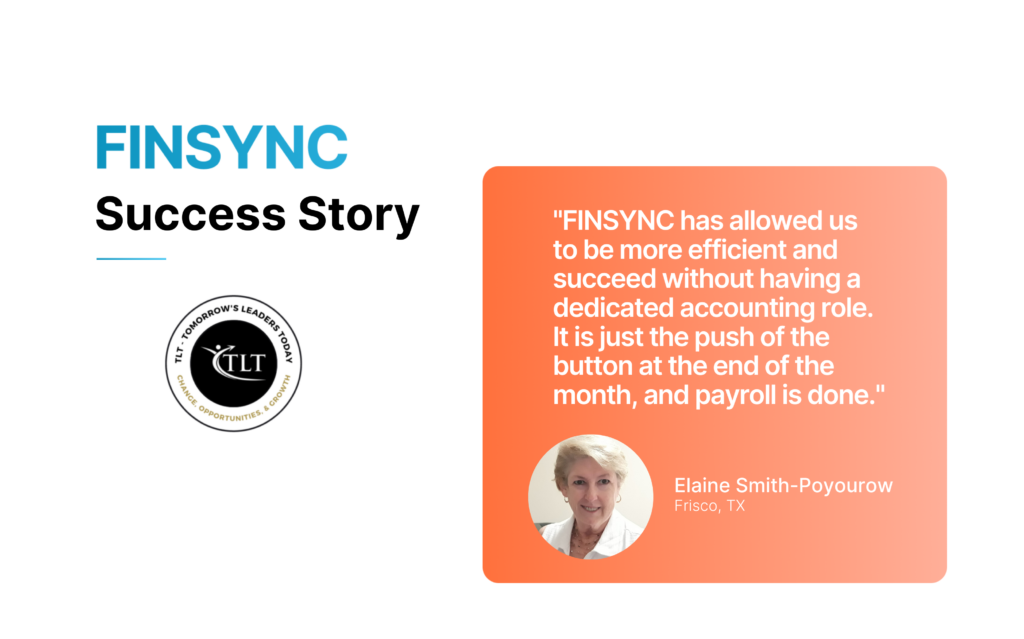
We are supported by volunteers. FINSYNC has allowed us to be more efficient and succeed without having a dedicated accounting role. It is just the push of the button at the end of the month, and payroll is done. 


What advice do you have for those thinking about owning their own business?

You have to look into the IRS laws along with local and state laws in your area. You need to research who your competitors are going to be and what makes you unique. If you are going to hire a staff, you need to plan for their salaries and taxes. Most of all, how are you going to process payroll


FINSYNC allows you to run your business on One Platform. You can send and receive payments, process payroll, automate accounting, and manage cash flow. To learn more about how we can help your business start, scale, and succeed, contact us today.
Why Reconciling Your Bank Statements is Essential for Small Business Owners

Your small business is a well-oiled machine, but even the best machines need regular maintenance to keep them running smoothly. One often overlooked yet crucial aspect of maintaining your company’s financial health is reconciling your bank statements for your business bank account. This essential process holds the key to ensuring your internal balances align with your bank balances, keeping your business on the path to success.


Imagine bank statement reconciliation as the unsung hero of cash flow management, tirelessly working behind the scenes to catch inconsistencies that could otherwise spell disaster for your business’s growth. By taking a short break from your daily operations to reconcile your bank statements, you are investing in the long-term prosperity of your company.


What is Bank Statement Reconciliation?


Bank statement reconciliation is the process of comparing your internal banking records with your bank statement. This is done to ensure records match and that there are no discrepancies between the two systems.


Typically, a company will receive a monthly bank statement from its financial institution showing all the transactions that have occurred during the month. The company’s owner or accounting team will then compare this statement to their own records of transactions, including deposits, withdrawals, and any other activity on the account.


Here are several methods that assist small businesses in enhancing their financial oversight by reconciling their bank statements.


Save Time


Embracing the power to save time with monthly bank reconciliations can revolutionize your financial management, streamline your tax filing process, and improve your cash flow monitoring. 


Failing to embrace the time-saving power of regular bank reconciliations can result in inaccuracies in your financial reports, severely impacting your business and consuming time to rectify. Regular reconciliations offer the advantage of early detection of discrepancies, saving you time and preventing errors in your financial statements.


Security


Ensuring your bank statements are accurately reconciled regularly is important for safeguarding against employee or outsider theft, which can compromise your company’s financial health. Reconciliations also provide an extra layer of security to help smooth money transfers between accounts, keeping your bottom line healthy. 


Not reconciling your bank account may leave you unaware of uncleared transactions, leading to overdraft fees and other bank charges compromising your financial security. Additionally, inadequate bank account reconciliation can put you at risk of non-compliance with government regulations, jeopardizing your entire organization.


Accuracy


Keeping an accurate budget is pivotal to managing your money responsibly, especially if cash flow is a challenge. Regularly reviewing your bank statements through the reconciliation process helps ensure that all transactions made from your accounts are accurate, allowing you to trust the information provided by your financial institution


This also helps you avoid mistakes that can hinder effective business finance management, leading to cash flow issues and financial difficulties down the line. Furthermore, Producing imprecise financial statements and reports can erode confidence from customers, vendors, and other stakeholders in the business.


Growth


Reconciling your bank statement is not only crucial for effective cash flow management, but it is also an integral part of the growth of your organization. Going over your individual transactions line-by-line can help keep your spending under control and ensure that your total expenses stay within the parameters of what you allocated in your budget. 


Moreover, identifying and tracking trends in your cash flow is a great way to learn how you spend your money and make more informed financial decisions, which can support your business growth.


Failing to reconcile your bank statements can have multiple negative consequences for growth. Not only may you overlook trends or patterns in your business finances, leading to missed opportunities for growth, but also, not reconciling can result in errors that erode customer confidence, vendors, and other stakeholders. This, in turn, can ripple across your organization, potentially jeopardizing its overall success and financial stability.


Conclusion


Ultimately, reconciling your bank statements should be a core component of any business. It is an essential piece of going beyond just monitoring income and expenses to keeping up with overall financial stability. Beyond the security benefits, the practice provides accurate information about your financial standing. Reconciliation can give you unshakable peace of mind and empower you to make bold, informed decisions about growing your business.


How FINSYNC can help


FINSYNC allows you to run your business on One Platform. You can send and receive payments, process payroll, automate accounting, and manage cash flow. To learn more about how we can help your business start, scale, and succeed, contact us today.

 

4 Ways to Turn Last-Minute Clients into Loyal Customers for Accounting Firms

Your accounting firm likely encounters last-minute clients, which can cause disruption and stress to your team’s workflow. However, with the right strategies in place, you can effectively manage these clients and even turn them into opportunities to showcase your exceptional service. 


Here are four strategies to manage your last-minute clients in your firm:


1. Set Clear Expectations and Maintain Open Communication

Start by communicating with your clients upfront about potential risks and consequences, such as penalties or late fees, and explain the necessary steps to complete their request. This will help manage their expectations and prevent any surprises down the road. Maintain open communication throughout the process to ensure the client is aware of any updates or changes.


2. Prioritize Tasks and Allocate Resources Efficiently

Prioritize tasks based on urgency and complexity to allocate resources efficiently. Consider implementing a system to categorize and prioritize client requests, so your team can work through them in an organized manner. Identify team members with the appropriate expertise to handle specific tasks and avoid overloading them. If necessary, consider outsourcing to a qualified third-party provider.


3. Embrace Technology and Automation

Streamline your workflows and enhance efficiency by embracing technology and automation. Cloud-based accounting software and data analytics tools can help you work through tasks faster and more accurately. Investing in technology can help your team work through last-minute requests more efficiently and with less stress.


4. Implement Surge Pricing or Fees

To discourage procrastination and compensate your team fairly, consider implementing surge pricing or fees for last-minute services. Communicate these policies to clients upfront so they know the costs associated with their last-minute requests. Prepare your team for time-sensitive situations by investing in training and providing tools to manage stress effectively.


To sum up, managing last-minute clients can be challenging, but they are also an opportunity to demonstrate your firm’s ability to go above and beyond. By applying the strategies discussed, you can identify areas for improvement and refine your processes. This approach is vital to the success of your accounting firm and ultimately leads to greater client satisfaction. With the right mindset and approach, you can effectively manage clients with urgent requests and ensure your firm’s continued success.

What is FINSYNC?

FINSYNC allows your small business customers to run their businesses on One Platform. They can send and receive payments, process payroll, automate accounting, and manage cash flow. To learn more about how we can help your small business customers start, scale, and succeed, contact us today.

Bob Hardy FINSYNC Customer Spotlight Interview

When starting a business, ambition isn’t everything. You must cultivate and understand your ‘why’ or your passion. Finding success will often prove difficult without a passion because that unwavering enthusiasm will give you the determination to make your dream come true, no matter what obstacles arise on your journey toward achieving greatness. With every new venture, it pays off to ask yourself: What is my purpose?


Jeannine Breedlove had a vision, which she put into action with her unstoppable passion for saving lives. Bob Hardy shares the incredible story of how Jeannine created Grace Abounds Rescue Mission, an influential non-profit striving to do good in this world every single day. 

Jeannine Breedlove Image

What prompted you to start using FINSYNC?

We were looking at buying software and using local bookkeepers, but Lead Institute was a FINSYNC customer before they merged with Orchard, a faith-based non-profit in Atlanta. Orchard advises those who are interested in starting similar non-profits, and eventually, they ended up recommending this platform for our organization.


Do you have a financial institution connected to FINSYNC?

Most of our transactions go through our synced business checking account. Jeannine will go into the platform and categorize the transactions. This automatically syncs and is very simple to use.


Tell me about your company.

I am the Treasurer of a local non-profit organization called Grace Abounds Rescue Mission, which was started by Jeannine Breedlove. In the summer of 2021, Jeannine had a secure job as a children’s ministry director. She got to know one of the kids’ mothers who was involved with the ministry and was fighting a battle with drug addiction. This young mother was in a terrible cycle of going to rehab and then using drugs again and again. Sadly, this woman was in a fatal traffic accident that cost her her life and left her children without support. 

Jeannine decided to do something about this. So she quit her day job without a life jacket and lived off her savings, eventually starting Grace Abounds. This is a two-year residential life and spiritual recovery program for women in the county. We now have a nice house in town, and the women are doing great. 


What are some of the challenges you’ve faced as a small business owner?

In the beginning, the challenge was not to reinvent the wheel. Jeannine had a friend in California who ran a similar program, and she created Grace Abounds, which was similar to what was working for them. 

Fundraising is always a challenge for non-profits. Unfortunately, the need for support is there in our community. We have slowly created recognition. Jeannine has given us legs, and we are now thriving. We are very grateful to Jeannine and this ministry. 


What are the biggest benefits your business has experienced using FINSYNC?

Simplicity. I am not an accountant by training, but FINSYNC was easy to navigate credit and debits and a financial management system. We found it to be very time efficient and easy to use. 


Have you utilized FINSYNC’s customer service?

Yes, your customer support is another strength for us. They are very effective and patient in helping us get set up and use the system. Since then, we have had very few issues, but if we do, they respond very quickly. 


How has FINSYNC saved you time?

One of the most important benefits we get from our FINSYNC  relationship is the handling of our payroll and all federal and state payroll withholding and tax reporting. With the FINSYNC payroll processing system, it is incredibly easy and inexpensive!


What advice do you have for those thinking about owning their own business?

If anyone is thinking about starting a faith-based non-profit, check out Orchard. Between FINSYNC and Orchard, we are able to touch the lives of people directly in our community. 


How to Open a Business Bank Account

A business bank account is the foundation of any small business. It is an invaluable tool for ensuring your personal and professional finances remain separate, allowing you to stay organized and protect yourself from potential tax problems while maintaining a good credit score.


However, before opening your account, it is important to think through choosing the right bank, types of accounts available, required documentation, digital banking tools, and more. Here are the important things to know when you open a bank account for your business.


Why Open a Business Bank Account

Managing a successful company requires keeping your finances in order. Establishing a dedicated business bank account helps streamline the process by protecting personal assets while ensuring accuracy when calculating income, expenses, and taxes. Investing in this small detail will provide tangible returns down the line. 


With a business bank account, you can easily manage the day-to-day finances of your enterprise. It provides an organized overview for tracking cash flow, analyzing expenses, and producing financial statements. In addition, having a dedicated account for your business conveys trustworthiness and stability to customers, suppliers, and lenders.


Also, a business bank account allows you to accept customer payments via check, credit card, and ACH, both in person and with digital invoicing. Embracing the power of modern technology will reduce your time spent collecting payments and improve customer satisfaction. 


Finally, lenders typically look for evidence of financial stability to secure a business loan or credit card. A business account provides an organized record of transactions, giving potential creditors confidence in the strength and reliability of your venture.


Choose the Right Bank

Once you have decided on the right time to open a bank account for your business, it’s time to find the perfect bank, your new partner. Thoroughly research all financial institutions that interest you, looking closely at fees, reputation for customer service, and convenience for both you and customers/clients. Other things to consider are competitive rates of return, such as interest yield, and additional business banking services available. 


You should also inquire about online or mobile banking options, including compatible software that may be available. Digital banking is becoming more popular and convenient for managing finances. The right bank will help you maximize your business’s potential, so it pays to compare every potential detail thoroughly. To dive in more on this topic, here are 7 things to consider when choosing an account. 


Account Types

After you’ve chosen a bank, you should decide which type of bank account, or accounts, are best suited for your operations. There are two main types of business accounts.


  1. Business checking account – These accounts provide higher transaction limits than personal alternatives and sometimes benefit from accruing interest on balances. This allows you to capitalize on small profits over time as your organization grows. 
  2. Business savings account – This type of account allows businesses to store funds in an interest-bearing account and is invaluable when planning long-term goals or cash flow emergencies. These accounts are designed to keep funds in one place for a more extended period of time and usually have limits on the number of monthly transactions. 


You could also benefit from having one of each account type. Your new partner, your banker, can assist you with the pros and cons of both options.


Required Documentation


Setting up a business bank account requires more than just filling out forms. Business owners must provide the following documents for review. 

  • Copy of a government-issued ID
  • Business license (if applicable)
  • Certificate of formation or incorporation 
  • Employer Identification Number (EIN) from the IRS
  • The operating agreement, partnership agreement, or corporate resolution authorizing the opening of an account
  • Bank statement from a personal account to verify identity and address
  • Some financial institutions require your articles of organization 


Additional documentation, such as financial statements or tax returns, might be required depending on the processes of an individual bank or the amount of money you plan to deposit.


The Bottom Line


Owning a small business is an exciting and rewarding venture but can come with unique financial challenges. A dedicated bank account makes managing your business much easier and provides an organized space to track income and expenditures better while keeping your personal finances separate.


Opening a bank account for your business is essential to remain in good standing with the IRS and maintain strong financial health. It will also help you stabilize your future plans and keep on top of your financial obligations. Your success as a small business owner may depend on it! 


FINSYNC is a cloud-based platform that allows you to send and receive payments, process payroll, automate accounting, and manage cash flow. To learn more about how we can help your business start, scale, and succeed, contact us today.

Apply For Business
Checking Account

Before you get started

1

We are not able to service these businesses at the moment:

  • Crypto Currency and Money Services
  • Privately Owned ATMs
  • Marijuana-Related
  • Gambling
  • Money Services Business
  • Business headquartered outside of the U.S.
2

At this time we are offering online business checking accounts through bank partners in these states:

  • Arizona
  • California
  • Idaho
  • Nevada
  • New Mexico
  • Oregon
  • Texas
  • Utah
  • Washington

Is your business in one of these states?